Pole to Pole Adventure
The Ultimate Bucket List Expedition Cruise
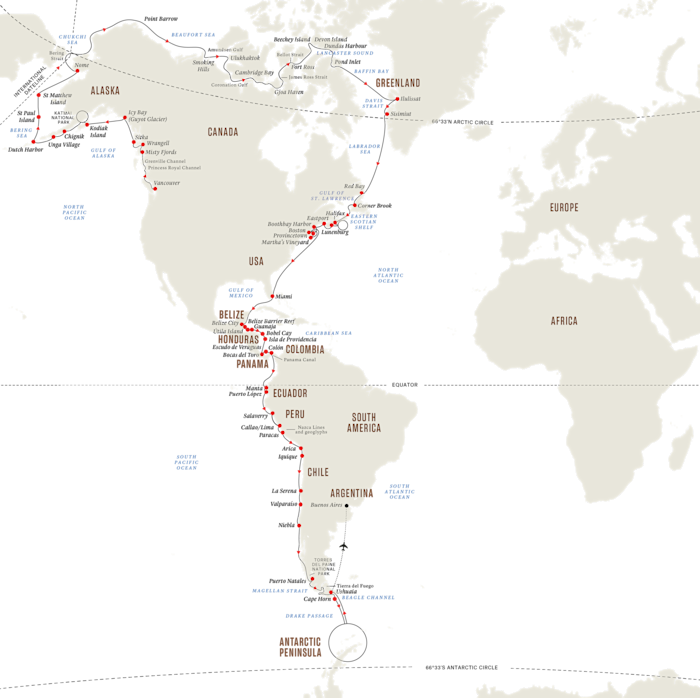
Join this epic adventure across 13 countries, starting in Vancouver and ending in Buenos Aires after taking in the Arctic, Antarctica and the Americas.
Get the rare chance to spot both polar bears and penguins in one trip, as well as brown bears, caribou, and an array of birds and marine life in their natural habitats Take in a dramatic variety of scenery, from vast icescapes at the poles to deserts, jungles and mountains in between. Take in an incredible variety of scenery, from vast icescapes to arid deserts, lush jungles and towering mountain ranges.
The Far North
Starting in Canada, this epic three-month cruise offers you a chance to experience Alaska’s coastal wilderness before heading into Arctic waters. Scout for whales, seals, and even polar bears as we attempt to sail through the fabled Northwest Passage to Greenland, where you’ll meet local Inuit people.
Heading South
Get a taste of east-coast culture in the US and island life in the Caribbean. Then watch jungles fade into deserts as we sail from Central America to South America’s Pacific coast via the Panama Canal. UNESCO sites await in Peru and Chile while the seventh continent brings icescapes and nesting penguins.
Key Expedition Details
Itinerary
Your adventure at a glance. Daily highlights, included activities, and optional extras to make it unforgettable.
Enjoy British Columbia’s largest city
Your grand adventure starts with an overnight stay in Vancouver, a bustling and beautiful seaport set against steep mountains.
Vancouver’s various neighborhoods buzz with world-class, farm-to-table cuisine. Don’t miss Gastown, Vancouver’s Victorian neighborhood. Here you’ll find the Vancouver Lookout, standing at an altitude of 553 feet. It offers a perfect panoramic view over the city.
If you have time, we recommend arriving a few days early and joining one of our optional Pre-Programs.

Explore Vancouver and embark on your adventure
After an enjoyable breakfast at your hotel, we will take you on a city tour to see the main highlights of fabulous Vancouver.
The excursion will end at the pier, where MS Roald Amundsen awaits. Settle in and take your time to get to know the ship. Locate the Science Center, gym, and restaurants.
Our knowledgeable Expedition Team will lead the way on excursions and landings. Get to know them and enjoy a tasty welcome dinner. Afterward, you can kick back and relax – your grand adventure is underway!

See the Inside Passage, bears, and the Aleutian Islands.
The Inside Passage coastal route takes us through the great North American Pacific Fjordland, a protected stretch of water over 930 miles long. Unlike other cruises that pass through at night, you’ll be able to view the sublime scenery in all its glory during the day.
Our smaller expedition ship allows us to reach areas that larger vessels can’t, meaning that you can explore the breathtaking scenery of lesser-traveled channels. Keep your cameras and binoculars close at hand to spot dolphins, porpoises, orcas, and humpback whales.
Weather permitting, our journey to Alaska will include the following exciting destinations.
Misty fjords
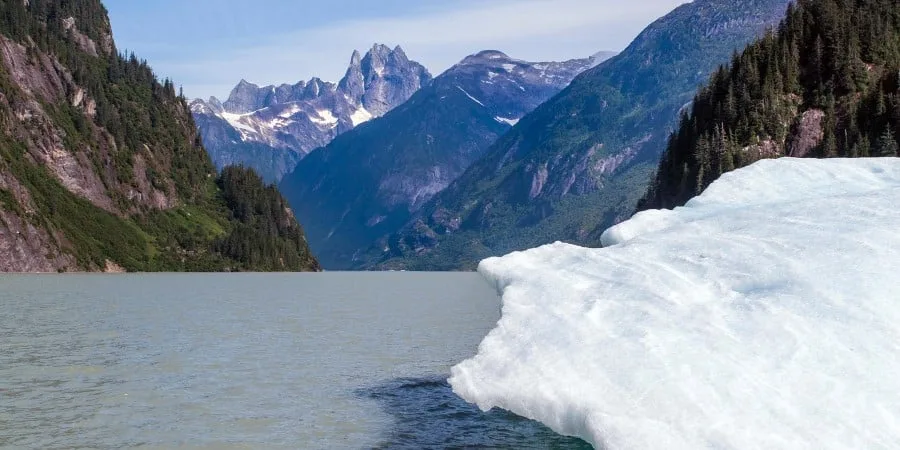
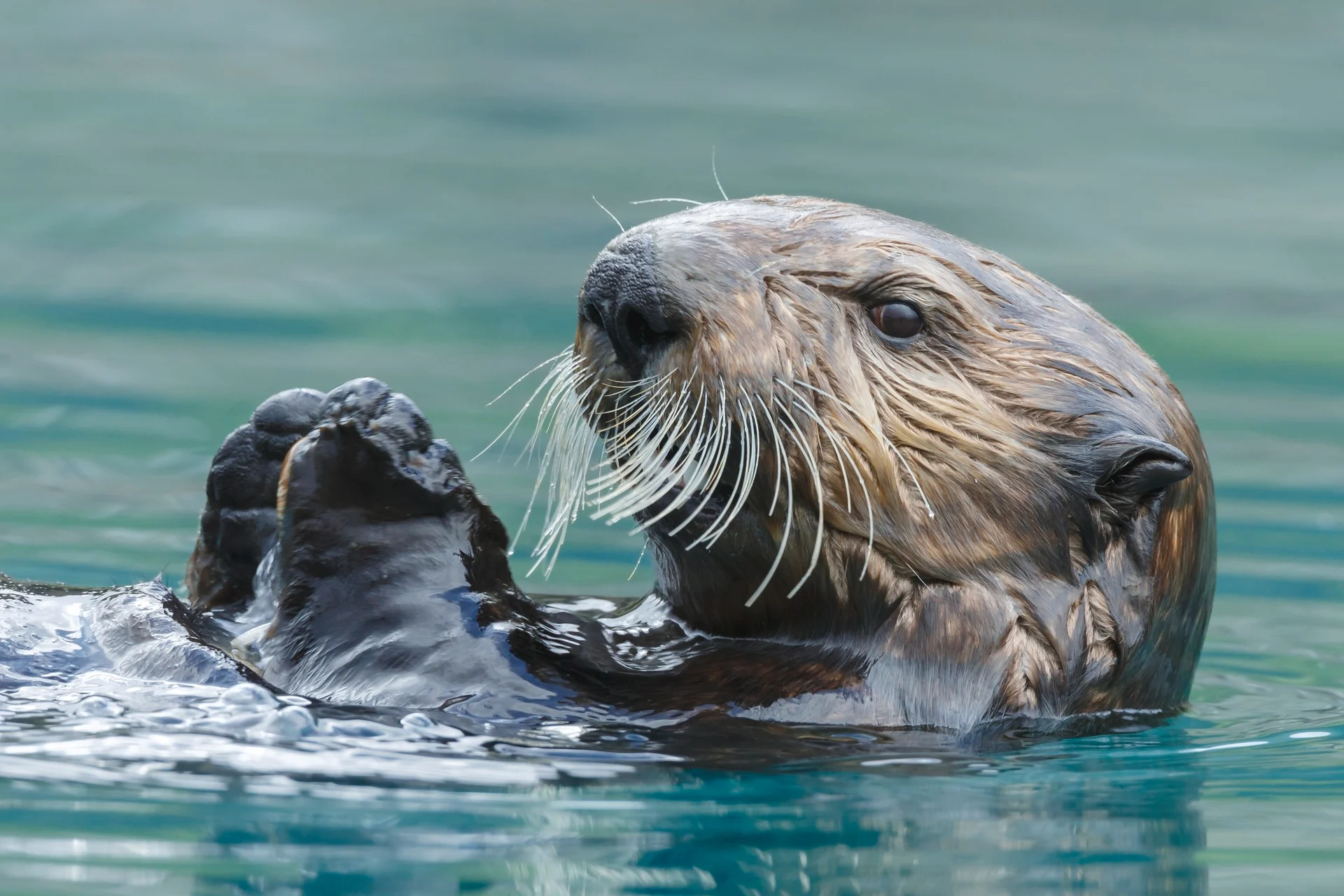
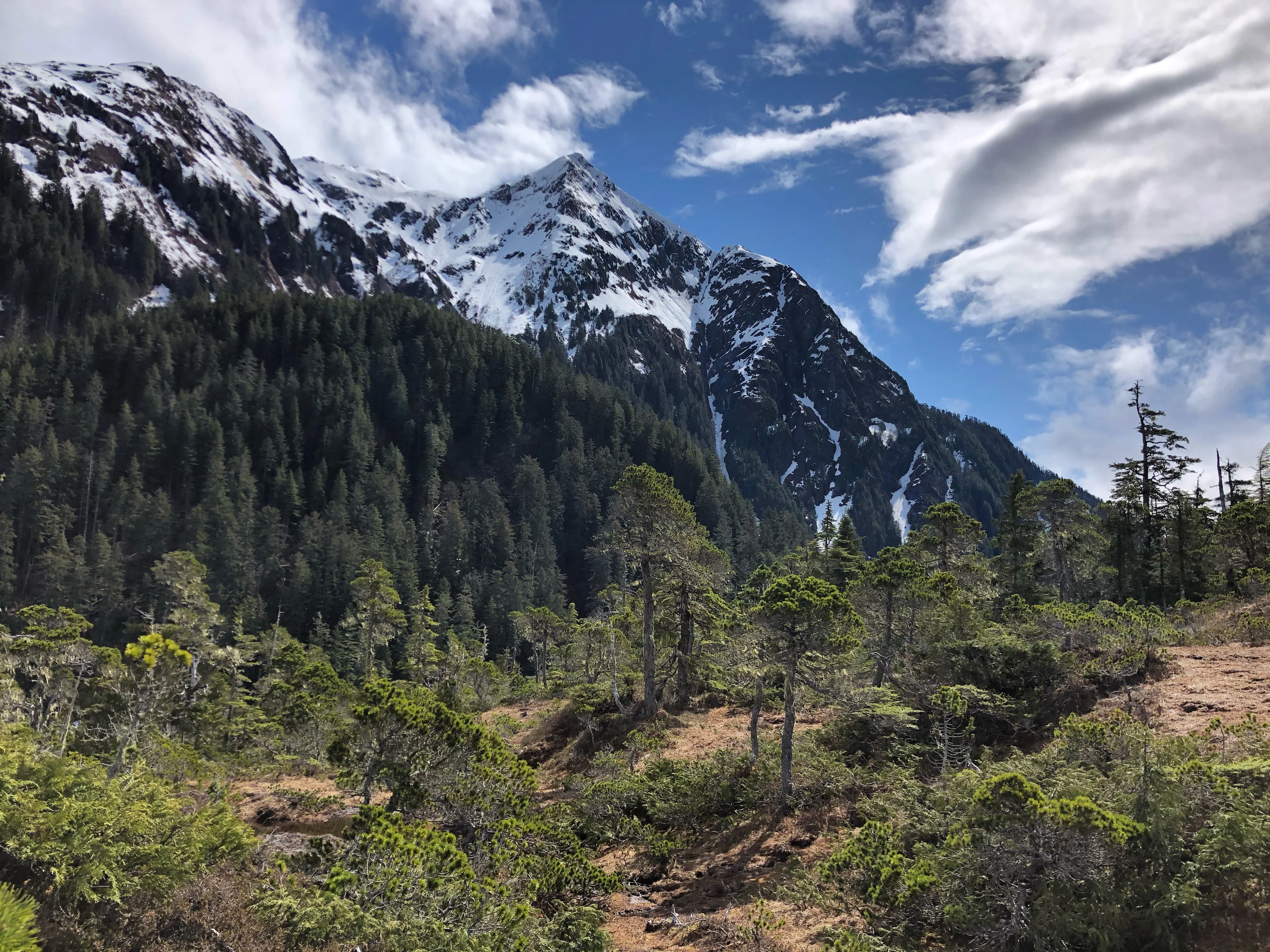
Misty Fjords is part of the Tongass National Forest. It is a pristine wilderness of evergreens, waterfalls, and snow-capped peaks, and it is rich in wildlife. Scan for mountain goats, bears, and moose as you explore. The waters are home to Pacific salmon, otters, sea lions, harbor seals, orcas, and Dall’s porpoises. Skywards, you might spot herons and bald eagles.
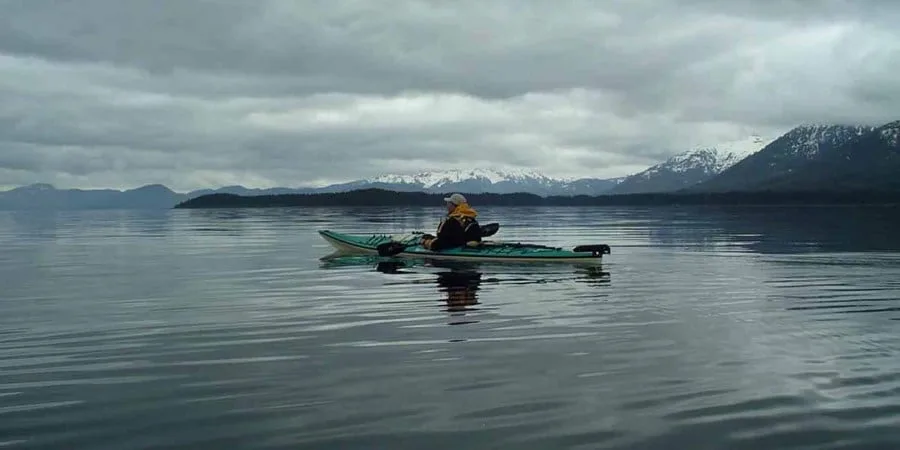
Weather permitting, join the Expedition Team to tour Misty Fjords in our small boats (RIBs) or kayaks.
Wrangell
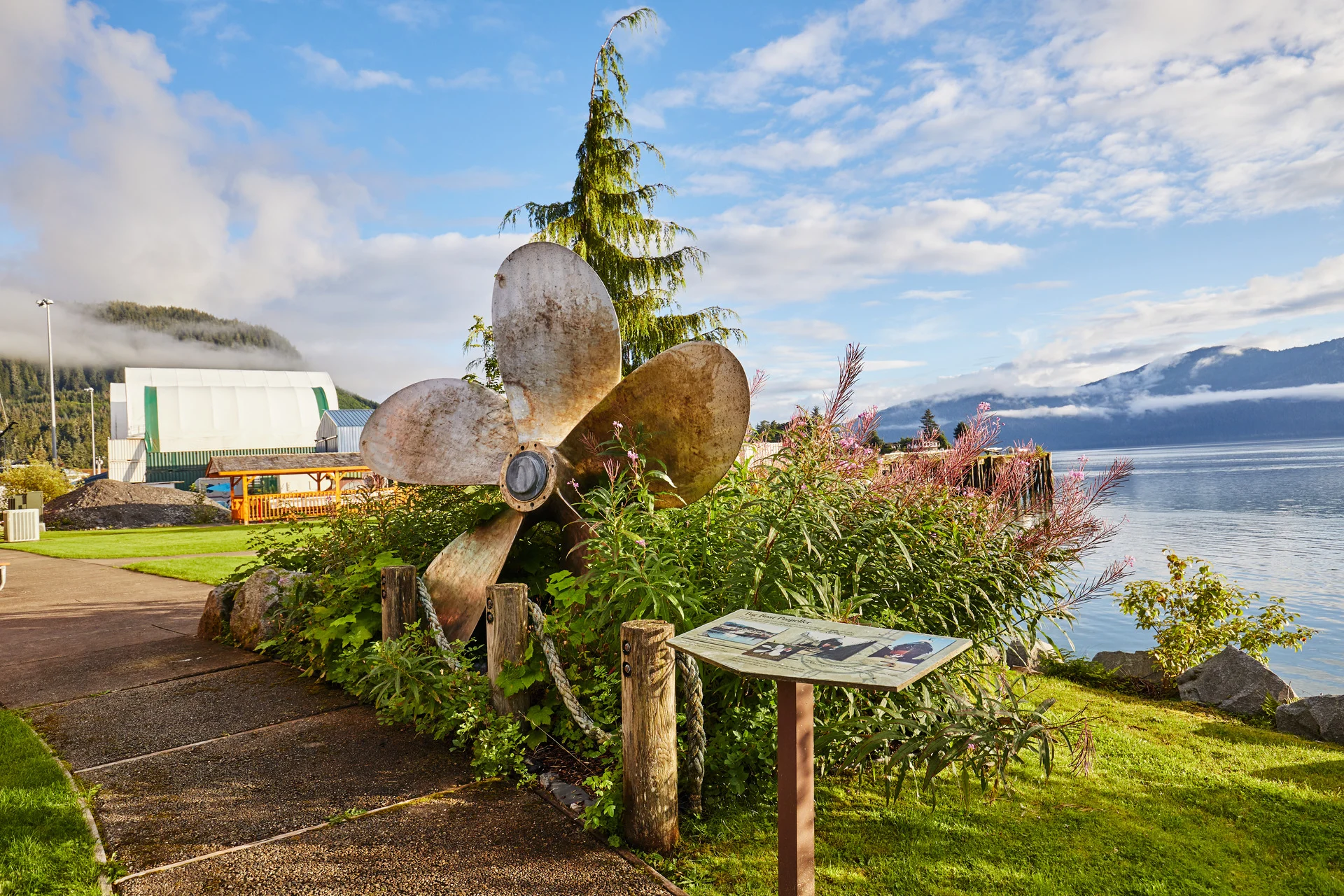
Visit the local museum to learn more about Wrangell’s fascinating past. Now part of the United States, it has been governed by Britain, Russia, and the Tlingit people in the past. Cross to Shakes Island, where the Chief Shakes Tribal House and totem poles tell the story of the Indigenous Tlingit people.
Hikers will enjoy the nature trails, surrounded by alluring scenery at the mouth of Stikine River and from the foot of Mount Dewey to the edge of the rain forest. Only a mile outside of Wrangell, you can see ancient rock carvings at the incredible Petroglyph Beach.
Sitka
Surrounded by Tongass National Forest, Sitka is only accessible by sea or air. You’ll see stunning views of the Sisters Mountains and Mount Edgecumbe volcano from the deck.
Discover Sitka’s fascinating history with our Expedition Team. Inhabited by the Tlingit people for 10,000 years, it was occupied by Russia until 1804 before being sold to the US after the Crimean War. Today, you can see a blend of all three cultures. Visit the Russian Orthodox cathedral and the Russian Bishop’s House. Admire ornate Haida and Tlingit totem poles at Sitka National Historical Park, or enjoy a walking trail through the forest to the ocean.
Icy Bay
Three glaciers – Guyot, Yahtse, and Tyndall – regularly calve into Icy Bay. If conditions allow, we explore it in our small boats (RIBs) or by kayak, immersing you in the area’s remarkable beauty.
The Gulf of Alaska
Wildlife abounds in the Gulf of Alaska, offering unrivaled photography opportunities. In these waters, you can often see humpback whales, orcas, Steller sea lions, sea otters, and harbor seals lounging on floating chunks of ice.
Enjoy the views from the deck or from the Explorer Lounge & Bar. See if you can spot all three species of North Pacific albatross. The Laysan and black-footed albatross are often sighted, but the short-tailed albatross is harder to spot.
Kodiak
Kodiak Island got its nickname, the ‘Emerald Isle’, due to its spruce forests and grasslands. Discover the island’s rich Indigenous heritage at the Alutiiq Museum, or visit the 1808 Kodiak History Museum, housed in the oldest-standing building in the state. You can also visit Fort Abercrombie State Historical Park, with its strategic World War II naval fort and bunkers from 1939.
The island’s most famous inhabitants are Kodiak brown bears. Around 3,500 of them live in the Kodiak National Wildlife Refuge, which covers two-thirds of the island.
Katmai National Park
Katmai National Park spans four million acres and features over a dozen active volcanoes. It is home to more than 2,000 protected brown bears – the largest concentration in the world. Accompanied by an experienced bear guard, we’ll safely scout for bears from the deck or from our small boats (RIBs). They might be foraging for berries, digging for clams, or catching fish in the stream.
Depending on conditions, we might visit Geographic Harbor, Kinak Bay, or Kukak Bay. Keep your eyes open for sea otters, seabirds, and humpback whales.
Chignik
Chignik is perched on the southern coast of the Unalaska Peninsula. It is one of Alaska’s most beautiful small settlements. Venture ashore to explore the village, where the local fishing community will gladly receive you. Spawning salmon fill Chignik’s rivers throughout the summer months, and you may see the leaping fish as they make their way upstream.
Keep your eyes on the skies, as Chignik’s sheltered conditions and plentiful fish support an abundant bald eagle population. Watch for bear tracks, as these animals can be frequently seen close to the settlement.
Unga
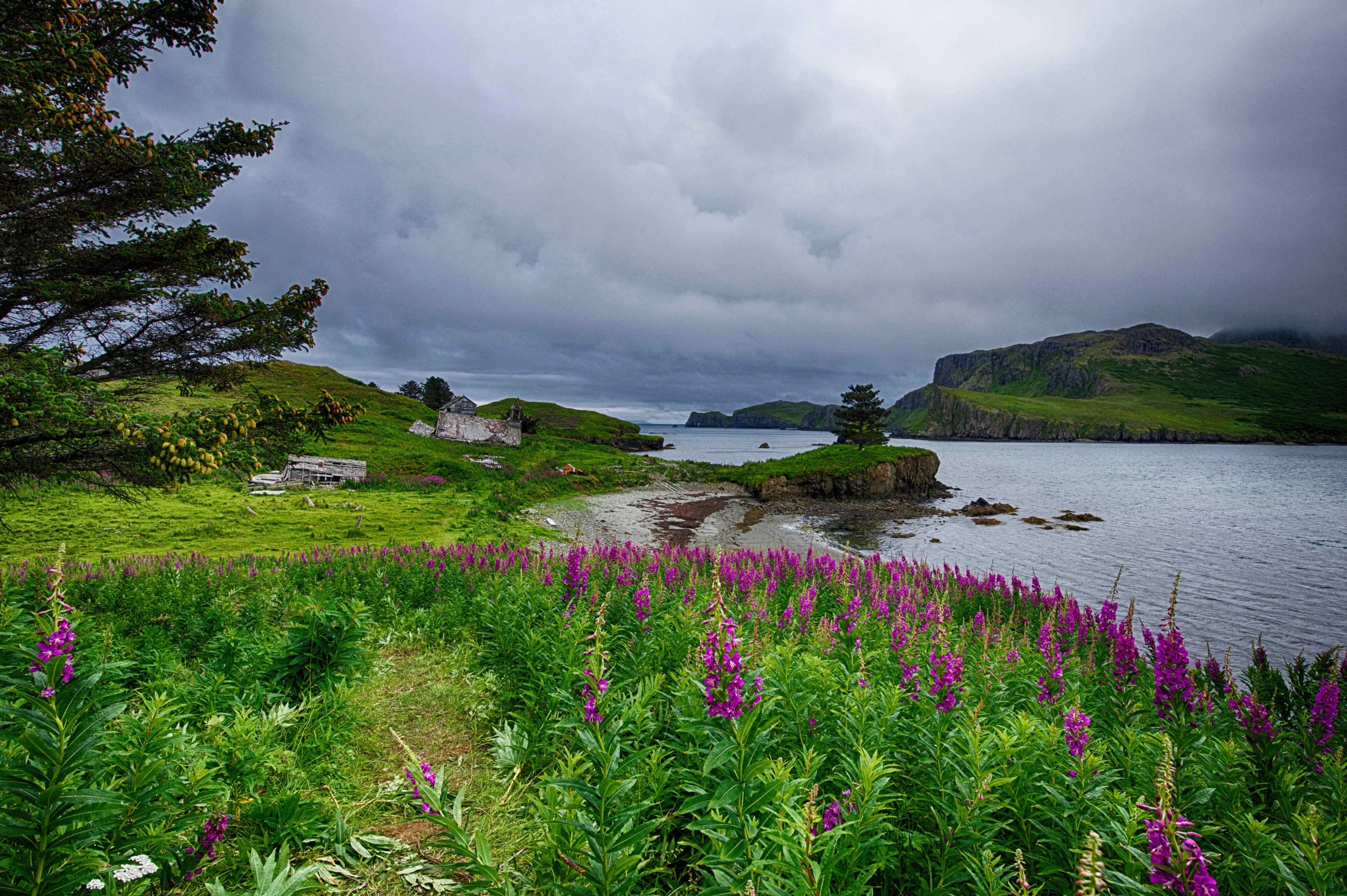
Unga Village is a wild and deserted settlement on the southern end of Unga Island. It was settled by Aleuts in 1833 but was abandoned in 1969, as subsistence fishing proved insufficient to support living here.
Today, a carpet of pink lousewort, fireweed, and other wildflowers surround the abandoned shacks as nature has gradually taken over. Experience the eerie beauty of this place during a nature landing with our small boats (RIBs).
Dutch Harbor
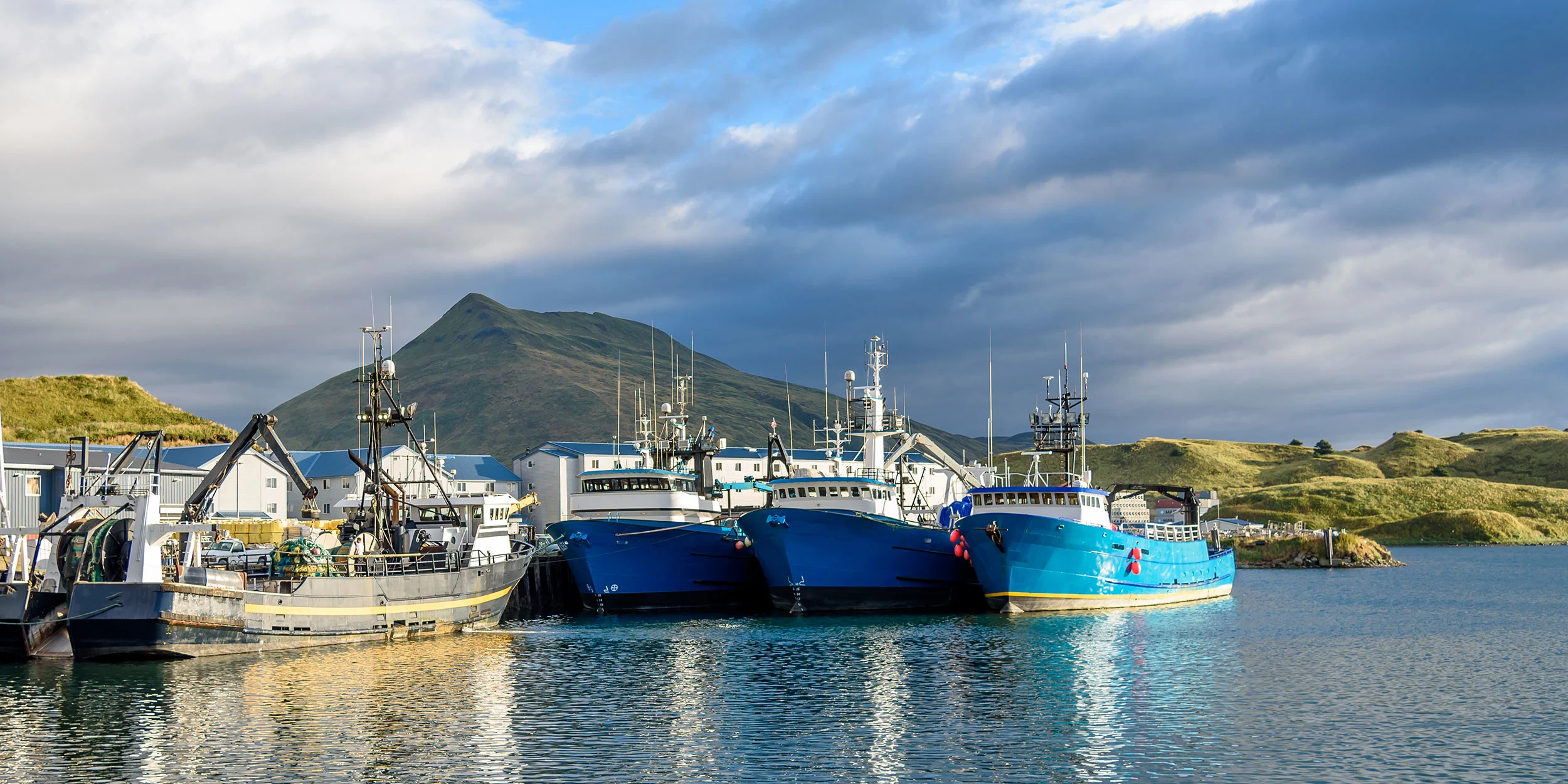
With a volcano as its backdrop, America’s largest fishing port – Dutch Harbor – is a fascinating place to visit. Learn about the local Indigenous Unungan people at the Museum of the Aleutians. Visit the Russian Orthodox Cathedral or tour the World War II museum commemorating the battle that took place here in 1942.
Scout for bald eagles and puffins in the skies. Foxes, lemmings, and wild horses thrive on land while whales, sea lions, and porpoises command the waters.
St. Paul
St. Paul is home to the largest Aleut community in the US, numbering around 400. You can visit the historical remains of barabaras here, traditional dwellings built half-underground to protect inhabitants against the sea winds.
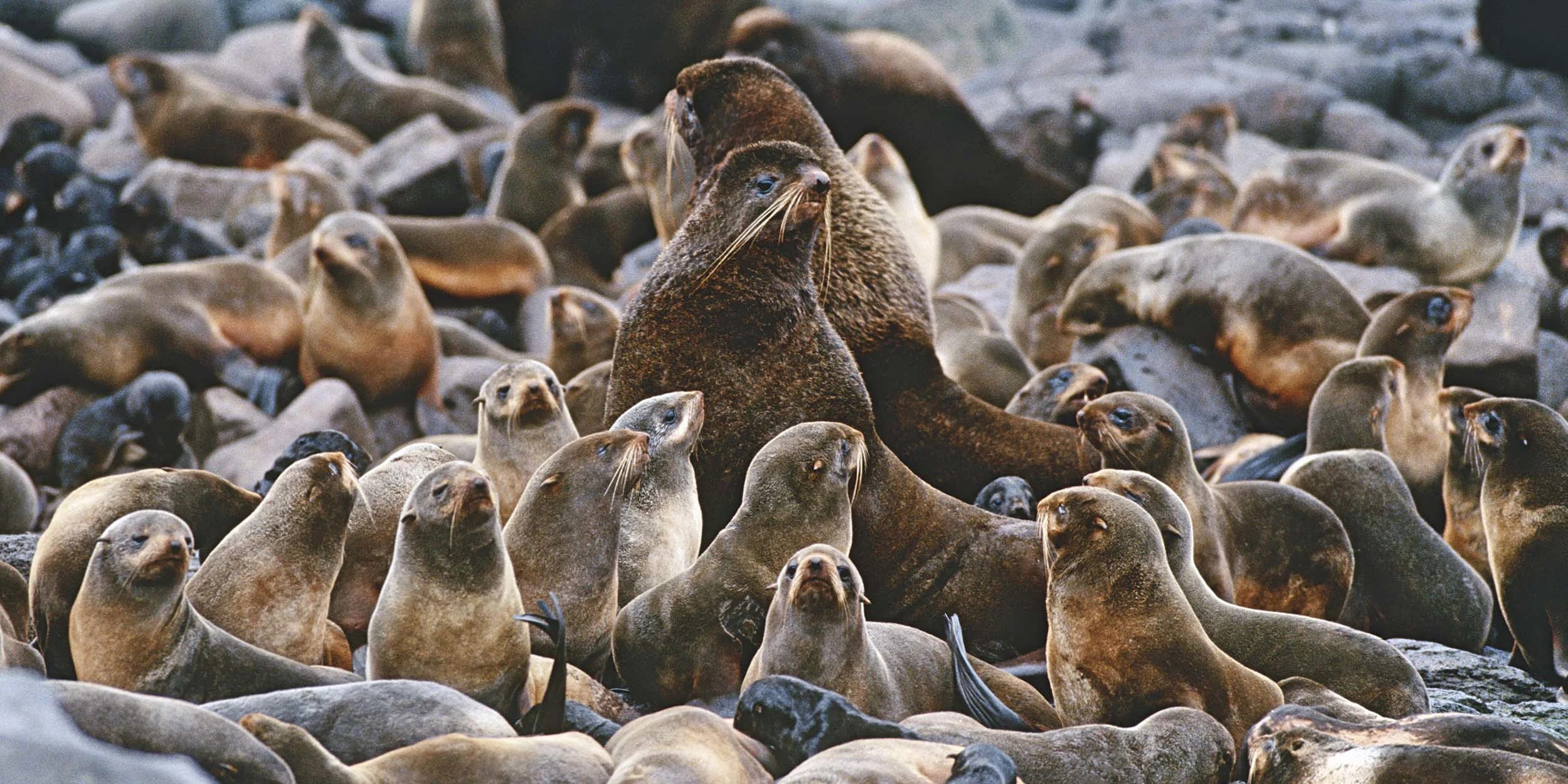
St. Paul is also designated an Important Bird Area, and around 300 species of migrating birds use it as a resting point. Scan for horned and tufted puffins, the Pribilof sandpiper, and the rare red-legged kittiwake. On shore, you may find northern fur seals waddling and playing. Half the world’s population of these charming animals lives on these islands.
St. Matthew
Part of the Alaska Maritime National Wildlife Refuge and 200 miles from the nearest village, St. Matthew Island is wild and remote. You’ll see traces of abandoned buildings between black-sand beaches and wildflower-dotted tundra.
Today, the only inhabitants are birds, including thousands of puffins, murres, and cormorants. On our nature landing, you could catch sight of the rare McKay’s bunting, which breeds almost exclusively here. Listen for the sound of the singing vole, named after its unusual warning cry.
Nome
Prospectors first came to Nome in 1898 and people still hunt for gold here today. You’ll see evidence of the Gold Rush era all around, including abandoned dredges, turn-of-the-century steam engines and old railroad tracks, lending the town a unique atmosphere. Nome was also the end point of three of Roald Amundsen’s great polar expeditions, including an attempt by air to reach the North Pole in 1926.

Science and wildlife watching at sea
As our Grand Expedition Cruise sails from the Pacific Ocean and heads east through the Bering Strait, Chukchi Sea, and Beaufort Sea, prepare for your adventures ahead with lectures from our Expedition Team on topics such as tectonic activity, glaciology, wildlife protection, and meeting local communities.
As we sail through the Bering Strait, look out for over 30 species of seabirds, including black-legged kittiwakes, auklets, and murrelets. We’ll cross the international date line and Chukchi Sea before reaching the Beaufort Sea and Point Barrow, the northernmost point of the United States. Keep an eye out for bowhead and gray whales here.

Cross a historical sea corridor in the Arctic
Like the pioneering explorers before you, we won’t have an exact itinerary as we attempt to sail our state-of-the-art, ice-class ship from the Pacific to the Atlantic via the Northwest Passage, the infamous sea route.
As we explore, we’ll land at sites linked to early exploration history, visit Inuit communities, and look out for Arctic wildlife such as polar bears, whales, narwhals, seals, and seabirds.
You’ll go cruising on small boats (RIBs) between ice floes and go ashore to experience the pristine wilderness first hand. Your Expedition Team will adapt activities to ice and weather conditions, giving you the best experience possible.
Here are some of the places we might be able to visit as we go through the Northwest Passage.
Smoking Hills
Smoking Hills is where lignite, eroded shale mixed with pyrite, spontaneously ignites when exposed to air, creating a photogenic phenomenon of smoke billowing from the cliffs.
Ulukhaktok
From here, we’ll sail through the Amundsen Gulf to Ulukhaktok, where you can pick up some prints, tapestries, and other crafts made by local artists.
Cambridge Bay
We’ll then continue into wildlife-rich Cambridge Bay, known for its large Inuit community, where you might catch sight of musk oxen and caribou.
Gjoa Haven
We’ll travel onwards to Gjoa Haven, where Roald Amundsen learned polar survival tips from the Netsilik Inuit people. If we are able to land here, we’ll take a walking tour to learn more.
Fort Ross
We’ll continue east to Fort Ross, a former Hudson’s Bay Trading post.
Beechey Island
We may stop at Beechey Island and pay our respects at the graves of three Franklin Expedition team members.
Devon Island
On Devon Island, the largest uninhabited island on Earth, we hope to visit Dundas Harbour and learn about its Thule heritage.
Pond Inlet
On the final stretch, we’ll try to reach Pond Inlet and the Inuit community of Mittimatalik on Baffin Island, rounding off an incredible 10 days of exhilarating exploration.

Discover dramatic landscapes and iconic wildlife
Leaving Canada behind, we’ll cross the Baffin Bay and the Davis Strait on our way to Greenland.
Join your Expedition Team for more insightful lectures on our historic route. Topics may include historic explorers and expeditions, Greenlandic culture, local wildlife, and geology. You can also pick up some photography tips on how to best capture the awe-inspiring scenery around you. Or take time to enjoy all the onboard facilities.
Weather and sea ice permitting, our time in Greenland will include the following destinations.
Ilulissat
Your Grand Expedition Cruise reaches Disko Bay, a haven for whales and seals. Ilulissat is nestled in the magnificent Ilulissat Icefjord, a UNESCO World Heritage Site. It is an ever-changing gallery of passing icebergs set against a backdrop of colorful houses. Marvel as icebergs float by in the deep blue waters, taking on different hues of white, gray, and blue.
Sisimiut
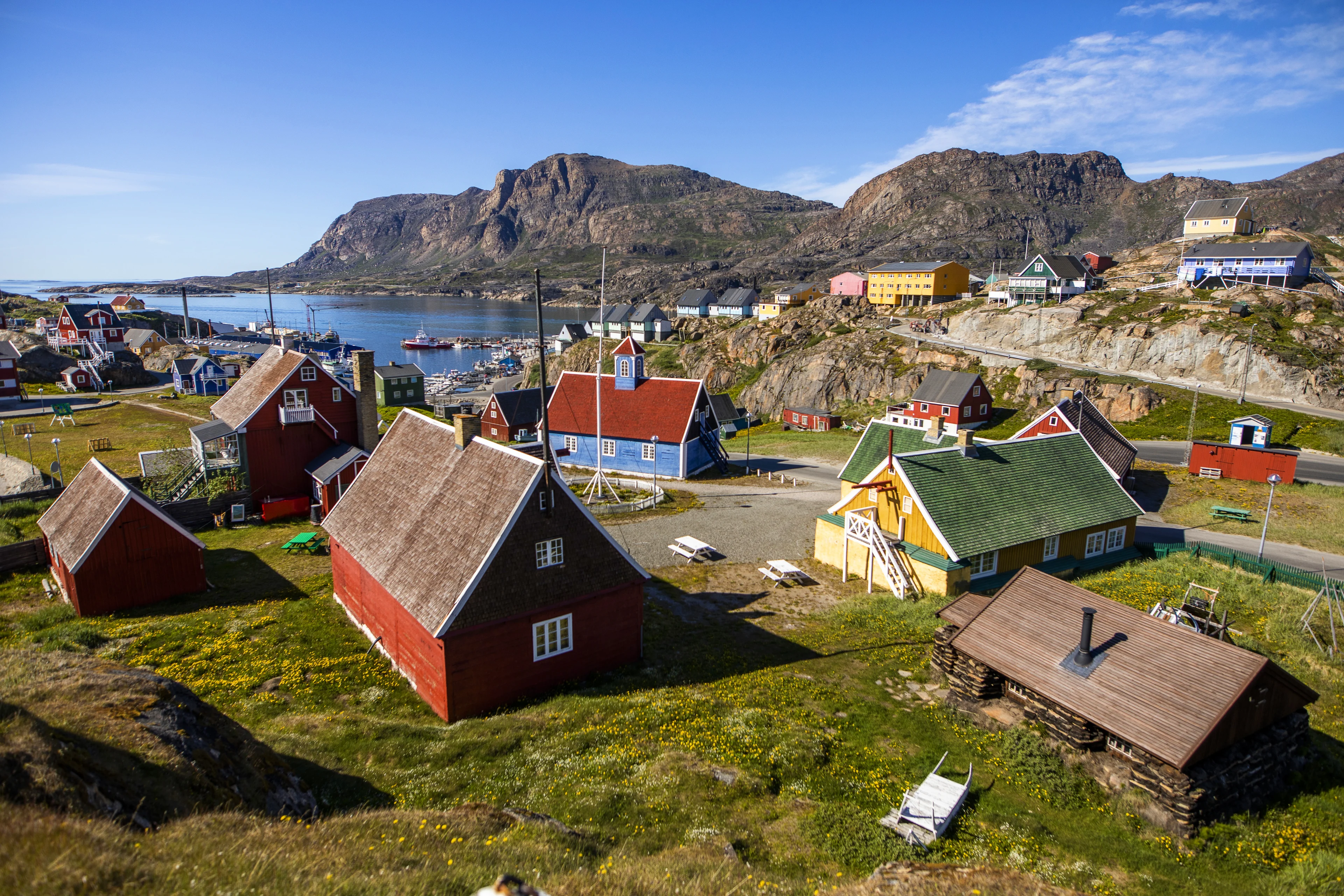
Sisimiut is Greenland’s second-largest city, with a spectacular location just 25 miles north of the Arctic Circle. The history of this area spans more than 4,500 years, and old traditions are alive and well. Learn more about the ancient Saqqaq artifacts in the local museum, pick up a souvenir made of qiviut – the inner wool of musk oxen – or stretch your legs on a hike.
Labrador Sea
Leaving Greenland behind, your Grand Expedition Cruise continues to Canada across the Labrador Sea. We’ll enter the Davis Strait, known for its abundance of seals, whales, and cod.
The Expedition Team will continue their onboard lectures on topics such as the wildlife of Northern Labrador, Inuit culture, and the history of Arctic exploration. Consider joining one of our Citizen Science projects by helping to photograph and track whales or by observing clouds to help scientists study our climate.
Red Bay
As we approach Red Bay, look out for humpback or minke whales – the very creatures that drew whalers to this harbor in the 17th century. The waters around Red Bay hide a number of wrecked galleons and chalupas, or small whaling boats, making it one of the world’s most important underwater archeological sites.
Visit the local museum to see a 26-foot chalupa and look for whale bones in the protected Red Bay National Historic Site. Try searching for pirate Captain Kidd’s buried treasure around Tracey Hill. You may not find gold doubloons, but you will be rewarded with a fantastic view.
Corner Brook
Following in Captain James Cook’s footsteps, we sail into the Bay of Islands toward the traditional city of Corner Brook. Discover the area’s fascinating history and collection of artifacts at the Corner Brook Museum, take in great views from Crow Hill, or go on a guided hike along the Corner Brook Stream trail. You can also opt for a visit to Gros Morne National Park and the picturesque Lobster Cove Head lighthouse, which also features a scenic drive.
Before we depart, we’ll enjoy a performance by local folk music performers and storytellers.

The cosmopolitan capital of Nova Scotia and the best of New England
The next stage of your journey begins in Halifax, a historic port city and the cosmopolitan capital of the Canadian province of Nova Scotia. This well-situated seaport looks out over one of the world’s largest natural harbors.
As you find your land legs, discover its red-brick heritage buildings, landmark Citadel Hill National Historic Site, and epic 2.5-mile seafront boardwalk. Take a leisurely stroll on Halifax Common – Canada’s oldest park, dating back to 1763 – and visit one of the city’s many art galleries or museums. Don’t miss the Titanic exhibit at the Maritime Museum of the Atlantic.
We’ll continue heading south to experience the following highlights of New England:
Eastern Scotian Shelf
If conditions allow, we’ll explore the Eastern Scotian Shelf, scouting for whales and conducting seabird surveys in this ecologically important area.
We may also attempt to circumnavigate or even land at Sable Island National Park Reserve. The island is home to magnificent wild horses and one of the world’s largest breeding colonies of gray seals. Just east of Sable Island is a great underwater canyon called the Gully. This 888-square-mile Marine Protected Area is home to 16 species of whales and dolphins, as well as cold-water coral that is up to 1,000 years old.
Lunenburg, Nova Scotia
The first thing you’ll spot as you sail into Lunenburg will be the colorful buildings along the waterfront. This UNESCO World Heritage Site has barely changed since the 1700s, when it was a British colonial settlement.
Take a walk around the Old Town and soak up the maritime atmosphere. If you prefer exploring on two wheels, rent a bike and enjoy the town’s scenic bike trails.
Eastport, Maine
Crossing into the United States, you’ll visit Eastport on Moose Island. This is the deepest natural harbor on the eastern seaboard. Archeologists believe that the Indigenous Passamaquoddy people lived here for at least 10,000 years before the first Europeans appeared in 1604.
As you explore the shops, restaurants, and cafés in the downtown district, you’ll feel the echoes of history all around. If the weather cooperates, local lobster fishermen may offer trips to see ‘Old Sow’, a whirlpool believed to be the biggest in the western hemisphere, named after the ‘squealing’ noise it is said to make as it spins.
Boothbay
Known as the “Boating Capital of New England,” Boothbay Harbor overflows with fishing vessels and pleasure crafts in equal numbers. Walk along Boothbay Harbor’s flower-lined streets, dotted with art galleries, antique stores, and specialty shops. A visit to the famous Coastal Maine Botanical Gardens is highly recommended
Martha's Vineyard
By Visiting Martha’s Vineyard is the perfect way to see the magnificent Massachusetts port town and one of the most historic ports in New England The long, sweeping sandy beaches in Martha’s Vineyard are straight out of an oil painting, with picturesque lighthouses dotted along the shores and grand mansions adorning the nearby streets. Take a trip around the island to see wildlife reserves, lush farmland, historic monuments and fishing villages backed by rolling sand dunes. You’re never far from the sea here, with fishing boats, swish marinas and enticing seafood restaurants at every turn.
Cape Cod
Follow in the footsteps of Jackson Pollock as we reach Provincetown, Massachusetts. The light and progressive atmosphere of this seaside town has been attracting artists since the 1940s.
Enjoy a unique perspective of ‘P-town’ on a trolley tour and take time to enjoy its many galleries and restaurants. Take a short walk to Cape Cod National Seashore to explore the protected dunes. Here, you have the chance to ride a dune buggy. Avid whale watchers should head to the offshore Stellwagen Bank National Marine Sanctuary, known to attract 17 species of cetacean.
In historic Boston, you can visit the site of the famous Tea Party and walk the Freedom Trail to discover the city’s revolutionary role in shaping the modern-day United States of America.
Don’t miss out on the city’s culinary classics, including steaming bowls of seafood chowder and fried clams. And if you’re looking for a friendly bar, then you’ll want to head to Cheers, the bar that inspired the legendary TV show.


East coast sights en route to Miami
With several days at sea, enjoy the onboard facilities such as the infinity pool, hot tubs, sauna, indoor gym, outdoor running track, and spa.
Indulge yourself with a treatment in our wellness area or participate in an art workshop. Eat in style in one of our three restaurants, and spend time on deck looking for seabirds and other marine wildlife.
The Expedition Team will continue to deliver in-depth lectures on a wide range of subjects related to our upcoming destinations.
If you haven’t done so already, consider participating in one of our Citizen Science projects. You’ll gather real data to help scientists better understand the environment. This information might even help combat some of the problems that threaten our planet.

Caribbean vibes and ocean exploration
Miami is a thriving metropolis with vibrant doses of Latin American, Caribbean, Asian and European influence. This ‘City of Neon’ is one of the world's most popular holiday destinations.
Aside from white sandy beaches and clear teal waters, you can enjoy the Latin beats of glamorous South Beach, explore colourful Miami Beach or discover Cuban culture in Little Havana.
Look forward to the following highlights in Miami, the Caribbean and Central America.
Belize City
Belize City is a lively hub of shopping areas and seaside parks surrounded by colourful colonial architecture. For the perfect introduction to the city, the Old Belize train ride will take you through five exhibitions showcasing Belizean history and natural beauty.
We’ll visit the well-preserved Altun Ha ruins, a wealthy trading town dating back 2,000 years. It has two main plazas and 13 structures, including ancient temples. Altun Ha is also rich in wildlife. Over 200 species of birds have been spotted here as well as tapir, armadillos and the white-tailed deer.
Belize Barrier Reef
A thrilling variety of sea life, lush cays and opportunities to participate in water activities await you in Belize’s famed barrier reef. Wildlife thrives above and beneath the surface in this unique environment. The barrier is home to hundreds of fish species, exotic birds and endangered animals including American crocodiles, West Indian manatees and sea turtles.
We’ll stay on the barrier for the day, allowing you to absorb the incredible biodiversity of coral ecosystems. Belizeans consider their reef to be their most important natural asset; you’ll discover why.
Útila, Honduras
Útila is considered one of the best places to dive in the world. But you don’t need to go below the water to appreciate the unique beauty of this stunning island. Útila is an oasis of tranquillity hidden in the Caribbean Sea, as beautiful on the surface as it is underwater.
Most of Útila’s inhabitants dwell around the island’s only town. Located on the southeastern shore, it’s surrounded by swamps and wetlands that are home to many species of birds.
Guanja, Honduras
Guanaja is one of the Bay Islands of Honduras and is in the Caribbean. It is about 70 kilometres (43 miles) off the north coast of Honduras.
Bobel Cay, Honduras
If you’re dreaming of a place off the beaten track, today is a day of exploration around the small island of Bobel Cay, located off the coast of Honduras. The island used to be a resting place for lobster fishermen.
If possible, we will anchor off the shallows and use our small expedition boats to explore the island, spot marine life, and enjoy the beautiful warm tropical waters.
Isla de Providencia, Colombia
Once a base for pirates, the real treasures of this remote Colombian island are its idyllic beaches, pristine waters and tropical wildlife. Hit by Hurricane Iona in 2020, the island is currently undergoing rebuilding works. Our visits are important in supporting local businesses and helping the community recover.
Hike to the island's highest point for some incredible views. You may even encounter iguanas and electric blue lizards. Discover the beautiful coral reefs of UNESCO’s Seaflower Biosphere Reserve, dubbed the 'Sea of Seven Colours', and have the chance to snorkel among clownfish, turtles and manta rays.
Bocas del Toro, Panama
Our cruise continues to the clear blue waters and forested isles of Bocas del Toro. Here, we'll explore a stunning archipelago made up of nine main islands and hundreds of smaller ones.
Now a UNESCO World Heritage Site, this National Marine Park is one of the world’s most biologically diverse places on Earth. Possible destinations may include a beach or nearby tropical rainforest.
Escude De Veraguas, Panama
Escudo de Veraguas is traditionally considered the birthplace of the Indigenous Ngöbe–Buglé people.
Escudo de Veraguas, an island renowned for its abundant forests and clear waters. This island is the exclusive destination where tourists have the opportunity to encounter the elusive three-toed pygmy sloth.
Today, we will navigate the amazing channel system of the island and meeting the Ngäbe-Bugle community.
Colón, Panama
Colón stands at the entrance to the Panama Canal on the Atlantic coast. Enjoy wandering its bustling cosmopolitan centre with hot springs, admire a thriving handicraft scene and find a wonderful local restaurant to feast on local specialities.

Navigate the Panama Canal and explore the Pacific coast
Stretching 50 miles through natural and artificial waterways, the Panama Canal is a complex network of ingenious locks. We’ll transit the full length of the canal from one great ocean to another. Weather permitting, our Expedition Team will invite you on deck and tell the story of this ambitious project.
Halfway through, we’ll enter the Gatun Lake section, which is one of the world’s largest artificial lakes, surrounded by verdant rain forest. Keep an eye out for crocodiles, alligators, monkeys, and even sloths.
Then we’ll sail toward Ecuador and take in the following highlights:
Manta, Ecuador
After seeking Neptune’s blessing in a traditional – and somewhat entertaining – ceremony as we cross the Equator, we’ll dock at the port of Manta and visit the town of Montecristi. You can buy a genuine Panama hat here, expertly handwoven from the leaves of the jipijapa plant.
Wander around this interesting town and take a look at the imposing white church, or take in the colorful street art and murals. Returning to Manta, we’ll stop at the archeological museum.
Puerto Bolívar, Ecuador
We have a fruitful day ahead exploring Puerto Bolívar, a port in the city of Machala that exports coffee, cocoa, shrimp, and masses of bananas. Machala itself has all the charm you’d expect from a small coastal city, including friendly locals, quaint plazas, and striking monuments. You can try delicious fresh seafood at the harbor restaurants, taking in views of the mangrove swamps of Isla Jambeli. Then, explore the local markets, plazas, and the Casa de la Cultura museum.
Salaverry, Peru
Salaverry is the gateway port to Peru’s third-largest city, Trujillo. Colorful Trujillo boasts a Baroque cathedral, colonial churches, and Neoclassical mansions, as well as one of the longest mosaic murals in the world. Nearby, the ancient ruins of the Chimú city of Chan Chan date back to at least 900 CE. On the other side of Trujillo, the mysterious Moche pyramids of the Sun and the Moon are from even further back in history. Back on the ship, there will be a traditional Peruvian dance performance.
Lima, Peru
Lima’s historical center is designated as a UNESCO World Heritage Site. It’s a jewel of Spanish-era architecture, featuring colonial churches, monasteries, and elegant mansions. Go further back in time and learn about the city’s pre-Hispanic heritage at the ruins of the Huaca Pucllana pyramid.
Lima is also known as the food capital of South America. We recommend trying ceviche, Peru’s national dish. It is fresh fish marinated in lime juice, onion, and chili.
Paracas, Peru
Just offshore of Paracas are the wildlife-rich Ballestas Islands. On a boat tour, look for Humboldt penguins, turtles, pelicans, sea lions, Inca terns, and humpback whales. Alternatively, you can also explore the Paracas National Reserve, with its otherworldly yellow-sand dunes and red beaches. Another option is to fly over the mysterious Nazca Lines, etched in the Peruvian coastal desert – an experience on many people’s bucket lists.
Arica, Chile
Arica experiences a year-round desert climate and is classed as one of the driest cities in the world. On the lively streets of Calle 21 de Mayo and Bolognesi, try local treats and visit the El Agro market. Take a short hike up El Morro cliff for glorious views, or visit San Marcos Cathedral, designed by Gustave Eiffel. You can also see mummies and learn about Chinchorro culture at the archeological museum, trek along Playa Corazones, or explore the Caves of Anzota.
Iquique, Chile
Iquique is an ocean-side city with palm tree-lined promenades. From here, we’ll visit the abandoned saltpeter mining towns of Santa Laura and UNESCO-listed Humberstone in the Atacama Desert.
Back in Iquique, you can explore or simply relax in a café with a traditional mango sour and chumbeque, a beloved regional sweet. You can also pay a visit to La Esmeralda, a four-masted corvette from the 19th century that has historical significance.
La Serena, Chile
Chile’s second-oldest city, La Serena, is blessed with beautiful, sandy beaches and neocolonial architecture. There are around 30 carefully restored stone churches to discover, and you can visit the Archeological Museum to marvel at precolonial artifacts.
Take a stroll through the city’s manicured public gardens, like the Japanese-inspired Jardín del Corazón. You can also shop for handicrafts at La Recova market. Down the picturesque lane of Patio Colonial, near Balmaceda, you’ll find relaxed cafés and eateries. Before boarding the ship, leave some time to explore the port of Coquimbo.
Valparaíso, Chile
Colorful Valparaíso is a UNESCO-listed city, known as the ‘Jewel of the Pacific’. It’s an exhilarating maze of alleyways, colorful houses, and mercados packed with local produce. The enticing scents and sounds are sure to leave an impression. Take it all in on a cable car ride up to Cerro Alegre and Concepción.

Discover the wonders and beauty of Patagonia
Starting with one day at sea, you will learn about the wonders we’ll encounter while sailing through the Patagonia region of Chile.
Members of the Expedition Team will continue their lecture series on topics like oceanography, geology, ornithology, and history. Pop into the Science Center for hands-on presentations as well.
Grab a pair of binoculars and look for rare wandering albatrosses and petrels. Make the most of the onboard facilities and spoil yourself with a spa treatment in the wellness area. You can also enjoy the infinity pool, hot tubs, running track, sauna, and gym.
As we make our way along the Chilean fjords and channels, you’ll experience the following highlights:
Niebla
We go ashore at the pretty seaside town of Niebla, set on a picturesque peninsula with views of Corral Bay on one side and the Valdivia River on the other. Take a stroll on the wide sandy beach and, if the Feria Costumbrista market is open, sample traditional empanadas, anticuchos and churros.
Aside from the town itself, the ruins of the old Spanish fort and its associated museum are well worth a visit. Learn more about the region's history at the museum, then wander around the lighthouse. You'll enjoy beautiful views across the river and bay.
Puerto Natales
Puerto Natales is the gateway to the Torres del Paine National Park. You can choose to see this beautiful national park on a bus or hiking tour. The rugged landscape features steppe, forest, and desert, punctuated by glaciers and lakes. Guanacos and rheas roam freely. Look out for Chilean flamingos. You may even spot the mighty Andean condor.
Back in Puerto Natales, you can visit the artisan village of Etherh Aike, enjoy a gin tour at the Last Hope Distillery, or stroll along the picturesque waterfront.
Chilean fjords
Your journey south takes you through the ruggedly beautiful island chains that make up the fjords of Magallanes Province. Isolated islands and hidden bays create a rich haven for wildlife.
Whether cruising aboard our small boats (RIBs) or on deck, look out for colonies of Magellanic penguins, elephant seals, and various whale species. You may also see majestic waterfalls along this dramatic and beautiful section of coastline.
Cape Horn and the Drake Passage
After sailing through the Beagle Channel, we’ll pass the southernmost tip of South America, Cape Horn. This formidable icon often presents challenging conditions, but weather permitting, we’ll attempt to land there.
As we navigate the legendary Drake Passage toward Antarctica, the Expedition Team will give lectures about the frozen continent’s fauna, history, and geology, as well as the impact of climate change and plastic pollution.

Experience Antarctica in all its natural majesty
Nothing prepares you for your first sight of Antarctica’s immense, frozen beauty. Icebergs, sculpted by nature, float in the straits. Gentoo and chinstrap penguins court while Adélie penguins nest. Countless seabirds wheel overhead. Nature is in charge.
During the next four days, you’ll be busy exploring several possible landing sites on and around the Antarctic Peninsula and South Shetland Islands. It doesn’t matter where we go or what we do, every day will be thrilling and unlike anything you’ve experienced before.
We might sail into a flooded volcanic caldera or land in icy bays where remnants of whaling paraphernalia lie abandoned. You may also have the chance to kayak among icebergs and seals or snowshoe to a thrilling viewpoint.
Bird enthusiasts should look skyward for Antarctic seabirds such as skuas, petrels, and terns. Through onboard lectures and onshore talks, you’ll learn more about this precious habitat and how we can all protect it for the future.

Final days at sea
After four incredible days in Antarctica, we sail back across the Drake Passage toward warmer weather in Argentina, giving you two final days to enjoy life on board. There are plenty of things to do.
During your last few days at sea, you can take part in art workshops or enjoy a treatment in the spa. Get moving at the gym or admire views from the panoramic sauna. Relax in the outdoor pool or soak in the on-deck hot tubs.
Visit the Science Center and find out more about the things you’ve seen, or use the time to sort through your photos and get editing tips from our onboard photographer.

The end of your incredible pole-to-pole journey
Your Grand Expedition Cruise from pole-to-pole ends in Ushuaia, the main city in Tierra del Fuego, Argentina’s southernmost province. From here, you’ll take a flight to Buenos Aires.
This doesn’t have to be the end of your adventure! We recommend signing up for one of our optional Post-Programs before heading home.

Included activities & excursions
These activities are included with your trip. Dates and times will be confirmed closer to departure, you’ll just need to reserve your spot after booking.








What else is included?
Optional extras
Enhance your journey with optional extras. Some activities are only bookable onboard and can’t be reserved online or by phone. Subject to availability.






Our Grand Expedition Cruises ship
Get a taste of what life is like on board the ships that sail on this itinerary