Les animaux des Galápagos : où observer les « Big 15 »
Partez à la découverte des « Big 15 », les animaux les plus emblématiques des Galápagos. Ce guide vous indique sur quelles îles observer les iguanes marins aux couleurs vives (souvent surnommés « iguanes de Noël ») ou encore la fameuse tortue géante.
Lecture de 1 min
Que contient cet article ?
Les animaux des îles Galápagos : la liste des « Big 15 »
Où observer la faune des Galápagos
Meilleure période pour observer les animaux des Galápagos
Conseils pour repérer la faune des Galápagos
Les animaux que vous pourrez rencontrer lors des croisières HX
Explorez la faune des Galápagos avec HX Expeditions
Les animaux des îles Galápagos : la liste des « Big 15 »
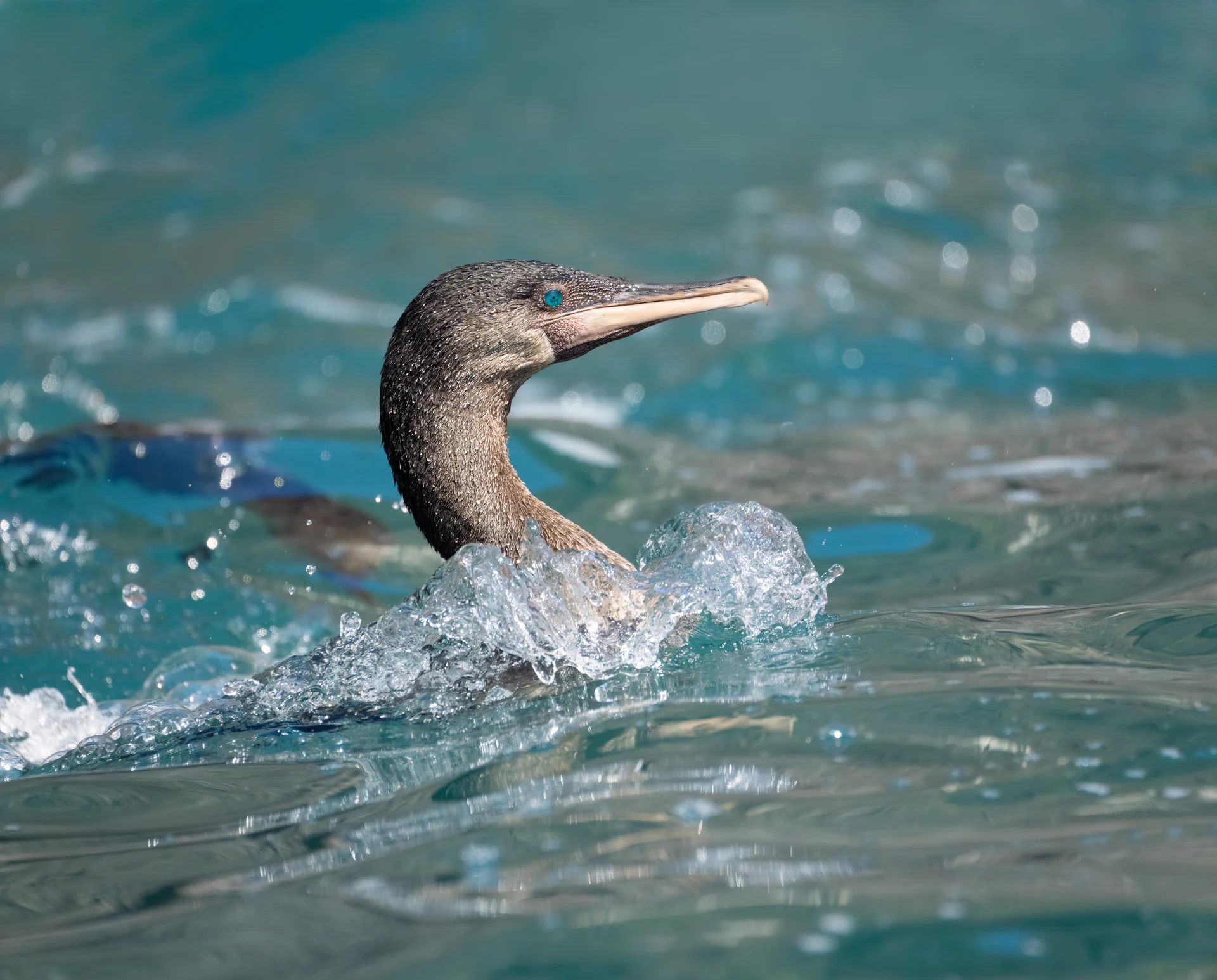
1. Le cormoran aptère
Le cormoran aptère ayant perdu sa capacité à voler, il est devenu un excellent nageur. Ses ailes réduites et ses pattes puissantes lui permettent de plonger pour chasser poissons, poulpes et murènes parmi les récifs volcaniques.
On observe principalement cet espèce sur l’île Fernandina et sur la côte ouest d’Isabela, en particulier le long des rivages rocheux d’origine volcanique. Elle est présente toute l’année, même si l’activité de reproduction est généralement plus importante pendant la saison fraîche (de mai à octobre). On reconnaît facilement ces oiseaux au plumage sombre et au long cou, souvent perchés près de l’eau avec les ailes déployées pour les faire sécher après une plongée.
À savoir :
le mâle et la femelle se relaient pour couver les œufs. Lorsque les jeunes deviennent suffisamment autonomes, la femelle peut chercher un nouveau partenaire tandis que le mâle poursuit seul l’élevage des oisillons.
2. Le fou à pieds rouges
Le fou à pieds rouges est moins répandu que le fou à pieds bleus et le fou de Grant. Il est capable de s’envoler jusqu’à 145 km pour rechercher de la nourriture, et il capture des poissons en plongeant rapidement à la surface de l’eau.
On l’observe surtout sur les îles Genovesa (île inhabitée surnommée « l’île aux oiseaux ») et San Cristóbal. Il niche dans les arbustes et les petits arbres, et on peut le voir toute l’année, sa reproduction étant davantage liée à la disponibilité de la nourriture qu’à une saison précise. On le reconnaît à ses pattes rouges et à son bec bleu pâle.
À savoir :
le fou à pieds rouges est la seule espèce de fou des Galápagos à construire son nid dans les arbres plutôt qu’au sol.

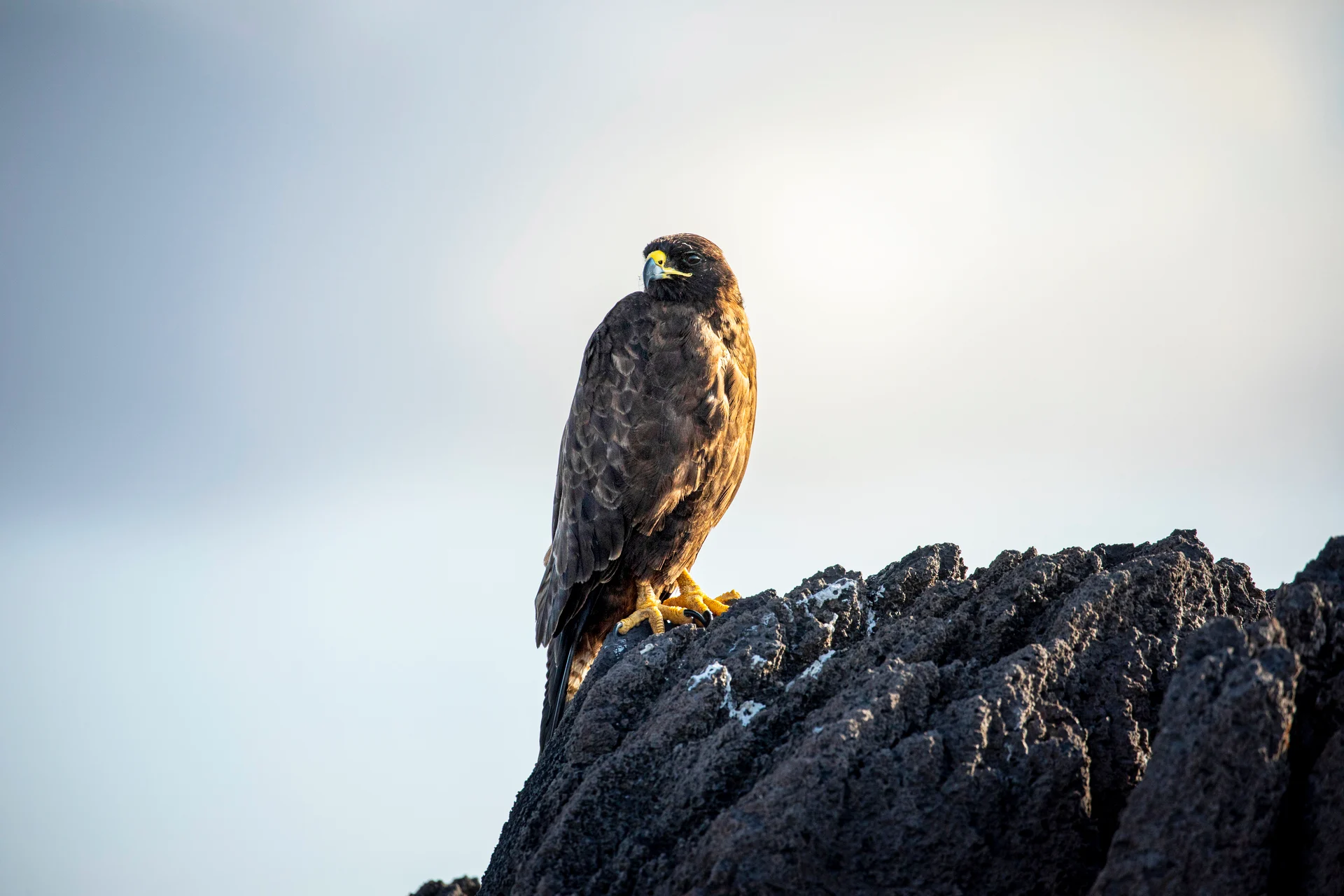
3. La buse des Galápagos
La buse des Galápagos est le principal rapace de l’archipel. Elle se nourrit notamment de petits oiseaux, de lézards et de jeunes tortues. On la remarque à son plumage sombre, ses larges ailes et sa silhouette massive. Endémique de l’archipel, sa population est limitée à quelques îles, ce qui rend son observation d’autant plus spéciale.
Elle est notamment présente sur les îles Isabela, Santiago et Española, le plus souvent dans des zones ouvertes et arides. Elle peut être aperçue toute l’année, perchée sur des formations rocheuses ou planant au-dessus des paysages volcaniques.
À savoir :
contrairement à la plupart des rapaces, la buse des Galápagos chasse parfois en groupe, ce qui lui permet de capturer des proies plus grandes ou plus agiles.
4. L’iguane marin des Galápagos
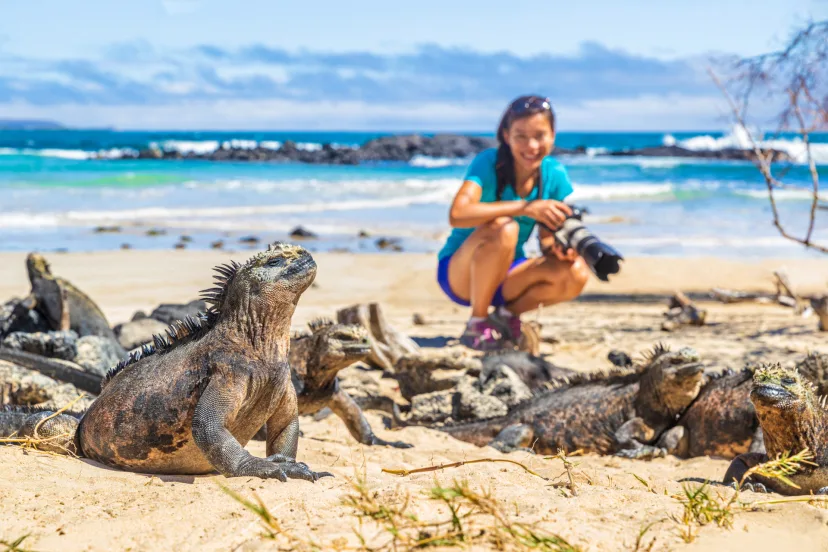
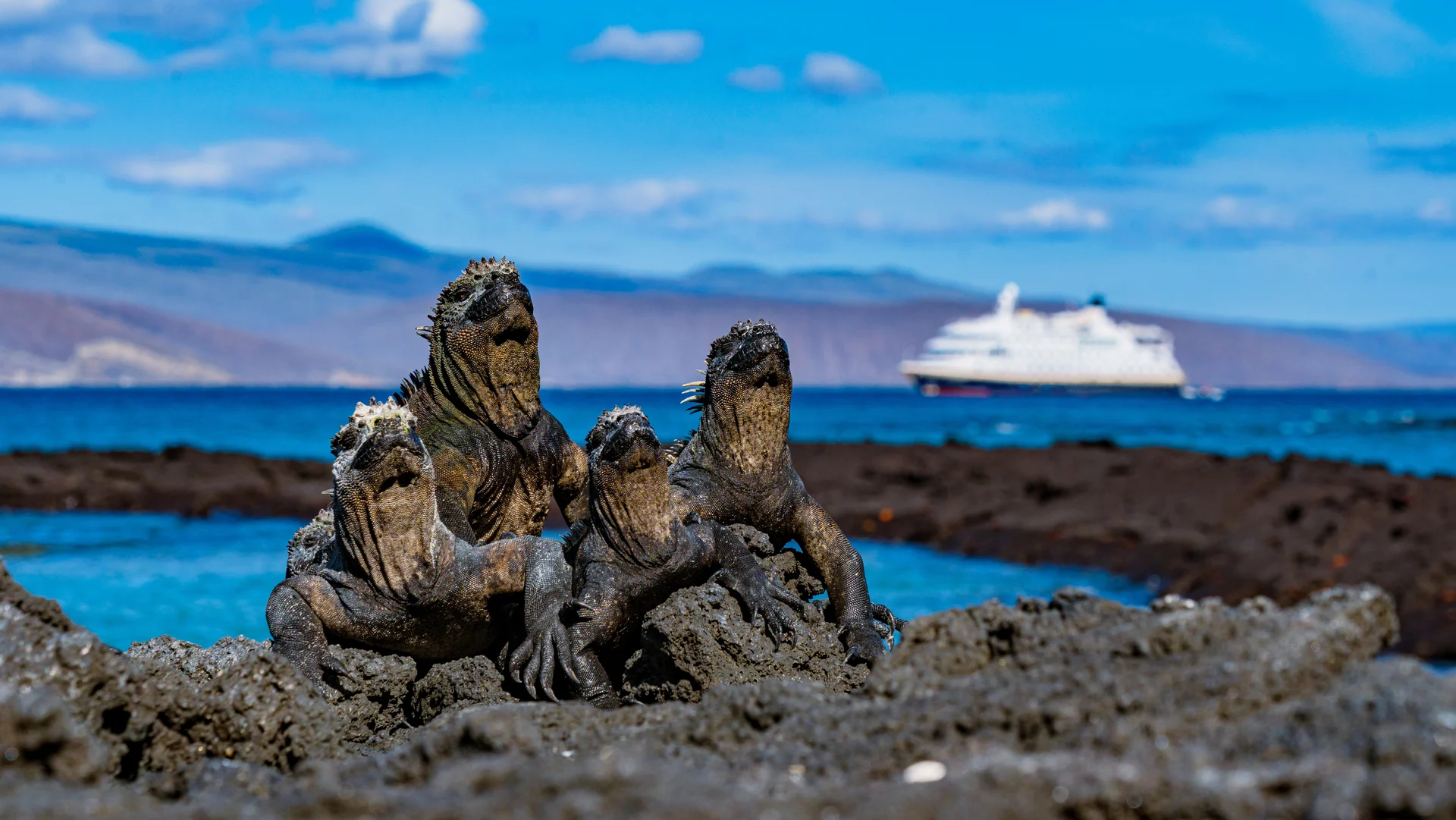
Les iguanes marins recherchent leur nourriture aussi bien à la surface que sous l’eau. Ils se nourrissent principalement d’algues, qu’ils broutent sur les rochers et les récifs côtiers.
Endémique des Galápagos, cette espèce est la seule d’iguane au monde à se nourrir dans l’océan. Elle plonge sous la surface pour atteindre les algues et s’accroche aux rochers immergés malgré les vagues.
Les iguanes marins sont présents toute l’année dans une grande partie de l’archipel, notamment sur les îles Fernandina et Española. Après leurs plongées dans l’eau froide, ils se rassemblent souvent en groupes sur les rochers pour se réchauffer au soleil.
À savoir :
des glandes spécialisées leur permettent d’éliminer l’excès de sel absorbé lors de leur alimentation en éternuant.

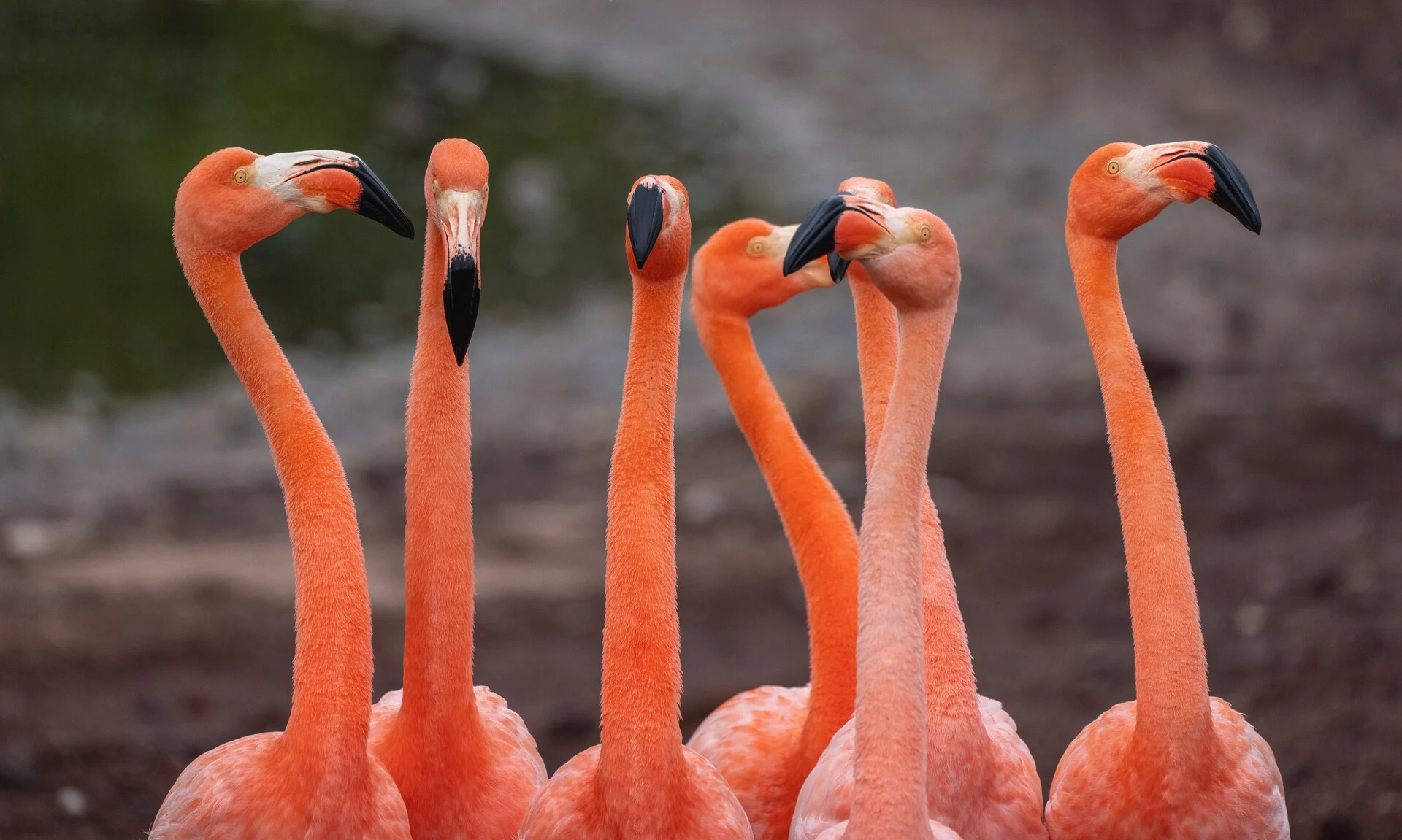
5. Le flamant des Caraïbes
Le flamant des Caraïbes, qui arbore l’un des plumages les plus éclatants de toutes les espèces locales, doit ses couleurs uniques aux crevettes dont il se nourrit. Même s’il peut mesurer jusqu’à 145 cm, cet oiseau est étonnamment léger, puisqu’il pèse de 2 à 4 kg. En général, il se tient en équilibre sur une patte pour conserver la chaleur du corps.
Les Galápagos accueillent une petite population de flamants des Caraïbes, surtout à Floreana, où les lagunes peu profondes leur offrent des conditions d’alimentation idéales. Tout au long de l’année, des groupes de flamants pataugent dans les eaux calmes et salées, balayant la surface de leur bec pour y filtrer leur nourriture.
À savoir :
leur couleur rose vient des pigments présents dans les algues et les crustacés qu’ils consomment. Sans cela, leurs plumes seraient beaucoup plus pâles.
6. Albatros des Galápagos
L’albatros des Galápagos est l’une des espèces les plus rares de l’archipel, qui niche exclusivement sur l’île Española. C’est le plus grand oiseau de la région, avec une envergure pouvant atteindre 2,4 mètres et un poids de près de 5 kilos.
Les adultes rejoignent Española pendant la saison de reproduction, généralement entre avril et décembre. Les couples s’y livrent à une parade nuptiale unique, composée de claquements de bec, de révérences et de mouvements synchronisés.
À savoir :
l’albatros des Galápagos passe l’essentiel de sa vie en mer et peut parcourir des milliers de kilomètres au-dessus de l’océan. Il retourne chaque année au même site de nidification et retrouve le même partenaire.

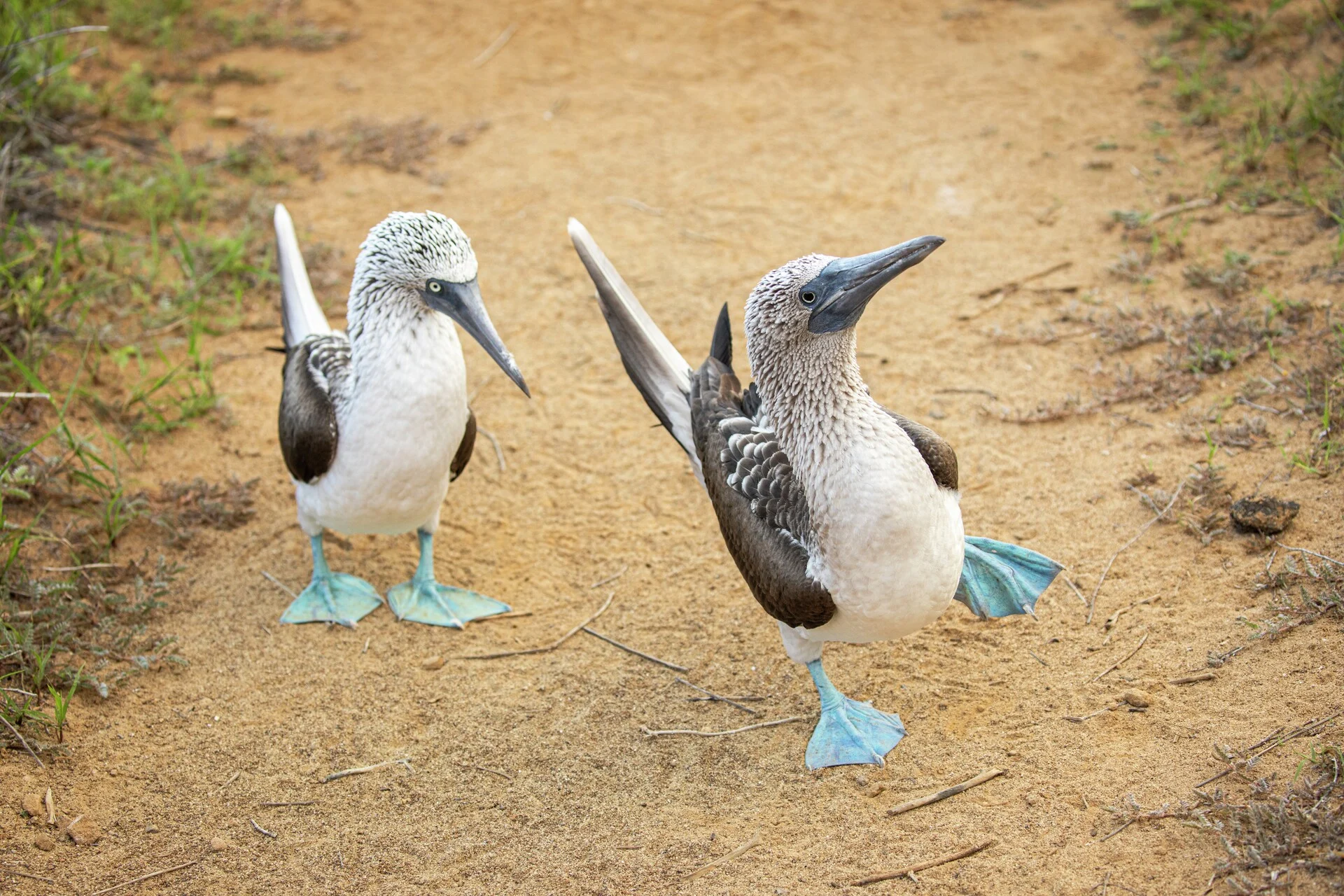
7. Le fou à pieds bleus
Les fous à pied bleu sont l’une des espèces emblématiques des Galápagos. Leurs pattes prennent leur étonnante couleur bleue lorsqu’ils atteignent leur maturité sexuelle.
On les croise souvent le long des zones côtières de nombreuses îles, y compris Española et Seymour Nord. Présents tout au long de l’année, on les observe plus particulièrement pendant la période de reproduction, quand le mâle semble danser sur ses pattes colorées pour attirer une femelle.
À savoir :
l’intensité du bleu turquoise des pattes est proportionnelle à la bonne santé de l’oiseau. Plus il est éclatant, plus il a de chances d’attirer une partenaire !
8. Le fou de Grant
Même si le fou de Grant est présent dans d’autres régions que les Galápagos, il n’en reste pas moins l’un des plus beaux oiseaux marins de l’archipel. Avec son plumage blanc éclatant, ses ailes bordées de noir et son bec orange, il est le plus grand représentant local de la famille des fous de bassan.
Bien souvent, on trouve ces oiseaux sur les îles Española et Genovesa, où ils nichent le long des falaises côtières. Observables tout au long de l’année, ils planent souvent au-dessus des rivages ou se regroupent en colonies sur la terre ferme.
À savoir :
très tôt, les poussins doivent lutter pour leur survie, et seuls les plus robustes en sortent gagnants.

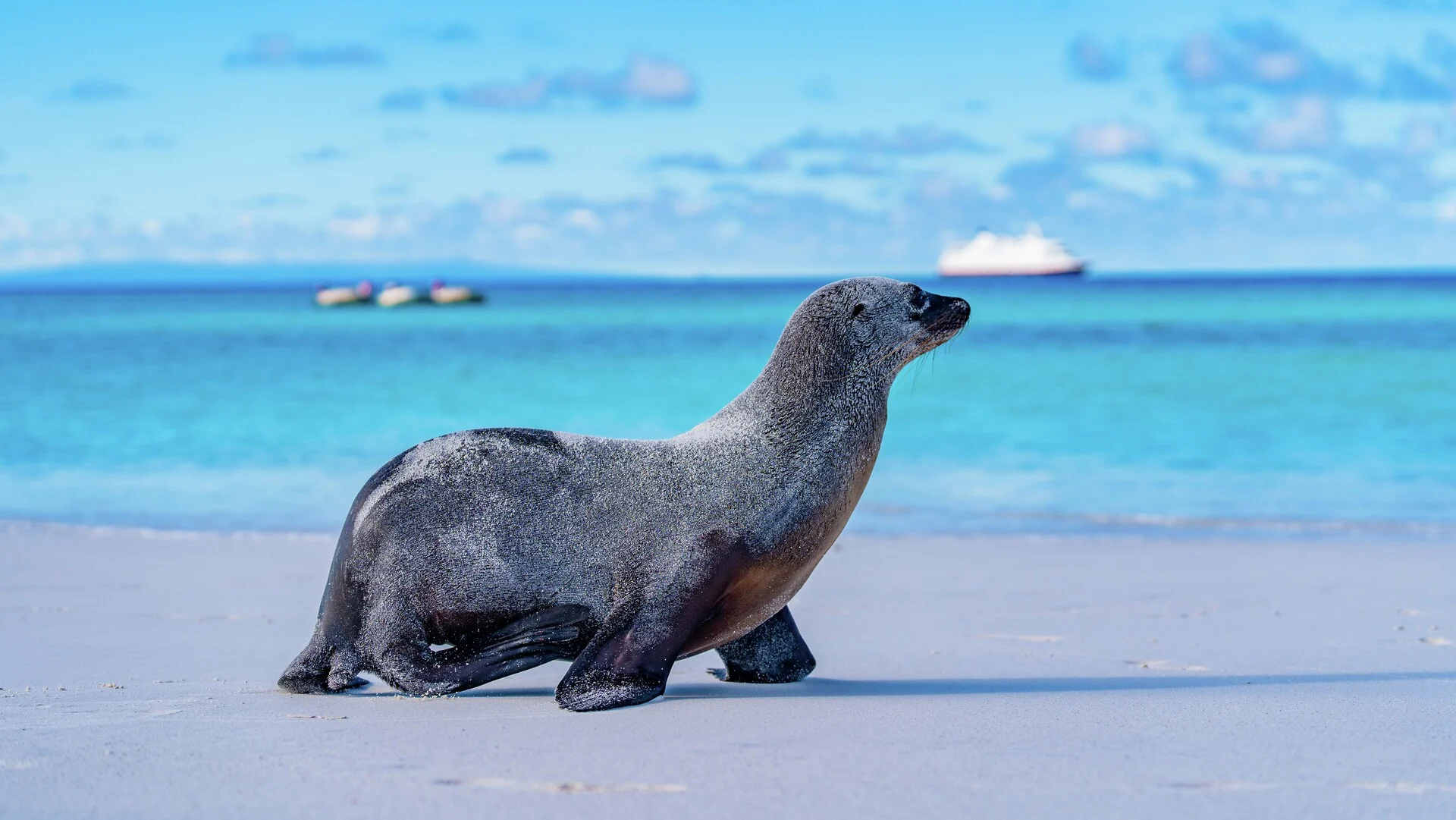
9. L’otarie des Galápagos
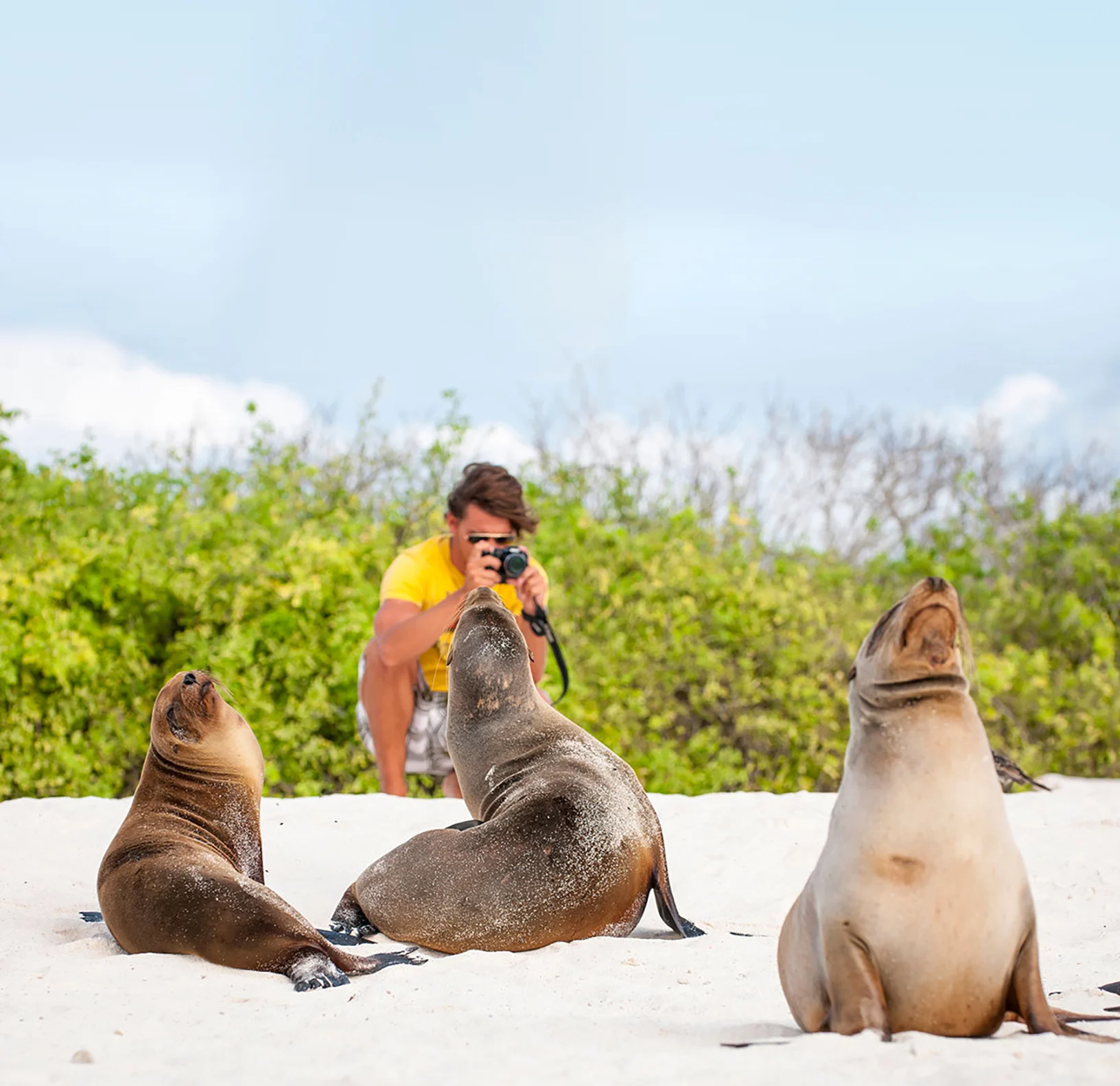
Vous pourrez voir des otaries des Galápagos quasiment partout dans l’archipel, notamment autour de Santiago et de Santa Fé. Elles adore bronzer sur les plages de sable et les rivages rocheux, mais aussi s’amuser dans l’eau.
Observables tout au long de l'année, elles sont très curieuses des plongeurs avec masque et tuba.
À savoir :
les chiots sont très curieux et viennent souvent nager et faire des pirouettes aquatiques autour des nageurs.
10. L’iguane terrestre de Santa Fe
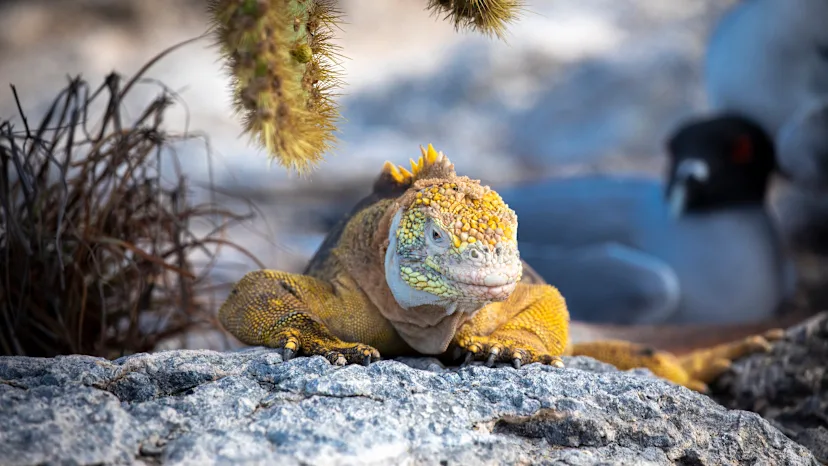
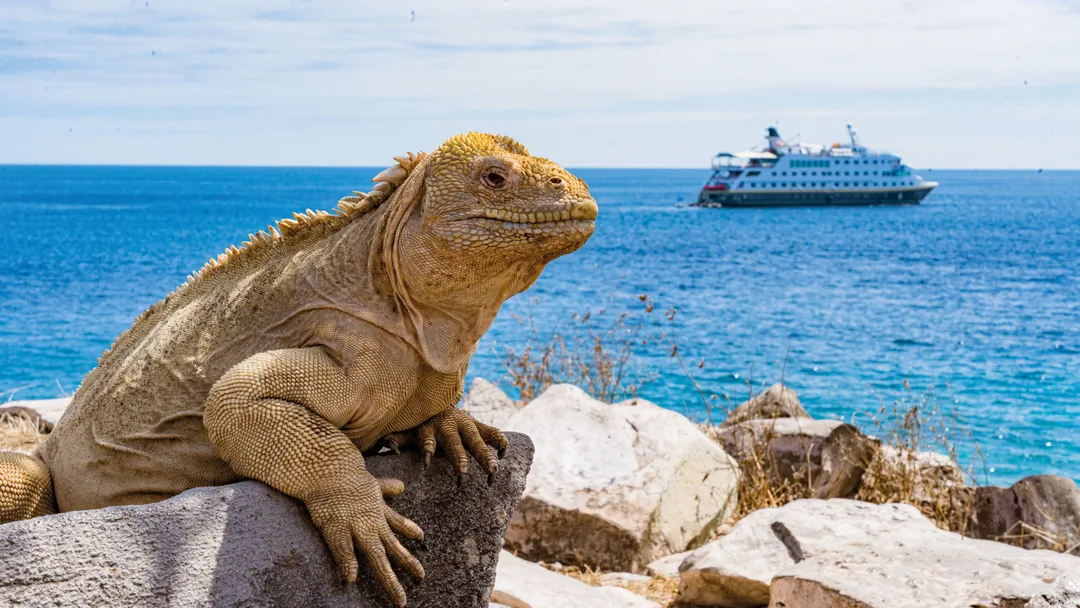
L’iguane terrestre de Santa Fe se fond parfaitement dans les paysages arides de son île, où sa coloration sableuse se confond avec la poussière et les forêts de cactus. Trapue et placide, cette espèce est remarquablement adaptée à son environnement désertique.
Malgré leur apparence robuste, ces iguanes sont plus légers qu’on pourrait le croire et pèsent généralement jusqu’à 11 kg. Leur robe aux nuances allant du jaune pâle au beige leur offre un excellent camouflage lorsqu’ils parcourent les broussailles sèches et les étendues de cactus de Santa Fe.
À savoir :
endémique de l’île de Santa Fe, aux Galápagos, cette espèce ne vit nulle part ailleurs dans le monde.


11. Le manchot des Galápagos
Le manchot des Galápagos est une espèce rare et singulière, puisque c’est le seul manchot dont l’aire de répartition s’étend au nord de l’Équateur. Malgré le climat tropical de l’archipel, il apprécie les eaux plus fraîches apportées par les courants océaniques.
De petite taille et particulièrement agile dans l’eau, il y passe l’essentiel de son temps à chercher sa nourriture. Présent toute l’année, on l’observer principalement sur l’île Fernandina et sur la côte ouest d’Isabela, où les conditions sont les plus favorables.
À savoir :
pour réguler sa température corporelle, le manchot des Galápagos halète comme un chien lorsqu’il fait chaud et écarte ses nageoires afin de dissiper l’excès de chaleur.
12. L’oiseau frégate
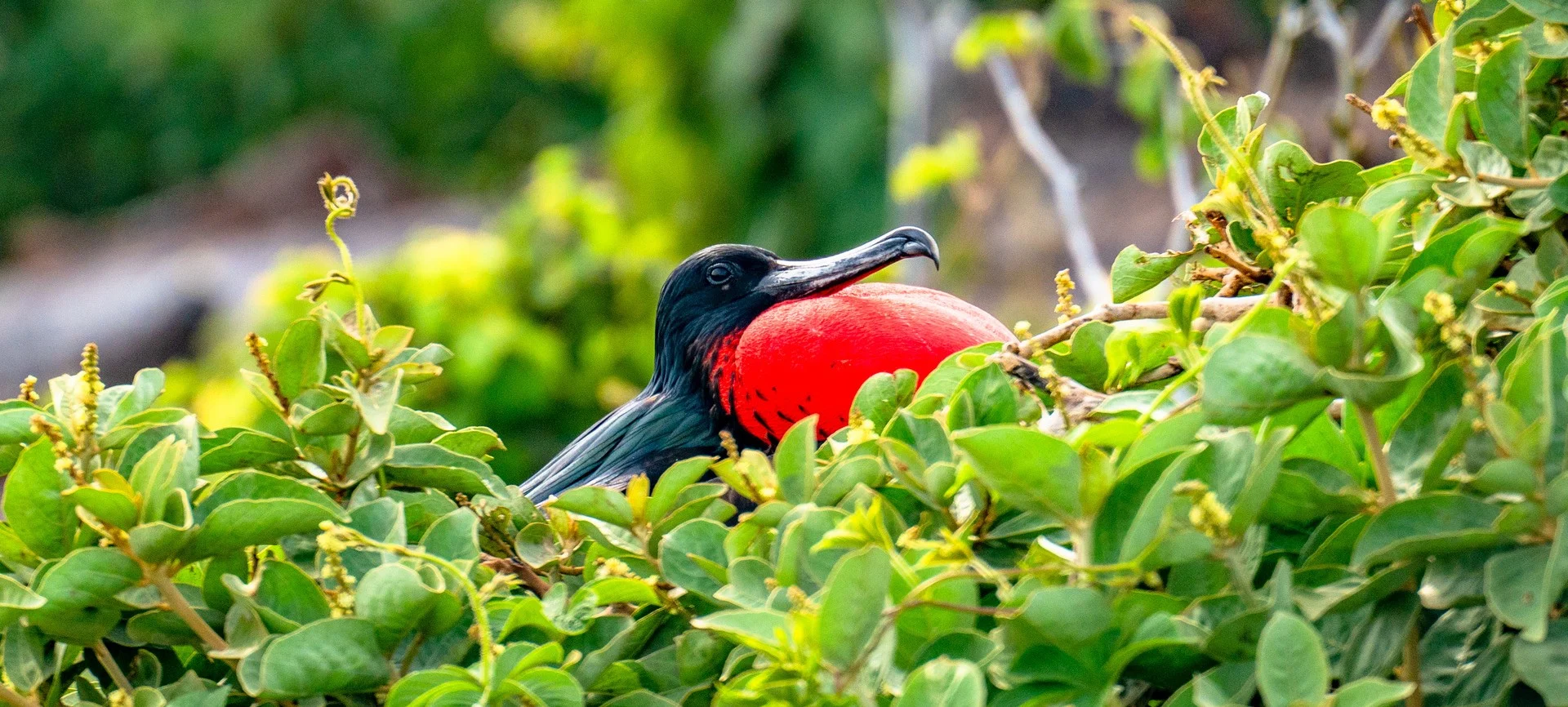
Les Galápagos abritent deux espèces de frégates : la frégate superbe et la frégate du Pacifique. Ces oiseaux marins sont particulièrement reconnaissables pendant la période de reproduction, lorsque les mâles gonflent sous leur cou une poche d’un rouge très vif pour attirer les femelles. Ils planent longuement au-dessus des îles, se posant de temps en temps sur l’eau et parcourant de vastes distances à la recherche de nourriture.
On observe les frégates dans l’ensemble de l’archipel. L’île Seymour Nord accueille d’importantes colonies de frégates superbes, tandis que Genovesa est l’un des principaux sites de nidification des frégates du Pacifique. Elles sont présentes toute l’année et peuvent être aperçues aussi bien en vol que dans leur nid, dans les arbres et les arbustes.
À savoir :
les frégates sont parfois surnommées « oiseaux pirates », car elles aiment voler la nourriture des autres oiseaux marins en plein vol, plutôt que de chasser elles-mêmes.

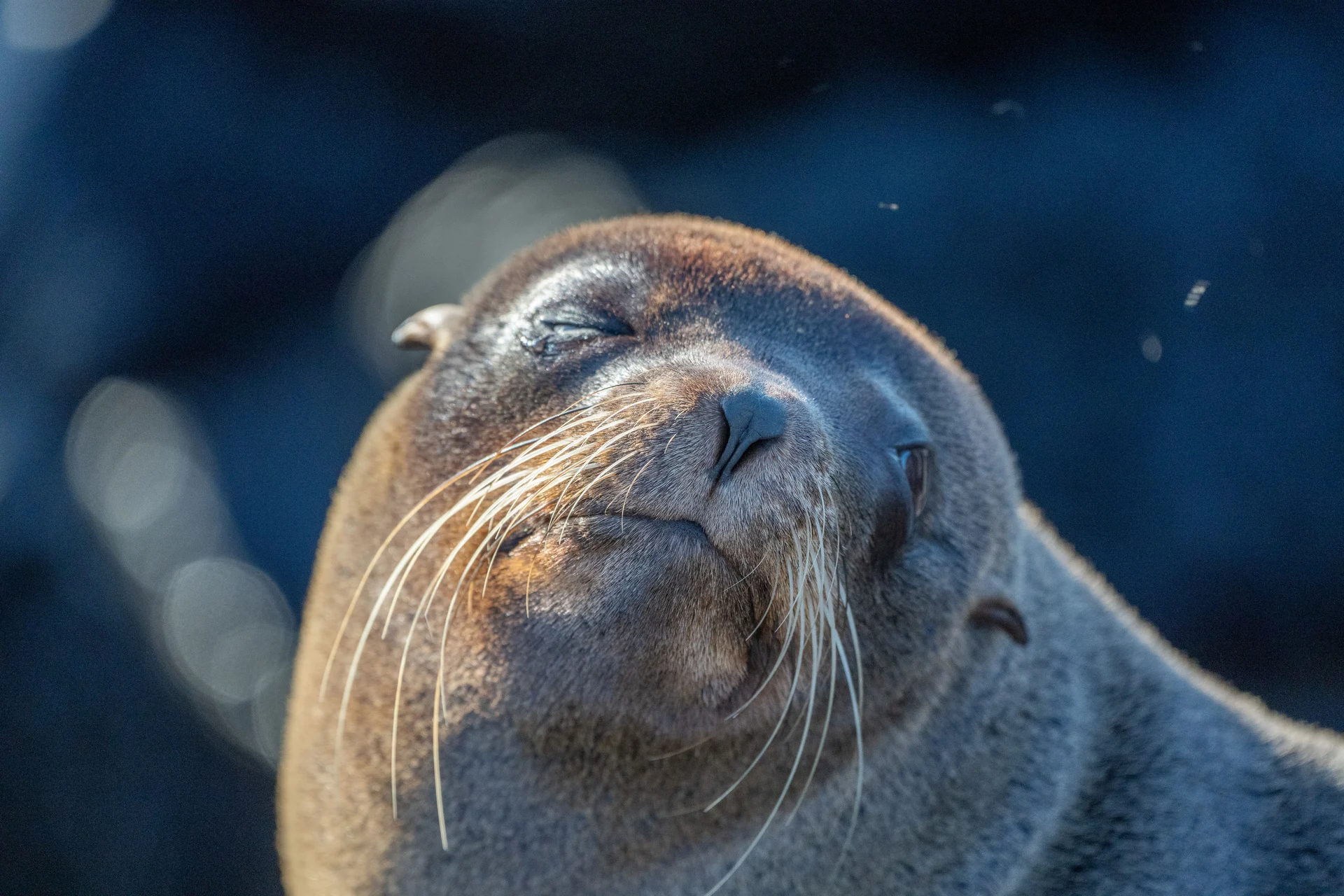
13. L’otarie à fourrure des Galápagos
Particulièrement furtives et mystérieuses, les otaries à fourrure des Galápagos font partie des plus petits mammifères marins de l’archipel. Elles ne donnent naissance qu’à un seul petit et préfèrent rester au frais dans les zones ombragées, comme les criques rocheuses.
On les rencontre toute l’année sur les îles de Santiago et Fernandina, généralement installées sur des roches volcaniques ombragées.
À savoir :
elles chassent principalement la nuit, car les températures plus fraîches leur permettent de moins se fatiguer.
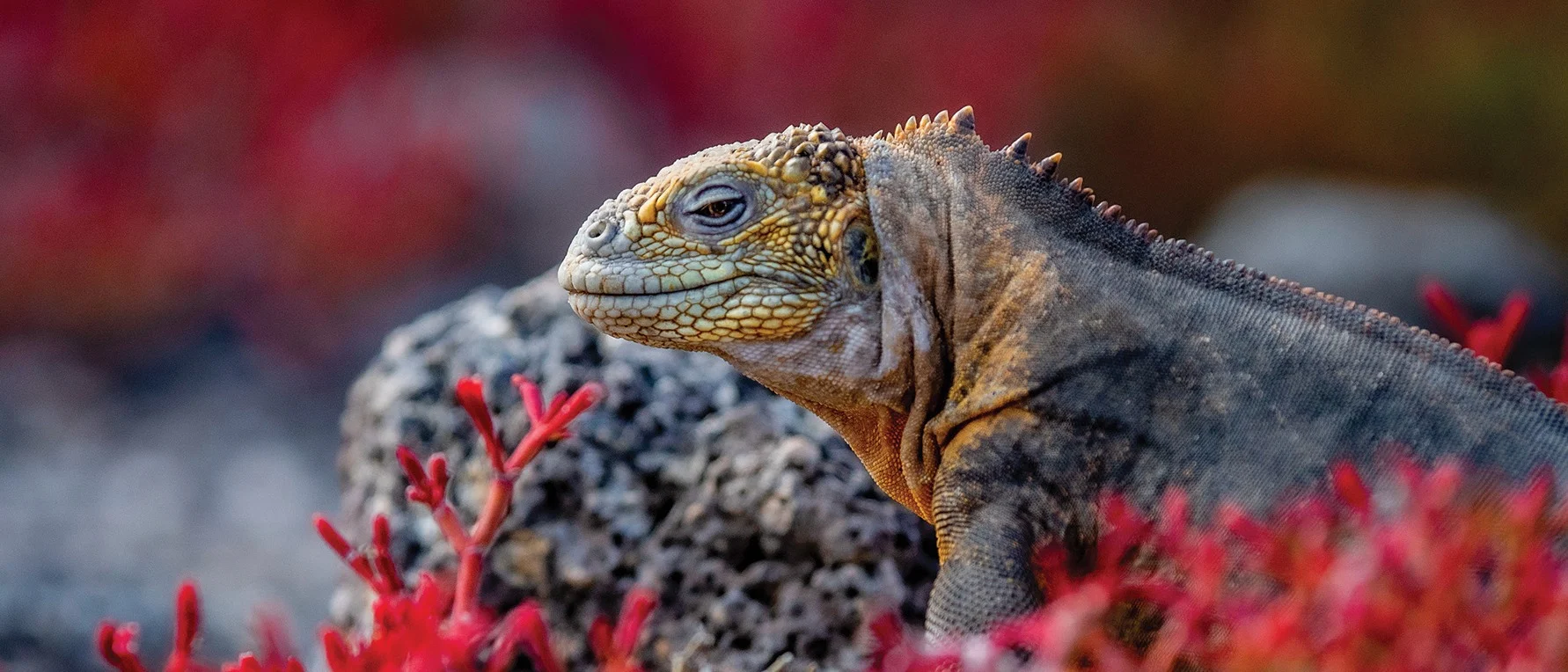
14. L’iguane terrestre des Galápagos
Ces imposants reptiles peuvent vivre jusqu’à 60 ans et atteindre 1,5 m de long. On les voit souvent se prélasser en petits groupes, absorbant la chaleur du sol. Ils préfèrent les plaines sèches avec une végétation clairsemée et un terrain dégagé.
Les iguanes terrestres se trouvent le plus souvent sur Santiago et Seymour Nord, où ils aiment se reposer au soleil ou se balader entre zones d’ombre et de végétation.
À savoir :
leur alimentation est principalement composée de cactus, qu’ils consomment grâce à leur bouche résistante, capable de mastiquer les épines que la plupart des animaux évitent.
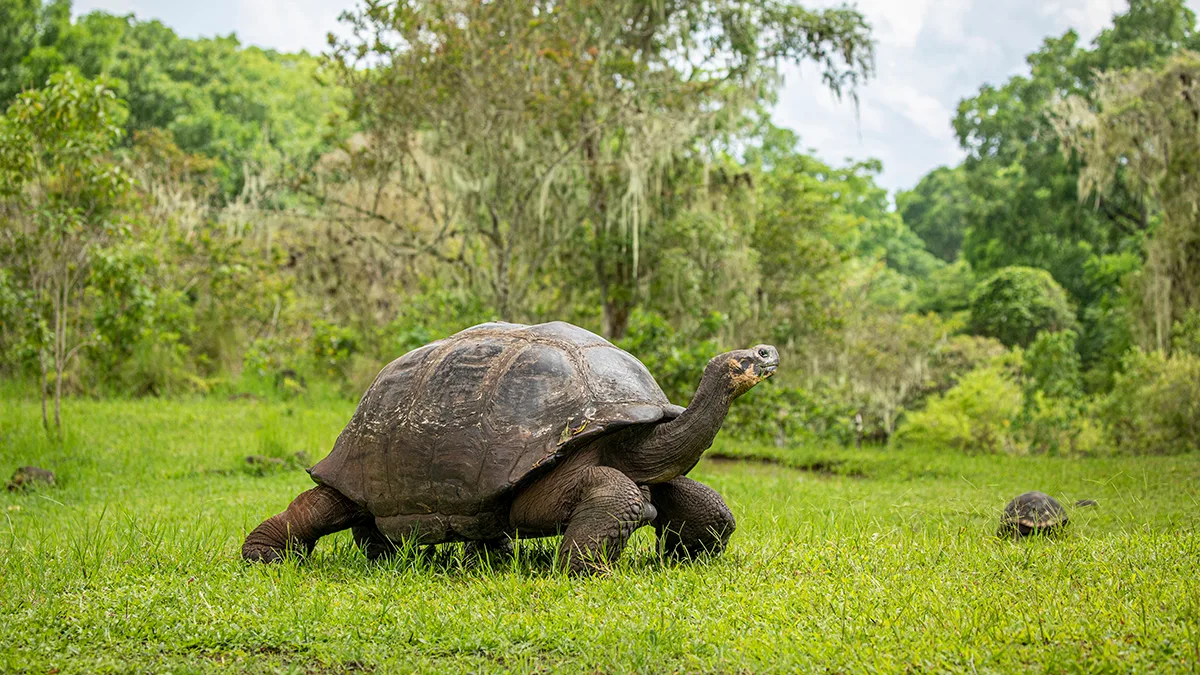
15. La tortue géante des Galápagos
La tortue géante des Galápagos est l’une des espèces les plus emblématiques de l’archipel. Connue pour sa longévité exceptionnelle, elle peut vivre plus d’un siècle. Après avoir connu un fort déclin, ses populations ont bénéficié de programmes de protection et de conservation. C’est aujourd’hui encore l’une des rencontres les plus marquantes à faire dans les Galápagos.
On l’observe principalement sur les îles Santa Cruz, Isabela et San Cristóbal, notamment dans les zones d’altitude où les températures sont plus fraîches et la végétation plus abondante.
À savoir :
la tortue géante des Galápagos compte parmi les plus grandes tortues terrestres au monde, et peut atteindre près de 300 kg.
Où observer la faune des Galápagos
L'archipel est incroyablement varié et, parce que les animaux ont évolué en isolation, chaque île possède son propre mélange unique de faune sauvage. Voici un aperçu rapide des endroits où vous avez le plus de chances d'observer certains des animaux les plus emblématiques :
Fernandina : Cormorans aptères, manchots des Galápagos, iguanes marins et otaries des Galápagos Española : Fous à pieds bleus et fous de Nazca, albatros des Galápagos, iguanes marins et buses des Galápagos Isabela : Cormorans aptères, manchots des Galápagos, buses des Galápagos et tortues géantes des Galápagos Santiago : Otaries des Galápagos, iguanes terrestres, lions de mer des Galápagos et buses des Galápagos Genovesa : Fous à pieds rouges, fous de Nazca et grandes frégates North Seymour : Iguanes terrestres, fous à pieds bleus et frégates superbes San Cristóbal : Tortues géantes des Galápagos South Plaza : Iguanes terrestres et marins, et fous de Nazca Santa Fe : Lions de mer des Galápagos et iguanes terrestres de Santa Fe Floreana : Flamants roses d'Amérique Santa Cruz : Tortues géantes des Galápagos Rábida : Buses des Galápagos, flamants roses d'Amérique Bartolomé : Fous à pieds bleus, grandes frégates et frégates superbes

Quelle est la meilleure période pour observer les animaux des Galápagos ?
La beauté des Galápagos réside dans son rythme de vie constant. La faune y est florissante toute l'année, et il n'y a pas de mauvaise période pour visiter. Que vous fassiez de la plongée en apnée dans des eaux cristallines, du kayak sur des houles douces ou que vous exploriez des rivages volcaniques reculés, il y a toujours quelque chose (ou quelqu'un) à observer.
Situées sur l'Équateur, les îles bénéficient d'un climat tropical avec peu de variations de température tout au long de l'année. Les deux saisons offrent chacune leurs propres récompenses :
Janvier à mai : Des mois légèrement plus chauds et plus humides, avec des mers calmes et accueillantes. Une période idéale pour plonger et observer la vie marine, et la haute saison de reproduction pour de nombreux oiseaux, reptiles et animaux terrestres, y compris la tortue géante des Galápagos.
Juin à décembre : Des journées légèrement plus fraîches et plus sèches, avec des mers plus agitées et la brume de garúa qui s'installe. Des courants riches en nutriments attirent les baleines, les dauphins et les manchots près des côtes.
De nombreuses espèces font des Galápagos leur foyer toute l'année, et les cycles de reproduction suivent souvent la disponibilité de la nourriture plutôt que les saisons. Quelle que soit la période de l'année que vous choisissez pour explorer ces îles extraordinaires, une faune abondante vous attend.
Découvrez-en plus sur la visite des îles Galápagos dans notre guide de voyage, ou obtenez la réponse à toutes vos questions dans notre FAQ sur les Galápagos.
Cinq conseils pour observer la faune des Galápagos
Notre partenaire, Metropolitan, emmène des voyageurs aux Galápagos depuis 1969, et ils ont acquis quelques précieux savoirs sur la façon de trouver ses résidents les plus emblématiques en chemin. Voici nos cinq meilleurs conseils :
Profitez au maximum de votre temps. Choisissez un itinéraire complet qui visite une gamme variée d'îles à travers l'archipel.
Optez pour un petit navire. Ils peuvent atteindre les rivages éloignés et les coins tranquilles que les grands bateaux ne peuvent pas.
Découvrez les îles sous tous les angles. Observez depuis le navire, partez en kayak, débarquez pour une promenade nature, ou glissez-vous dans l'eau pour nager et faire de la plongée en apnée.
Voyagez avec des guides naturalistes expérimentés qui connaissent parfaitement la région et les règles de protection de la faune.
Par-dessus tout, gardez les yeux ouverts et l'esprit curieux ; on ne sait jamais ce qui peut apparaître, ni quand.
Quelle faune observerez-vous lors de quelle croisière HX ?
HX propose deux itinéraires pour découvrir les îles Galápagos. Nous avons une croisière qui explore les îles orientales des Galápagos, et une croisière qui explore les îles des régions occidentales et septentrionales des Galápagos.
Route des îles orientales : Sur les traces de Darwin
Lors de cette croisière expédition tout compris de 9 jours à travers les îles orientales des Galápagos, vous rencontrerez certains des résidents les plus emblématiques de l'archipel, notamment : Albatros des Galápagos
Fou à pieds bleus
Fou de Nazca
Fou à pieds rouges
Flamant rose d'Amérique
Frégates
Buse des Galápagos
Iguane terrestre
Iguane marin
Iguane de Santa Fe
Lion de mer des Galápagos
Otarie des Galápagos
Tortue géante des Galápagos
Route des îles du nord et de l'ouest : Neuf des meilleures îles
Ce circuit de 11 jours en island-hopping à travers neuf des plus belles îles des Galápagos vous offre de bonnes chances d'observer les espèces suivantes :
Fou à pieds bleus
Fou de Nazca
Fou à pieds rouges
Flamant rose d'Amérique
Grandes frégates et frégates superbes
Buse des Galápagos
Iguane terrestre
Iguane marin
Lion de mer des Galápagos
Otarie des Galápagos
Tortue géante des Galápagos
Découvrez les animaux des Galápagos avec HX Expeditions
De la grâce lente d'une tortue géante à la danse de séduction d'un fou à pieds bleus, les Galápagos abritent des rencontres avec la faune sauvage que vous ne trouverez nulle part ailleurs, et les « 15 grands » comptent parmi les plus mémorables.
Nos croisières tout compris de 9 à 11 jours à bord du MS Santa Cruz II vous emmènent au cœur de l'archipel, avec des guides locaux experts et l'accès à certains de ses coins les plus reculés. Tout au long du voyage, nous honorons les efforts de conservation et protégeons activement la remarquable biodiversité des îles.
Explorez notre gamme de croisières expédition aux îles Galápagos et commencez à planifier votre prochaine aventure.