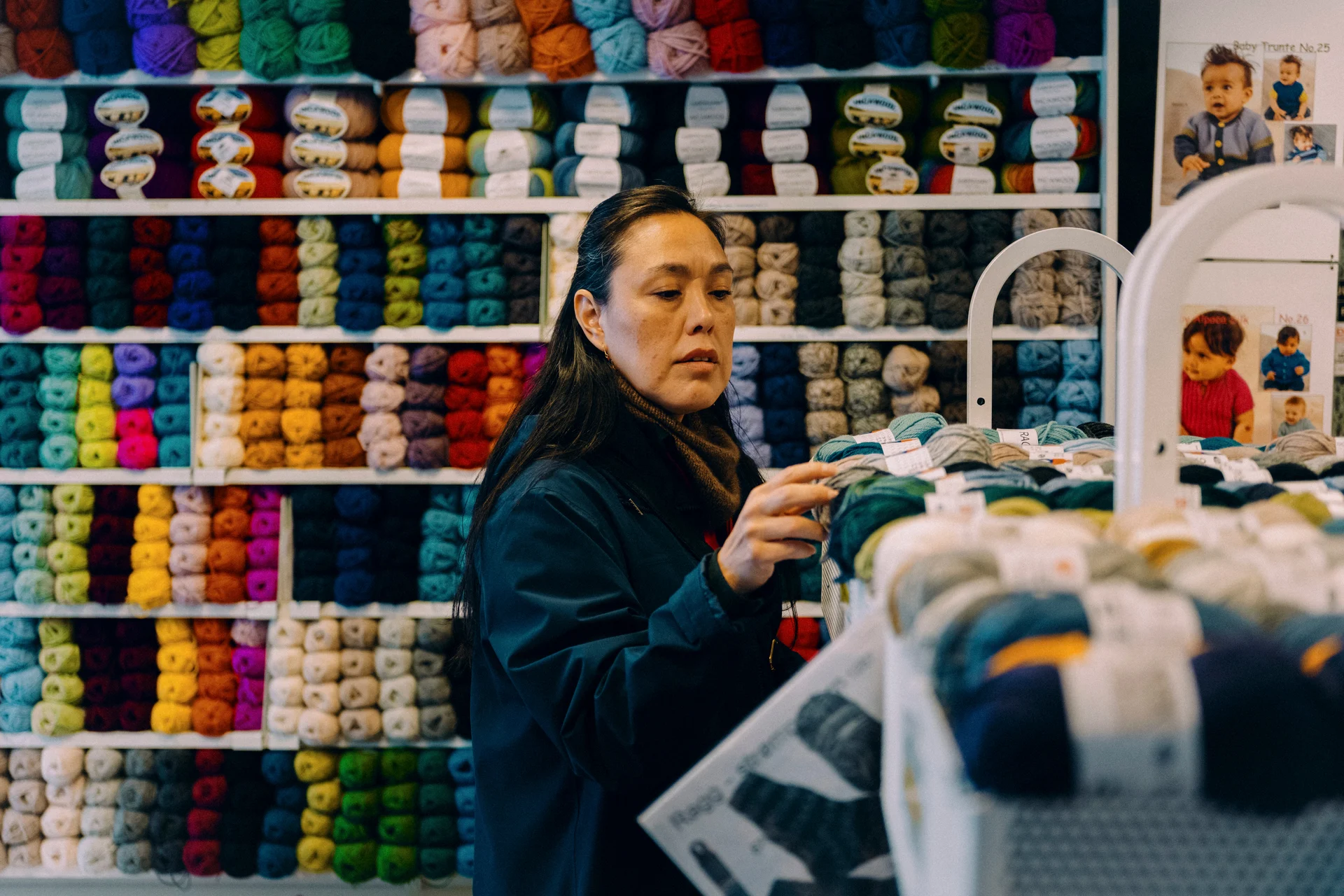
Skrædder Sara-Marie
En del af vores serie Kalaallit: Portrætter fra Grønland. Denne historie følger en syerske fra Nuuk, hvis håndværk bærer en kulturel identitet fra én generation til den næste
1 minutter at læse
Senest opdateret 12. april 2026
Arv af traditioner
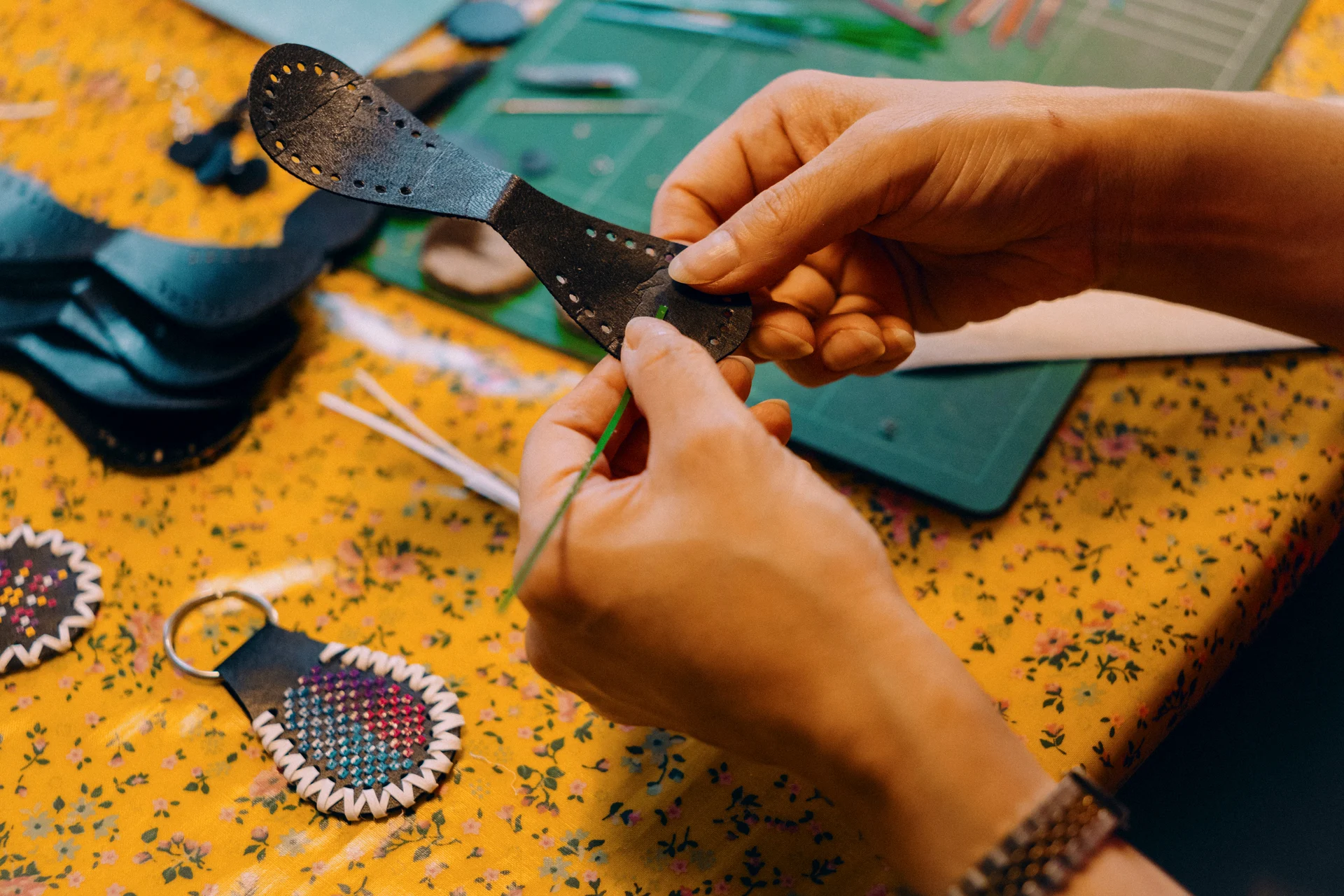
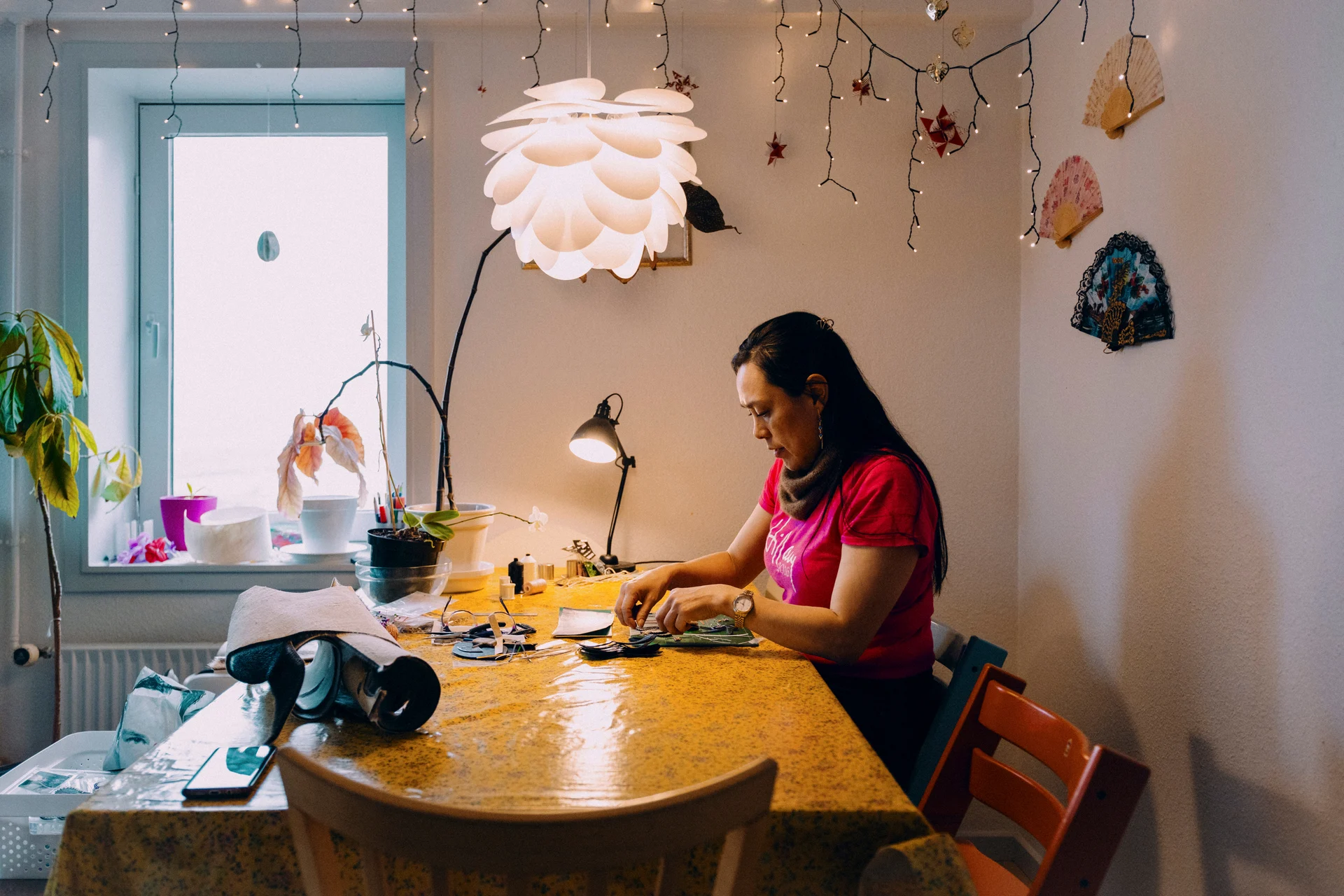
"Det blev givet videre til mig, og jeg vil også give det videre." I et lille værksted i Nuuk sidder Sara-Marie ved et bord, der er fyldt med materialer, perler og trådspoler. Hendes hænder bevæger sig som et urværk og fører nålen gennem stoffet igen og igen med rolig, omhyggelig præcision, som hun lærte for mange år siden ved at se på sin bedstemor. "Jeg husker hendes ro og kreativitet med stor glæde," fortæller Sara-Marie. Syning er "noget, der kommer indefra ...", formet gennem mange år, hvor hun har iagttaget sin bedstemor.
Sara-Marie, syersken
Tøj gennem generationer
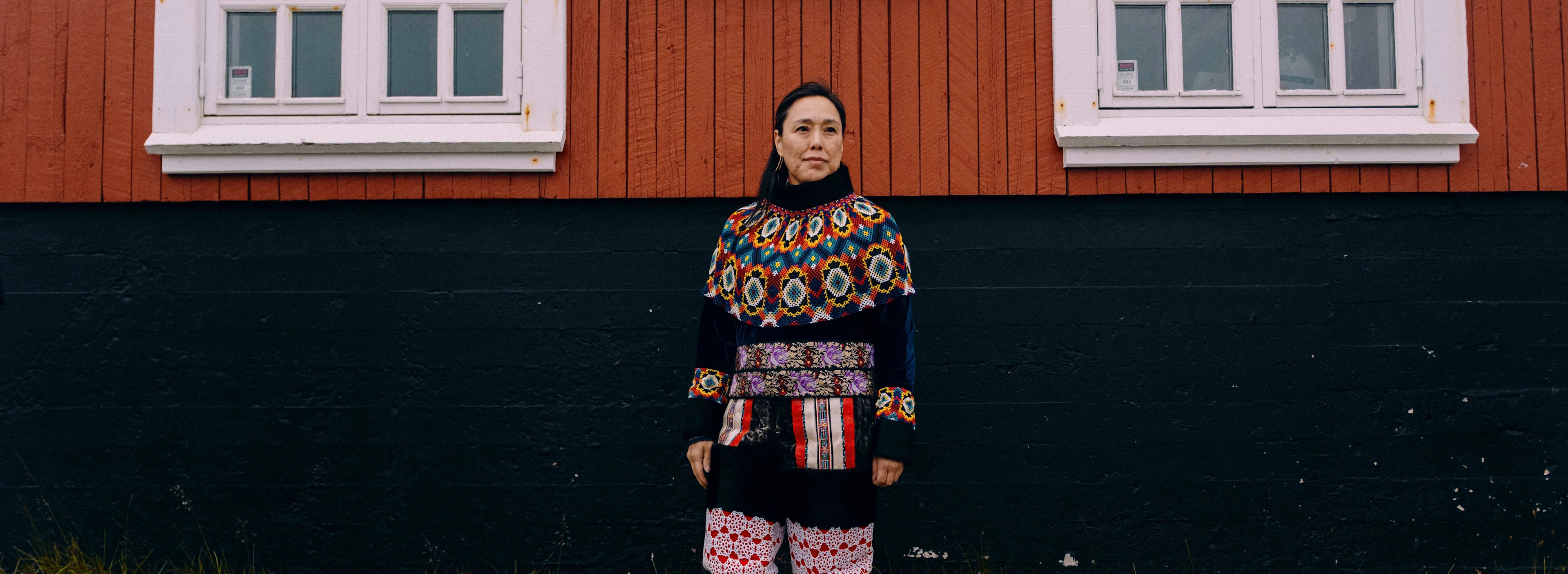
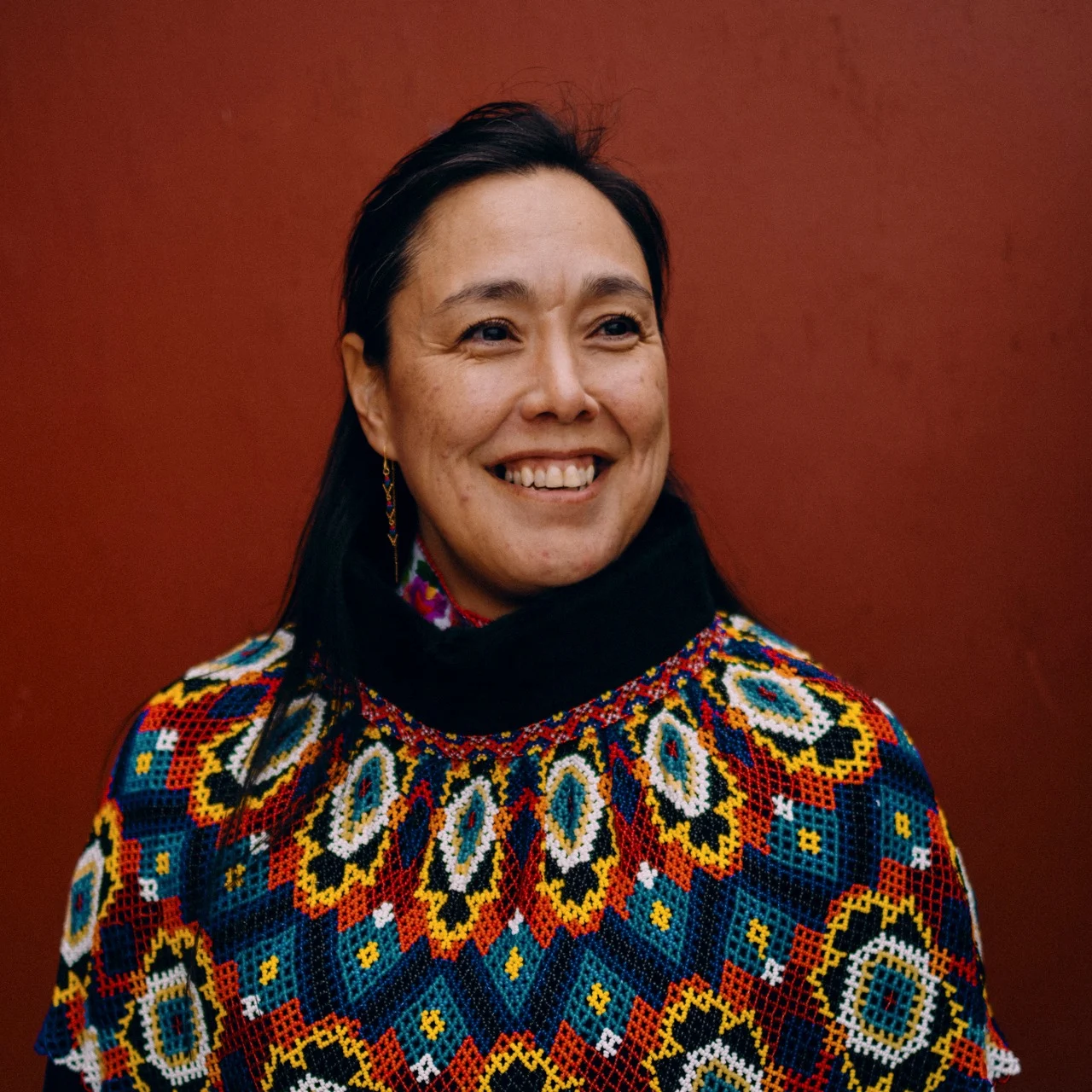
Et komplet sæt kalaallisuut består af flere dele: timmiaq’en, der bæres under en dekoreret anorak, sammen med korte bukser af sælskind, kaldet seeqqerngit, kamik-støvler og nuilarmiut’en, en krave med perler.
Hvert stykke tøj fortæller en historie: om hvem der har lavet det, hvem der har båret det, og de begivenheder, det har været vidne til. ”Vi lægger stor vægt på at bære kalaallisuut... til både glade og triste begivenheder.” Bryllupper, begravelser, når et barn starter i skole – de samme beklædningsgenstande følger med gennem livets milepæle.

At skabe sammenhold gennem håndværk
Sara-Marie husker en episode, hvor en lille pige skulle til at starte i skole uden en nuilarmiut – en perlekæde, der kan bestå af omkring 20.000 små perler og tage op til 64 timer at færdiggøre. Da tiden var knap, samlede familiemedlemmerne materialer og arbejdede sammen hele natten for at sikre, at tøjet var klar til om morgenen.
»Hvis nogen har brug for hjælp, træder vi hurtigt til for hinanden, for i sidste ende er vi ét fællesskab. ”
I Grønland findes der et ord for denne form for fælles ansvar: ataatsimoorneq. I sin kerne betyder det ’samhørighed’ eller ’enhed’. Sara-Marie beskriver ataatsimoorneq som en måde, hvorpå den grønlandske kultur bevares gennem de traditioner, der har formet den: som jagt, dans, historiefortælling og, for hendes vedkommende, syning.
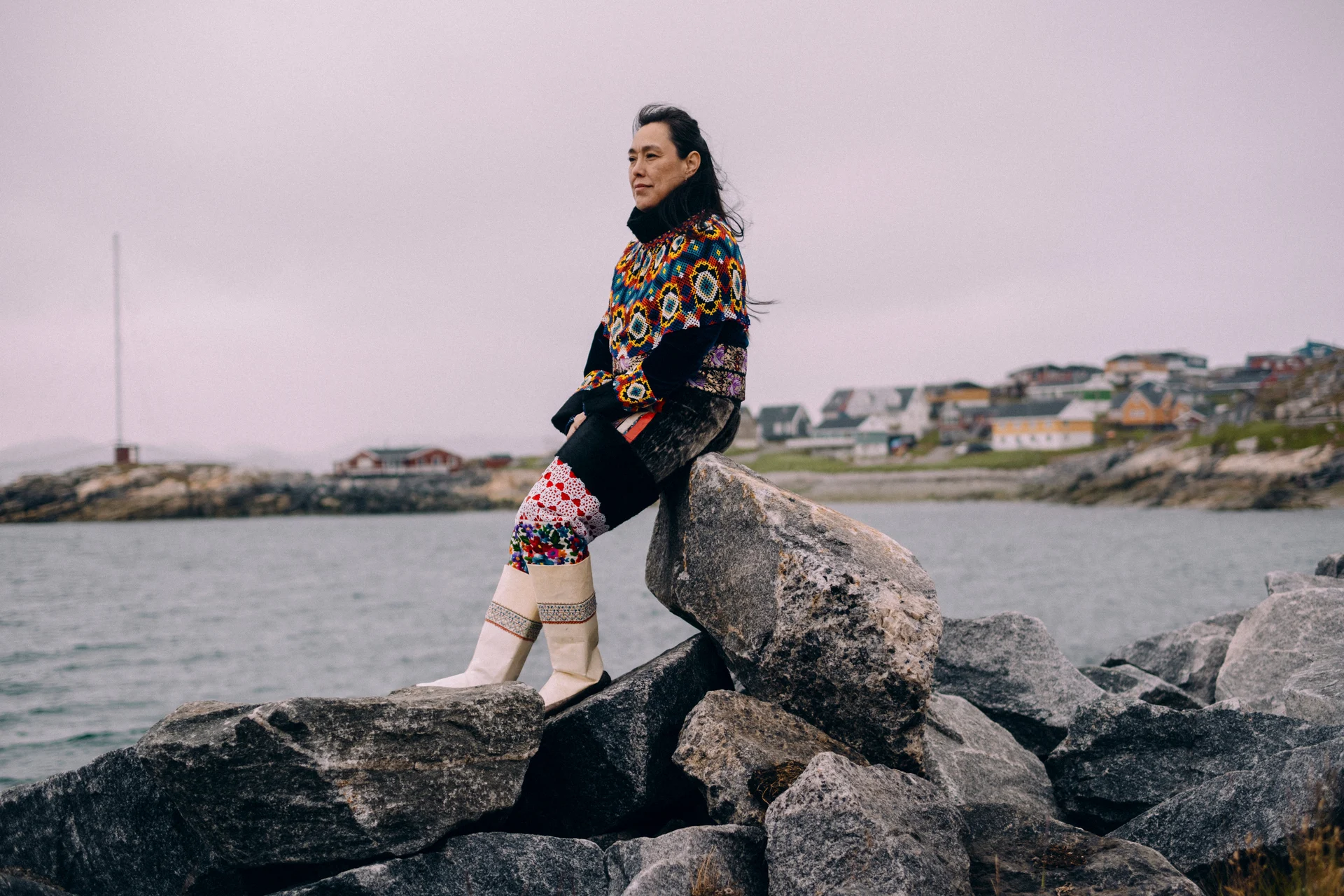

»Før i tiden levede folk i fællesskab. Hvis de var på jagt, blev maden delt mellem alle. Ataatsimoorneq betyder meget for mig, for i sidste ende er vi ét samfund.«
I Sara-Maries værksted tager den idé en praktisk form. En søm forstærkes, en perle udskiftes, et stykke tøj kommer tilbage i brug. Gennem vedligeholdelse forbliver kjolen en del af hverdagen i stedet for et symbol, der er taget ud af brug. ”Jo mere jeg forstår det, jo mere lærer jeg om gamle grønlandske levemåder,” siger hun. ”Jeg er stolt over at kunne gøre det.”
Identitetens væv
I arbejdet hos mennesker som Sara-Marie kommer de værdier, der har været og fortsat er bærende for de grønlandske samfund, tydeligt til udtryk. Gennem de gamle sytraditioner bliver hvert enkelt stykke tøj en metafor for, hvordan fortid og nutid flettes sammen, og hvordan mennesker knyttes til traditionerne og til hinanden. Det minder os om, at den, vi er, er uløseligt forbundet med den måde, vi samles på, tager os af hinanden og fører vores arv videre. ”Kalaallisuut betyder meget for os som mennesker, for vores identitet som mennesker. Det lever allerede i os, i vores hjerter, og derfor betyder det så meget.”