Seabirds of Alaska and the North Pacific
The Pacific is the world’s largest ocean and an important habitat for many seabird species. Several of these birds are frequently seen flying or gliding alongside our ships.
Lesedauer 1 Minuten
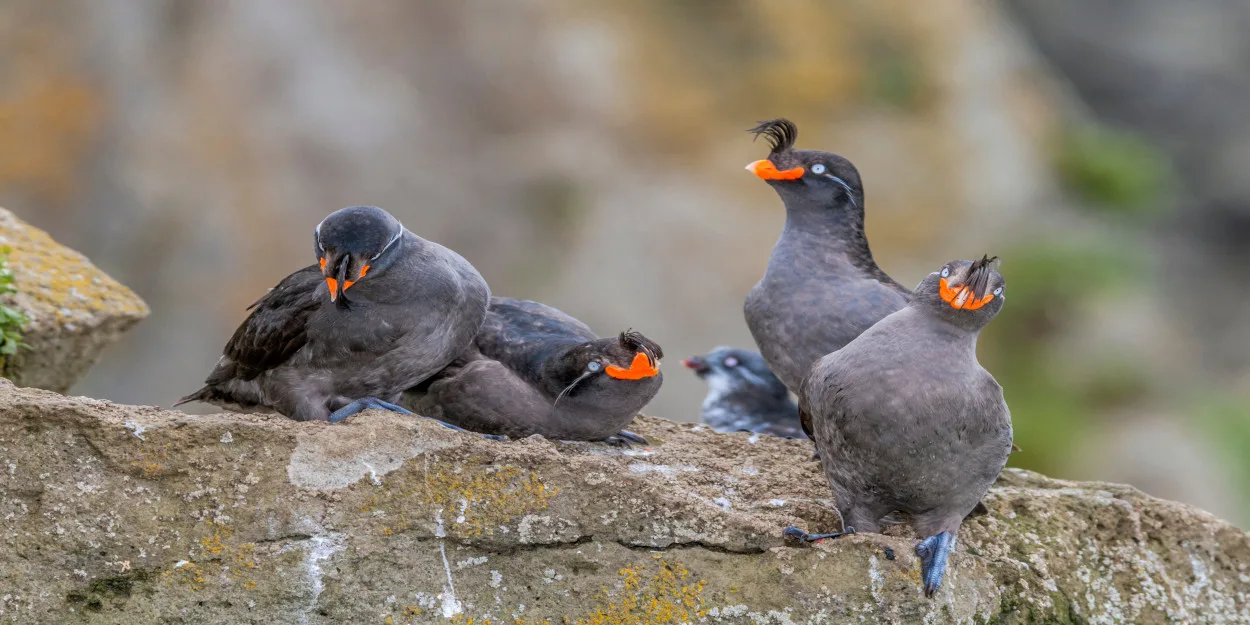
On both sides of the North Pacific, there are a multitude of volcanic islands which are part of the Pacific ‘Ring of Fire’, and provide a perfect habitat for seabirds breeding away from predators. Whether we are sailing over the open sea or closer to the Alaskan shore in our expedition ships, you are likely to spot seabirds of all kinds. However, we will highlight a couple of species below that deserve special mention.

What’s in This Article?
Learn about specific Alaska seabirds, when and where you can see them soar, and how important it is to protect their environment:
Where to See Puffins, Murres, and Other Auks in Alaska
Albatross in Alaska: Where to Spot Them in the North Pacific
Why Alaska’s Waters Attract So Many Seabirds
Protecting Alaska's Seabirds: Conservation and Climate Challenges
Best Places for Seabird Watching in Alaska and the North Pacific
When Is the Best Time to See Seabirds in Alaska?
Found on Alaska Expeditions
Bunte Vogelwelten

Why Alaska’s Waters Attract So Many Seabirds
Alaska and the North Pacific support a large number of seabirds since the waters are exceptionally rich in nutrients. With currents and upwellings, nutrients are brought to the surface, allowing the sunlight to help algae grow and multiply. In spring and summer in particular, there are vast blooms of algae that can even be seen from space!
Algae form the base of the food chain, providing sustenance for small, filter-feeding organisms, which are then fed upon by small fish and squid, and which, in turn, end up in the stomachs of ‘top’ predators such as large fish, seals, whales, and Alaska seabirds. Some seabirds skip a link in the food chain and directly eat tiny filter-feeding organisms, but you get the picture.
The richness of nutrients creates ideal feeding conditions for Alaska birds as they dive for fish or feed near the surface. This is why Alaska’s coastlines, islands, and seas are a great location to observe these birds in their natural environment, especially in spring and early summer.
Where to See Puffins, Murres, and Other Auks in Alaska
Among the most distinctive seabirds in Alaska, auks gather along rugged coastlines and remote cliffs, as well as volcanic islands across the North Pacific. Together, these Alaska seabirds form dynamic colonies.
Members of the auk family include the puffins, murres and guillemots, auklets, and other auks. There are 24 recognised species of auks alive today. A total of only six species live in the North Atlantic Ocean, 20 live in the North Pacific, and two species exist in both oceans. This magnificent diversity in the Pacific is probably because the auk family evolved there and only later made it to the Atlantic either via the southern route between Panama and South America, or later through the Northwest Passage of the Arctic.


Tufted Puffins
Tufted puffins are some of the most recognisable birds in Alaska. With their bright orange bills, white facial markings, and distinctive golden feather tufts extending from behind their eyes, they contrast beautifully against dark cliffs and open ocean. During the breeding season, tufted puffins gather in colonies along coastal cliffs and offshore islands, and nest in burrows in grassy slopes and volcanic terrain. When it’s time to eat, you may spot tufted puffins flying low across the water before diving under to catch fish.
Best viewing: Aleutian Islands, Kodiak Island, coastal cliffs of the Gulf of Alaska (May–September)


Horned Puffins
Horned puffins are smaller than their tufted relatives, but just as distinctive with their bright triangular bill and small dark ‘horn’ above their eye. When it’s breeding season, these puffins return to coastal colonies and nest on rocky ledges or crevices along the cliff. Similar to tufted puffins, they are skilled divers and chase fish underwater to feed their chicks.
Best viewing: Gulf of Alaska, Inside Passage, and Aleutian Islands

Murres and Guillemots
Some of the most dramatic scenes of Alaskan seabirds include murres and guillemots. Murres nest together in large colonies on narrow cliff ledges, standing shoulder to shoulder. On the other hand, guillemots often fly low over the water near rocky coastlines and rest quietly next to shore. Both species are strong divers, which can be quite the show during breeding season.
Best viewing: Aleutian Islands, Bering Sea islands, and coastal cliffs

Auklets and other Auks
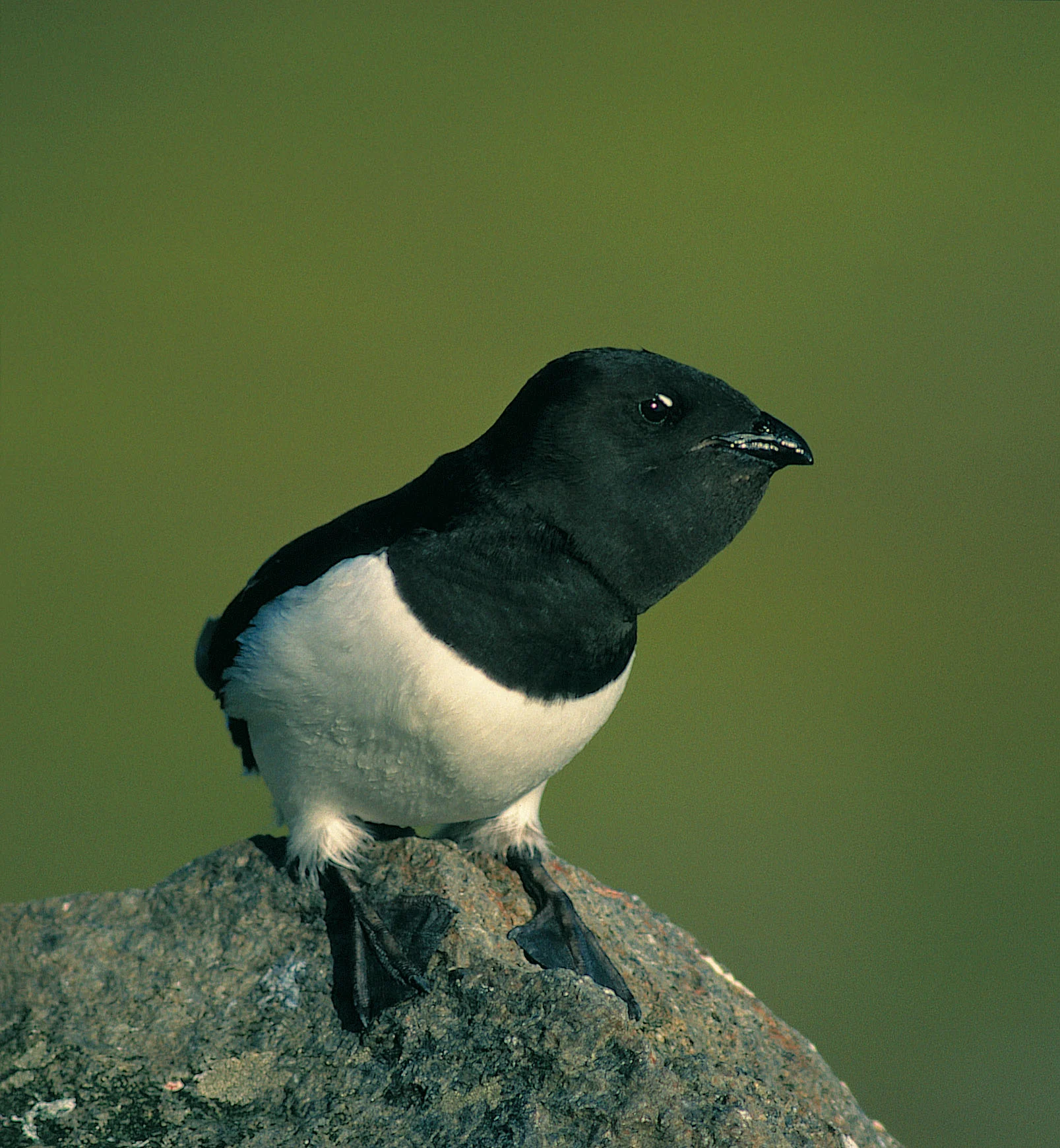
Auklets and other smaller auks add further diversity to the range of Alaska birds. Gathering in flocks, auks move quickly across water before nesting on remote islands. Although they’re more elusive than puffins, murres, or guillemots, their movement brings life to Alaska’s coastal waters. It also emphasises the richness of the coast, where an abundance of food supports large breeding colonies.
Best viewing: Aleutian Islands, Bering Sea islands, and offshore waters
Albatrosses in Alaska: Where to Spot Them in the North Pacific
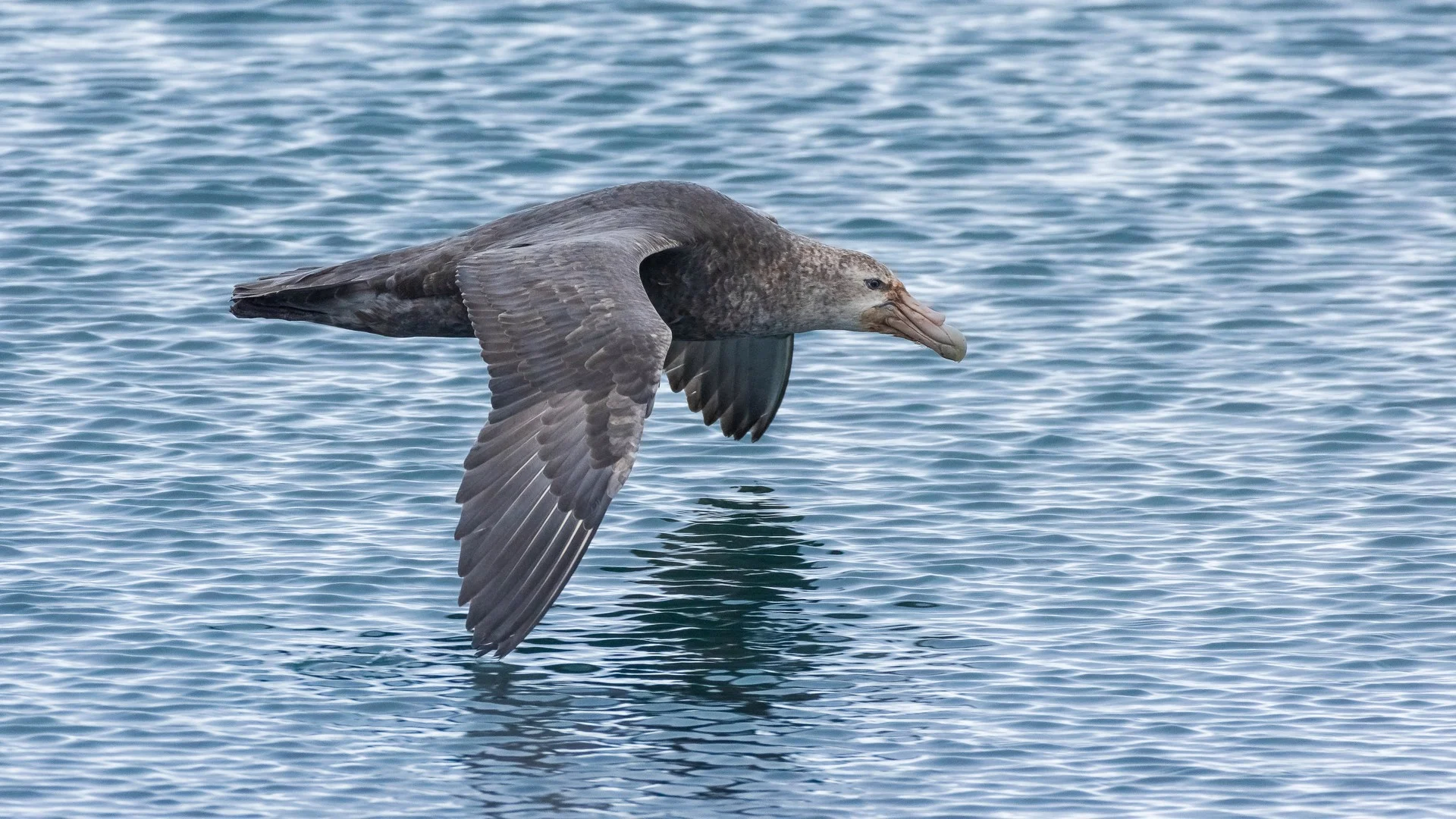
Albatrosses can be found in the North Pacific Ocean, specifically around the Gulf of Alaska and waters south of the Aleutians. The North Pacific is the only place in the Northern Hemisphere where albatrosses breed, featuring the Laysan, black-footed, and the rare short-tailed albatross.
All three North Pacific species breed on small islands off Japan and into the Pacific, in places like Midway, Laysan, and the Hawaiian Islands. Birds leave the colony in mid-summer and disperse over the entire North Pacific to feed in remote and nutrient-rich seas, covering many thousands of kilometres before returning to their breeding colonies again in autumn. On our summer voyages in Alaska, you can keep your eyes open for albatrosses gliding low and riding the winds, and our Expedition Team will be out on deck to help.


Protecting Alaska's Seabirds: Conservation and Climate Challenges
Alaska seabirds depend on the balance of the North Pacific, and changes in ocean conditions and temperatures can have major effects. First discovered in 2013, there is a body of warm water, a marine heat-wave which has been named ‘The Blob’. The temperatures here were 2–3°C above normal, which may not seem like a lot, but has considerable consequences for life in the sea.
Most marine life is very sensitive to the temperature of its surroundings, and numbers decline if the temperature is too warm or too cold. Populations of small marine animals, like copepods, have gone down to the point where many auklets, which feed on copepods, have starved and died due to a lack of food. In some areas, seabirds struggled to find enough food, affecting breeding conditions and, in some cases, leading to starvation.
With dedicated efforts from scientists, these changes in conditions are being closely monitored to determine how they impact Alaska bird populations and wider marine ecosystems. Conservation efforts support understanding, as well as help to safeguard wildlife. Marine heat-waves in the North Pacific may be the 'new normal' of climate change and will impact the entire ecosystem in the future.

In fact, HX expeditions directly support conservation and sustainability efforts. While experiencing Alaska, passengers have “a unique opportunity to actively contribute to scientific research.” Chief Scientist at HX Expeditions, Dr. Verena Meraldi, explains: “Our ships are really the best platforms of opportunity for researchers… to do research from the vessels.” With further research comes improved knowledge, which contributes to a better understanding of Alaska seabirds and changes in their environment.
Best Places for Seabird Watching in Alaska
We’ve listed the best time, region and route to make the most of your Alaska trip and observe seabird activity at its peak. Alaska seabirds follow seasonal patterns shaped by breeding cycles, migration habits, and ocean conditions. Typically, they are most active from late spring through summer.
This is when seabirds return to coastal cliffs and remote islands to nest, raise, and feed their young. We have further outlined busy periods and patterns for their colonies below.
In May, seabirds are quite active as they return to breeding grounds, begin courtship and form their colonies.
The best regions to see their activity in this season are the Inside Passage, the Gulf of Alaska and the Aleutian Islands. Fortunately, all HX expedition cruises to Alaska explore the Inside Passage. You can choose the 13-day Where the Mountains Meet the Sea expedition or the 10-day voyage through the Fjords of the Great Land.


In June and July, Alaska seabird activity is at its peak, as colonies are busy nesting and feeding.
Come August, Alaska seabirds are rearing their chicks and bringing food for them. Our Alaska & British Columbia - Inside Passage, Bears and Aleutian Islands (Northbound) expedition sets sail in late July through August, when seabird colonies are most active. Coastal waters across the Aleutian Islands, as well as other offshore islands and coastal cliffs, offer opportunities to see seabirds diving and fishing for their young. By September, some seabird species begin to disperse and migrate offshore, until they return the next year.
Spring and Early Summer Breeding Season
From May, seabirds return to coastal cliffs, offshore islands, and volcanic coastlines to establish their nesting sites. Puffins will gather near burrows, murres crowd along narrow ledges of cliffs, and auklets move in flocks across the water. At this time, the increasing activity of birds in Alaska makes them more visible.
Our expeditions through the Inside Passage, such as Where the Mountains Meet the Sea, and the Fjords of the Great Land, as well as our combined cruise with the Aleutian Islands (heading Northbound or Southbound), provide ample opportunities to observe. Discover more about our Alaska cruises, and sail beneath soaring seabirds.

When Seabird Colonies Are Most Active
The real activity occurs between June and August, when nesting is underway and adult seabirds travel between colony sites and feeding grounds frequently. With movement along the cliffs and surrounding waters, Alaska's coasts become alive with diverse seabird species sharing the same habitat. At this point, you may see puffins holding fish in their mouths, murres tending to their chicks, and auklets flying between feeding grounds and nesting sites; it is a spectacular sight.
This is why summer expeditions exploring Alaska and the North Pacific offer many opportunities for seabird encounters, especially around the Aleutian Islands, the Gulf of Alaska, and offshore island regions.

Found on Alaska Expeditions
Birdwatchers will feel right at home on our expedition cruises to Alaska. From puffins to murres to auklets, the coastlines offer myriad opportunities to observe Alaska birds soaring, diving, and simply living and raising their families. Alaska hosts many natural wonders, and you can learn more about the diversity of wildlife in Alaska.
Don’t forget to pack your binoculars and long lens for your camera, and of course, make sure to check our Alaska Travel Guide for further travel advice.


