Galápagos Animals: The ‘Big 15’ and Where to Find Them
Meet the Galápagos ‘Big 15’: the archipelago’s most iconic animals. This guide shows where you’re most likely to see them, from the brightly coloured Española marine iguanas (often nicknamed the ‘Christmas iguanas’) to the famous Galápagos giant tortoise.
1 mins read
What’s in this article?
Galápagos Islands Animals: What are the ‘Big 15’?
Where to See Galápagos Wildlife
When is the Best Time to See Galápagos Animals?
Five Tips for Spotting Wildlife in the Galápagos
Which Wildlife Will You See on Which HX Voyage?
Witness the Animals of the Galapagos with HX Expeditions
Galápagos Islands Animals: What are the ‘Big 15’?
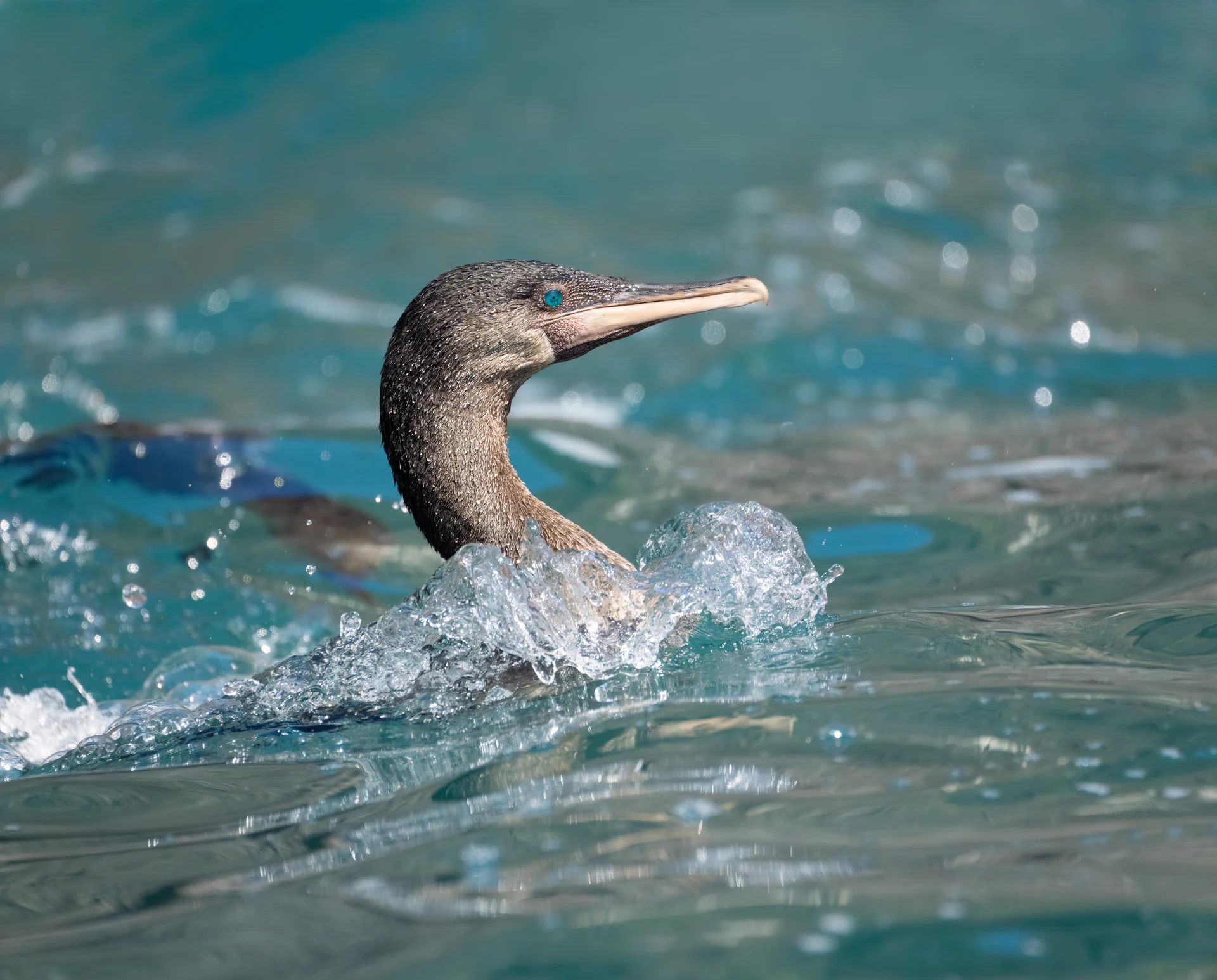
1. Flightless Cormorant
Without the need to fly, the flightless cormorant has evolved into a powerful swimmer with short wings and strong legs. They dive beneath the surface to hunt fish, octopus, and eel among volcanic reefs.
Flightless cormorants are most commonly seen on Fernandina Island and the western coast of Isabela Island, particularly along rocky, lava-strewn shorelines. You can spot them year-round, with peak breeding during the cooler months (May–October). Look for dark, long-necked birds perched on low rocks near the water, often holding their wings outstretched to dry after a dive.
Interesting fact:
Both male and female birds share egg incubation equally. Once the chicks are sufficiently independent, the mother leaves to find another mate, while the father stays to care for the chick.
2. Red-Footed Booby
The red-footed booby is much less common than its blue-footed and Nazca relatives. Agile and far-ranging, these birds can travel up to 90 miles in search of food, diving with speed and precision to catch fish.
Red-footed boobies are best spotted on Genovesa Island, a remote island often referred to as ‘bird island’ and San Cristóbal Island. They nest in shrubs and low trees, and you can see them year-round as they breed, depending on food availability. Look for their distinctive red feet and a pale blue beak, often perched in trees or circling above coastal cliffs.
Interesting fact:
This is the only booby species in the Galápagos that nests in trees rather than on the ground.

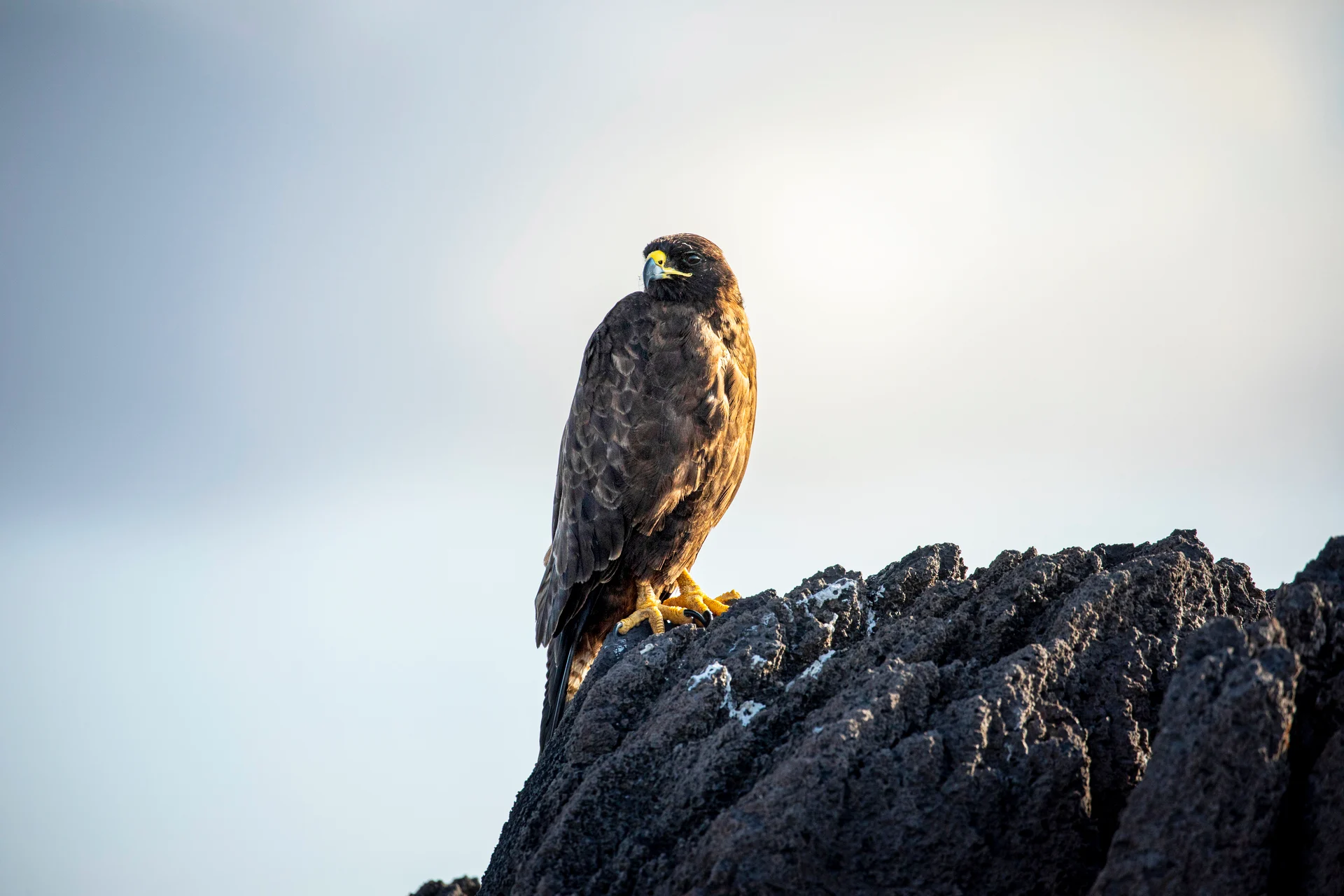
3. Galápagos Hawk
The Galápagos hawk is the top avian predator in the islands, preying on smaller birds, lizards, and young turtles. These formidable birds are dark in colour with broad wings and a powerful build. Endemic to the Galápagos, the species has a very limited global population, making sightings all the more special.
You’re most likely to see Galápagos hawks on islands such as Isabela, Santiago, and Española, typically in open, arid terrain. You can spot them at any time of year. Keep a watchful eye for solitary birds perched on lava outcrops or circling slowly overhead.
Interesting fact:
They often hunt in groups, an unusual behaviour for birds of prey, allowing them to take down larger or more agile prey.
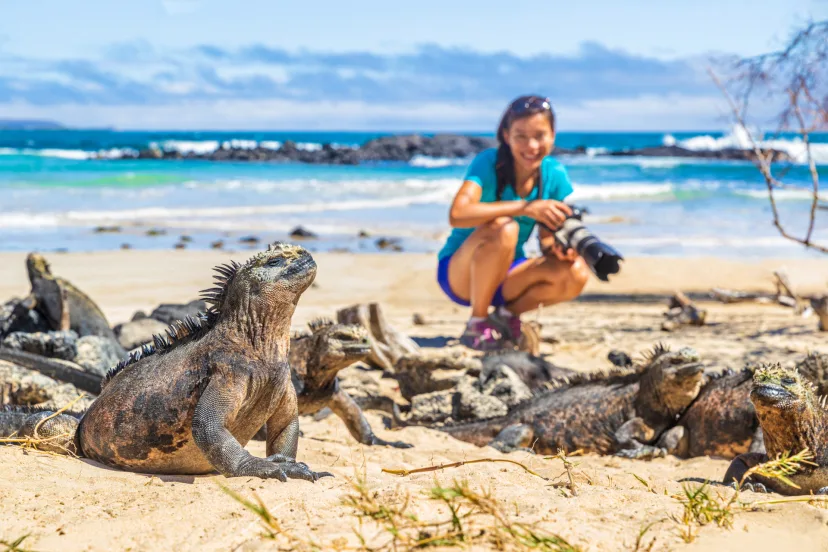
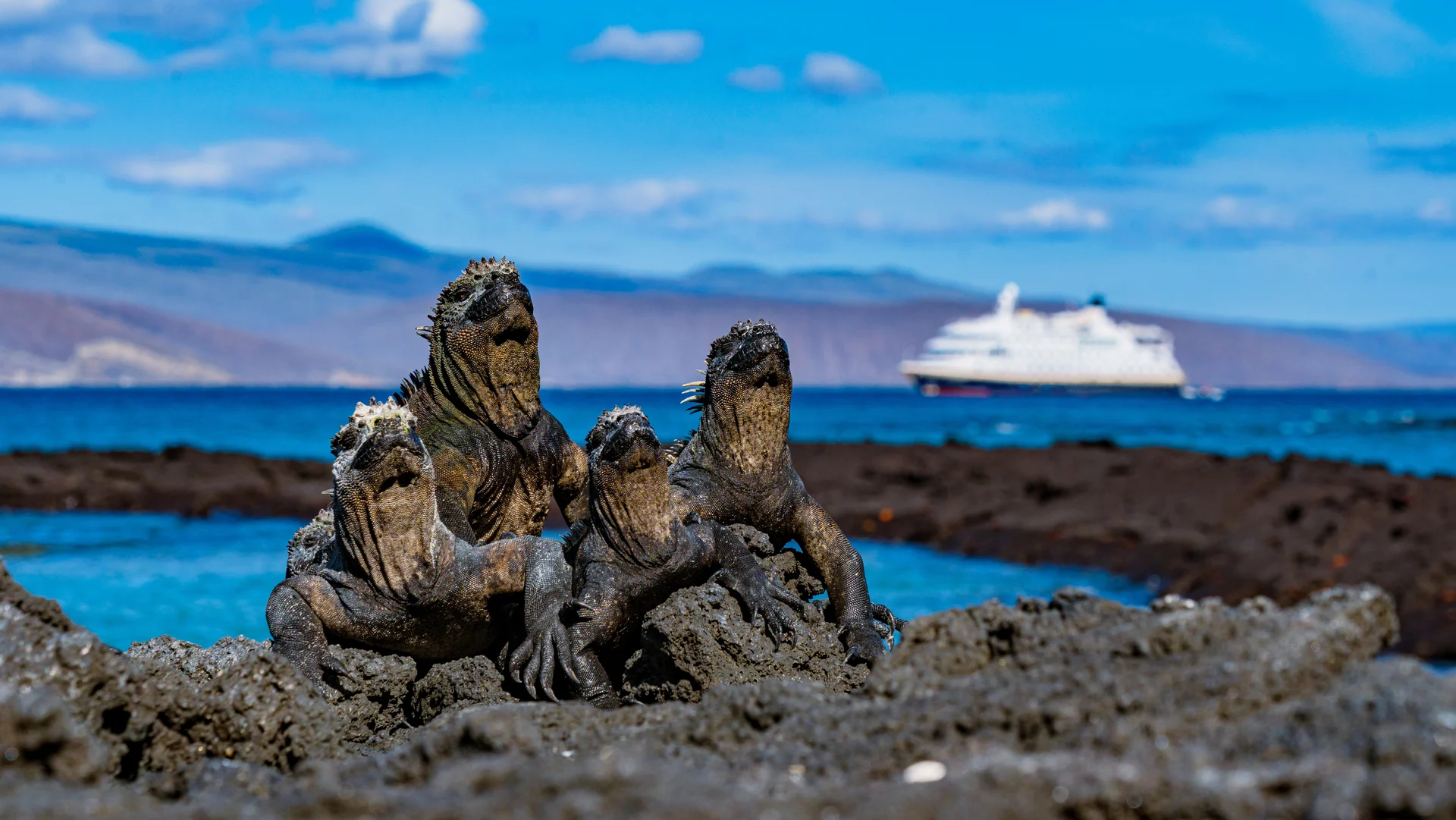
4. Marine Iguana
These colour-shifting creatures search for food both above and beneath the surface of the water. Algae is their primary food source, which they graze from rocks and reefs along the shoreline.
Endemic to the Galápagos, the species is the only iguana in the world that feeds in the ocean, diving below the surface and clinging to submerged rocks as waves surge overhead.
Marine iguanas are found all year across much of the archipelago, particularly on Fernandina Island and Española Island, where they gather in large groups, basking in the sun together to retain heat after cold ocean dives.
Interesting fact:
They expel excess salt by sneezing through specialised glands, often leaving a white crust around their noses.

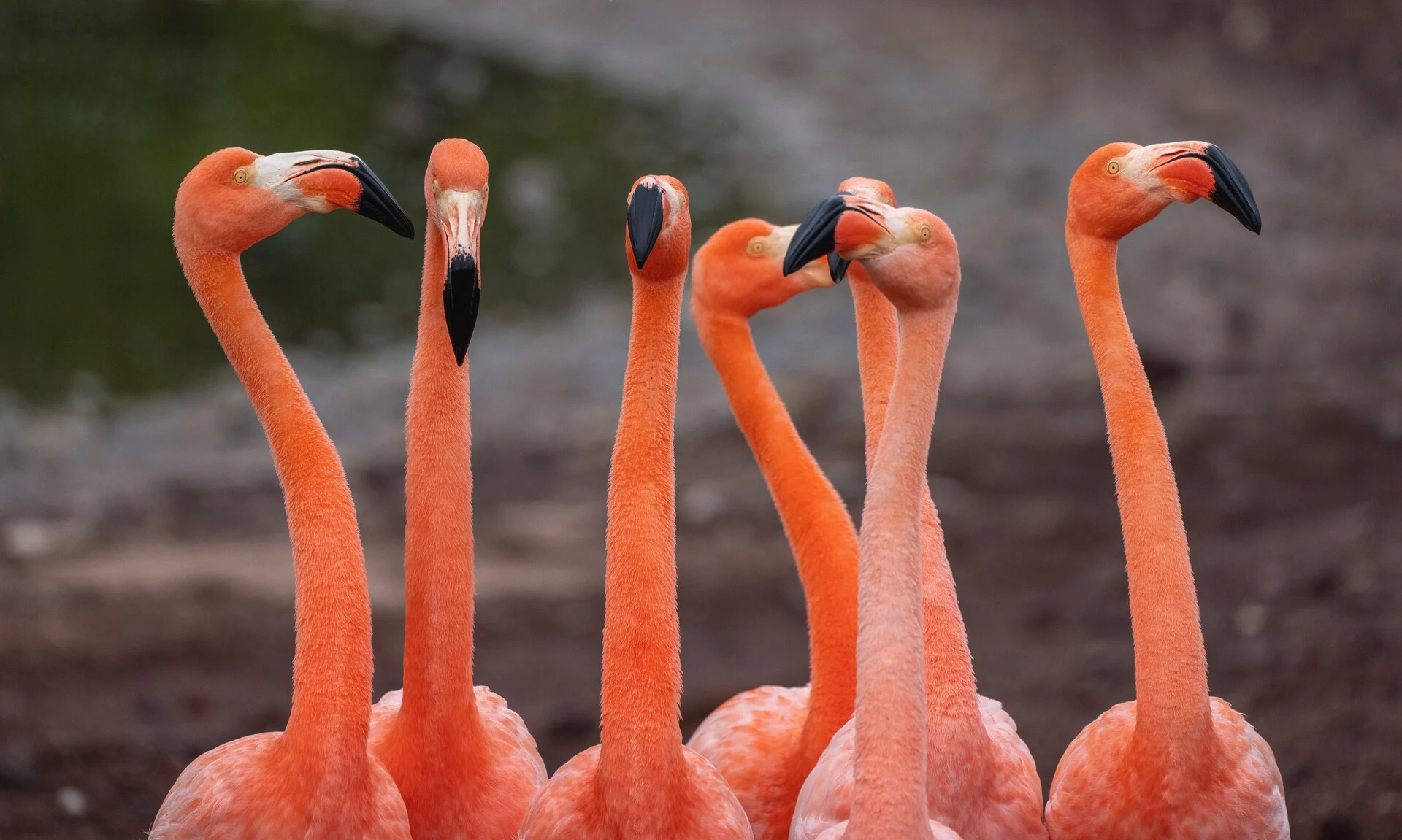
5. American Flamingo
Because they feed on shrimp and other small crustaceans, these birds display some of the brightest colouring of any species in the Galápagos. Despite standing up to four feet tall, they remain surprisingly light, weighing around six pounds on average. They’re often seen balanced on one leg, which is thought to help conserve body heat.
The Galápagos Islands are home to a small population of American flamingos, which are most often found on Floreana, where shallow lagoons provide ideal feeding grounds. At any time of year, you can see groups wading through still, saline waters, sweeping their beaks from side to side to filter food.
Interesting fact:
Their pink colour comes from pigments in their diet. Without it, their feathers would fade to a much paler shade.
6. Waved Albatross
The waved albatross is one of the more elusive species in the Galápagos, found exclusively on Española Island. The largest bird in the region, it has a wingspan of up to eight feet and can weigh up to 11 pounds.
These graceful birds return to Española during the breeding season, typically between April and December. On open ground, pairs gather to perform their ritualised courtship, which includes bill clacking, bowing, and synchronised movements.
Interesting fact:
They spend much of their lives at sea and may travel thousands of miles, returning to the same partner and nesting site each year.

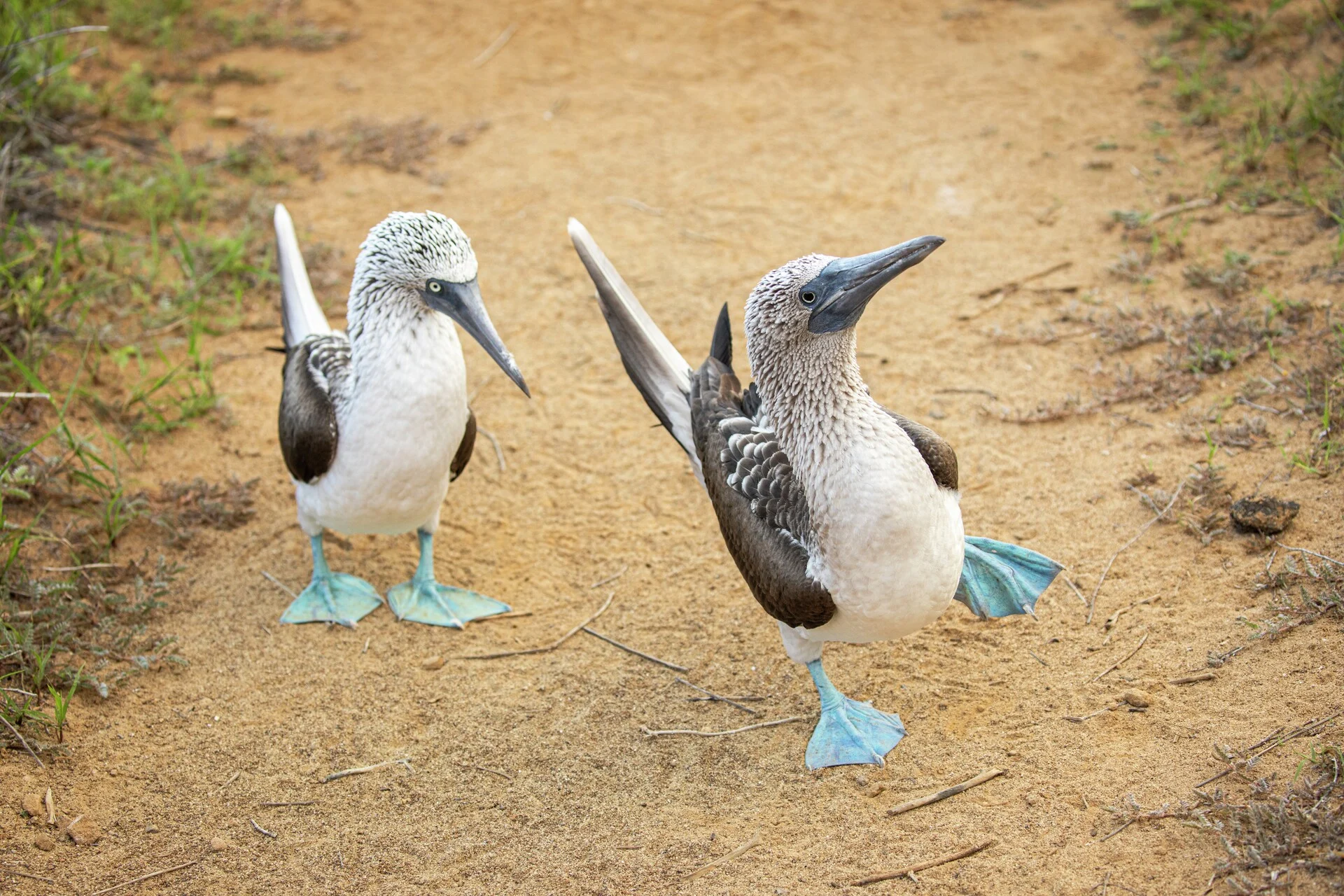
7. Blue-Footed Booby
Blue-footed boobies are among the most recognisable species in the Galápagos, with their iconic blue feet developing their colour as the bird reaches full maturity.
These distinctive birds are often found along the coastal areas of many islands, including Española and North Seymour. Present throughout the year, they’re best observed during courtship, when males lift and display their bright feet in a dance to attract a mate.
Interesting fact:
The vividness of their feet signals health and fitness to potential mates: the brighter the blue, the more attractive the bird.
8. Nazca Booby
The Nazca booby is not unique to the Galápagos, but it’s one of the most striking seabirds found across the islands. With crisp white plumage, black-edged wings, and a distinctive orange beak, it’s also the largest of the booby species here.
These birds are frequently found on Española and Genovesa, nesting along coastal cliffs. Active throughout the year, they’re often seen gliding above the shoreline or gathered in loose colonies on the ground.
Interesting fact:
Chick siblings compete intensely for survival, with only the strongest typically making it to adulthood.

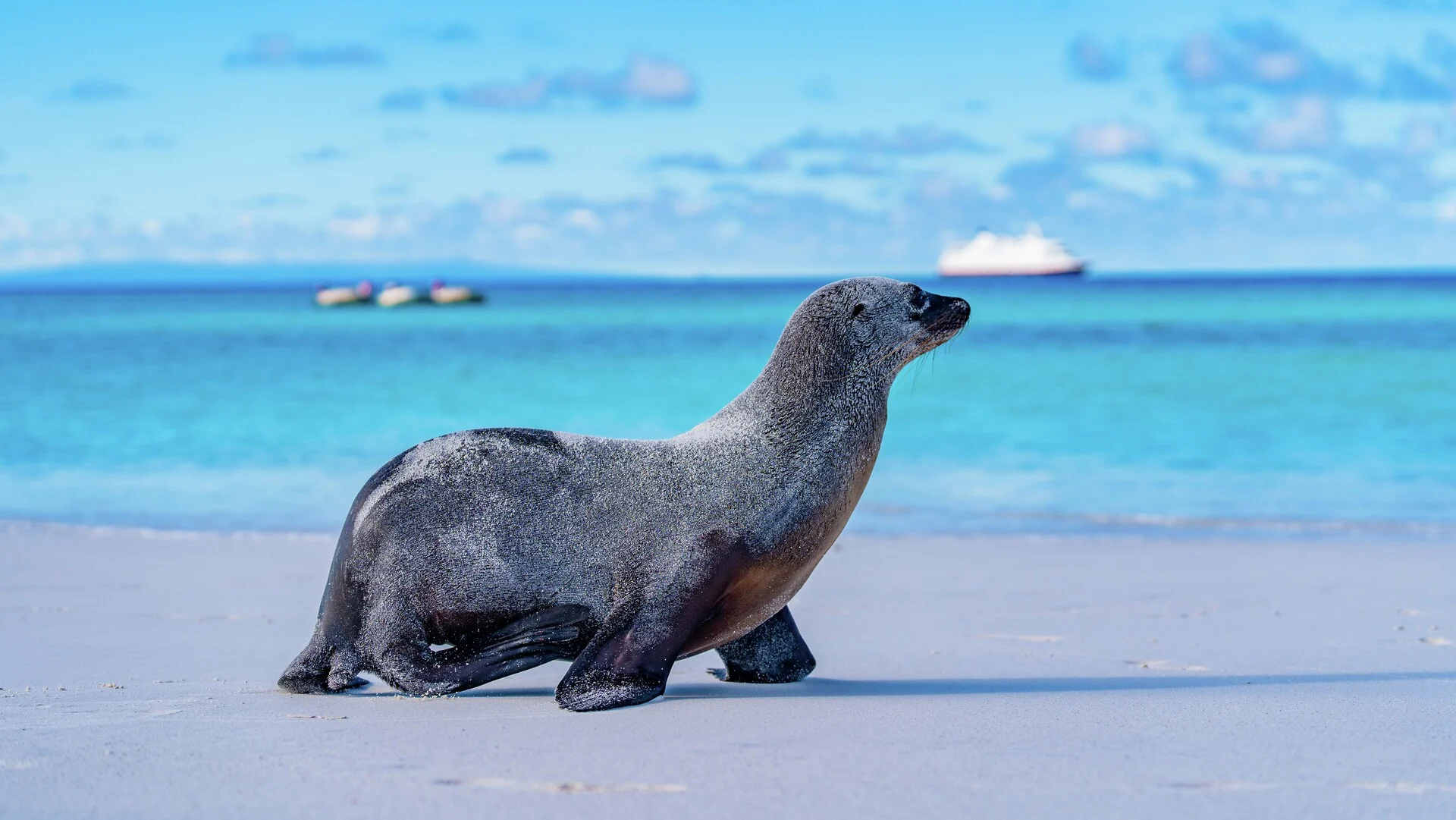
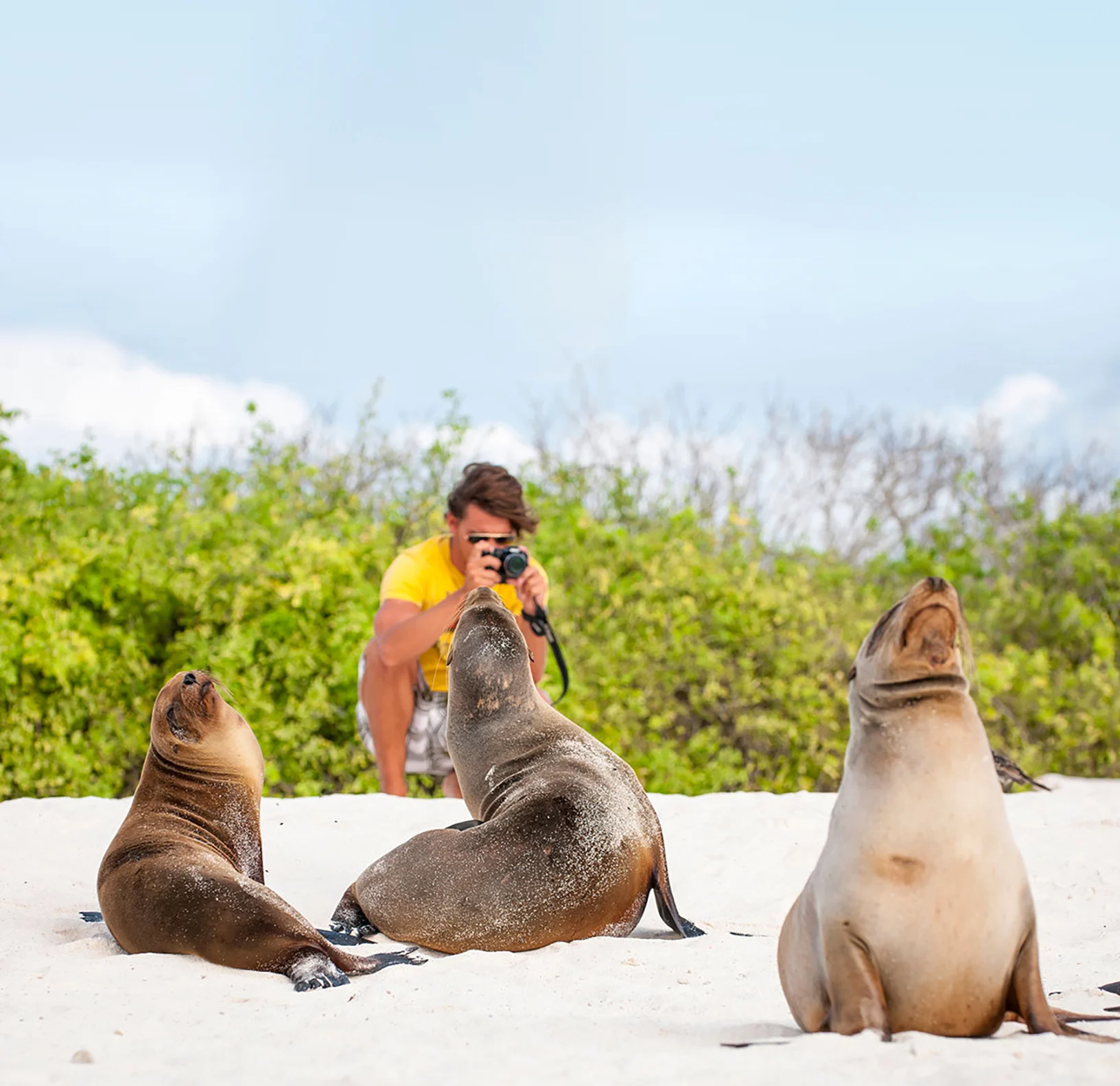
9. Galápagos Sea Lion
You’re likely to encounter Galápagos sea lions almost everywhere you go in the islands, particularly around Santiago and Santa Fe. While they spend much of their time stretched out on sandy beaches and rocky shores, their playful nature becomes clear the moment they slip into the water.
Present throughout the year, they’re often seen lounging in the sun or weaving through the water around snorkellers.
Interesting fact:
Pups are known for their curiosity and will often approach swimmers, darting and turning with surprising agility.
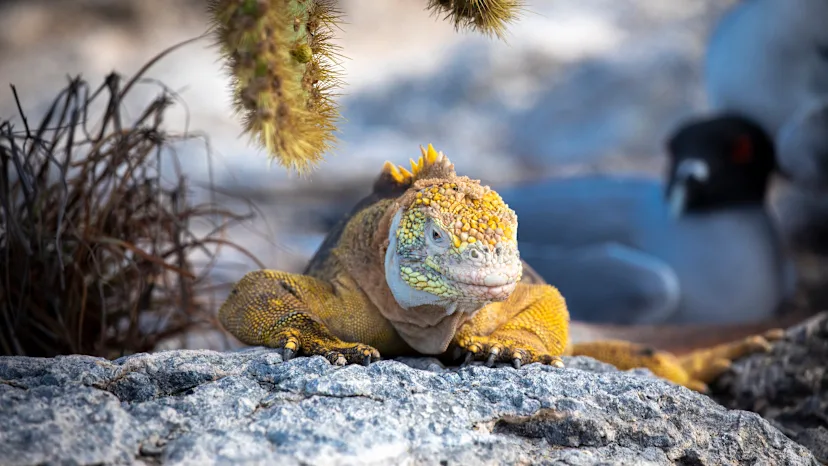
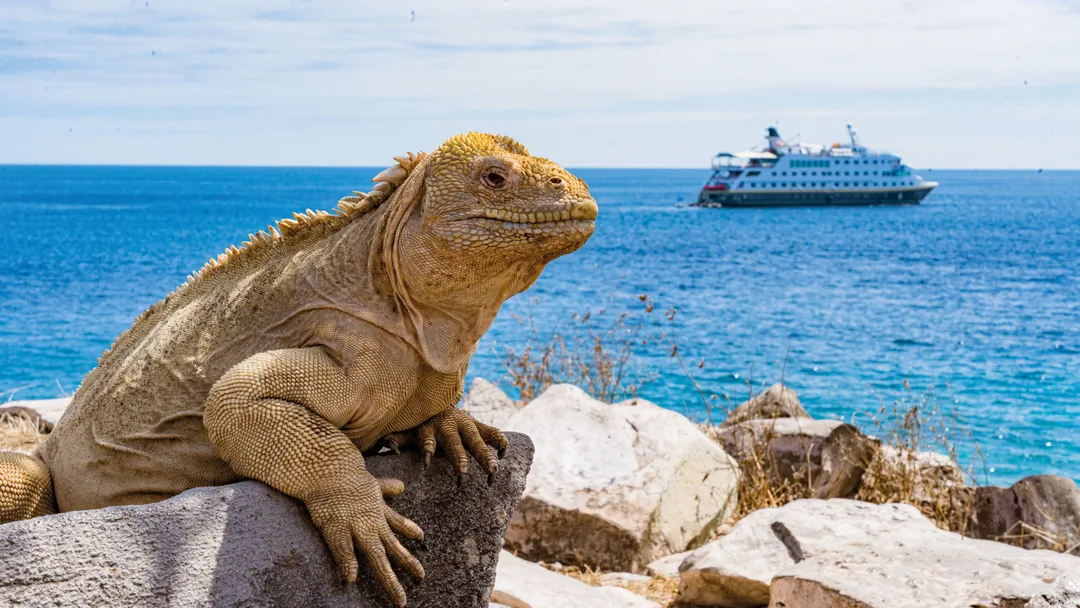
10. Santa Fe Land Iguana
The Santa Fe land iguana blends seamlessly into its surroundings, its colouring echoing the dry, cactus-covered landscape of the island. Stocky and slow-moving, it’s well adapted to this arid environment.
Despite their solid build, these iguanas are far lighter than they appear, typically weighing up to 25 pounds. Their pale yellow to sandy tones helps them disappear against sun-bleached rock and dust. They are found only on Santa Fe Island, where they roam dry scrubland and cactus forests.
Interesting fact:
Endemic to Santa Fe Island in Galápagos, this species exists nowhere else on Earth.


11. Galápagos Penguin
The Galápagos penguin is a rare and unique species; the only penguin found north of the Equator. Despite the tropical setting, it thrives in the cooler waters created by ocean currents flowing through the islands.
Small and agile, these penguins spend much of their time in the water. Present throughout the year, they are most often encountered on Fernandina Island and the western coast of Isabela Island, where cooler currents provide ideal conditions.
Interesting fact:
To cope with the heat, they pant like dogs and hold their flippers out to release excess body heat.
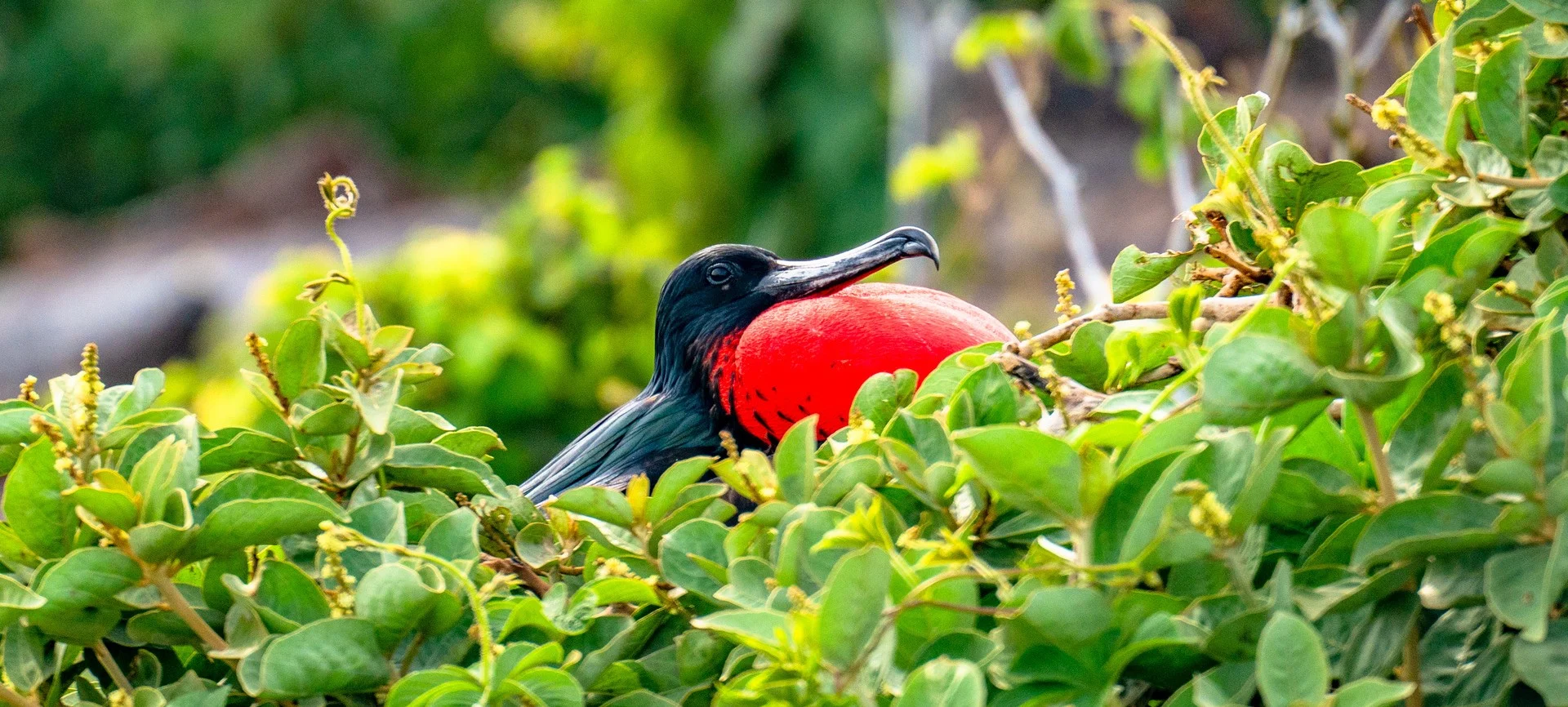
12. Frigatebird
The Galápagos Islands are home to both magnificent and great frigatebirds. These birds are easily recognisable, particularly during breeding season, when males inflate a striking red pouch beneath their throat. This vivid display is used to attract a mate and is one of the most memorable sights in the Galápagos. They spend long periods soaring above the islands, rarely landing on the water and travelling vast distances in search of food.
Frigatebirds are often seen across the archipelago. North Seymour has large nesting colonies of magnificent frigatebirds, while Genovesa is a key site for great frigatebirds. Year-round, they're spotted gliding overhead or gathered in nesting sites among low trees and shrubs.
Interesting fact:
They’re known as ‘pirate birds’, often stealing food from other seabirds mid-flight rather than catching it themselves.

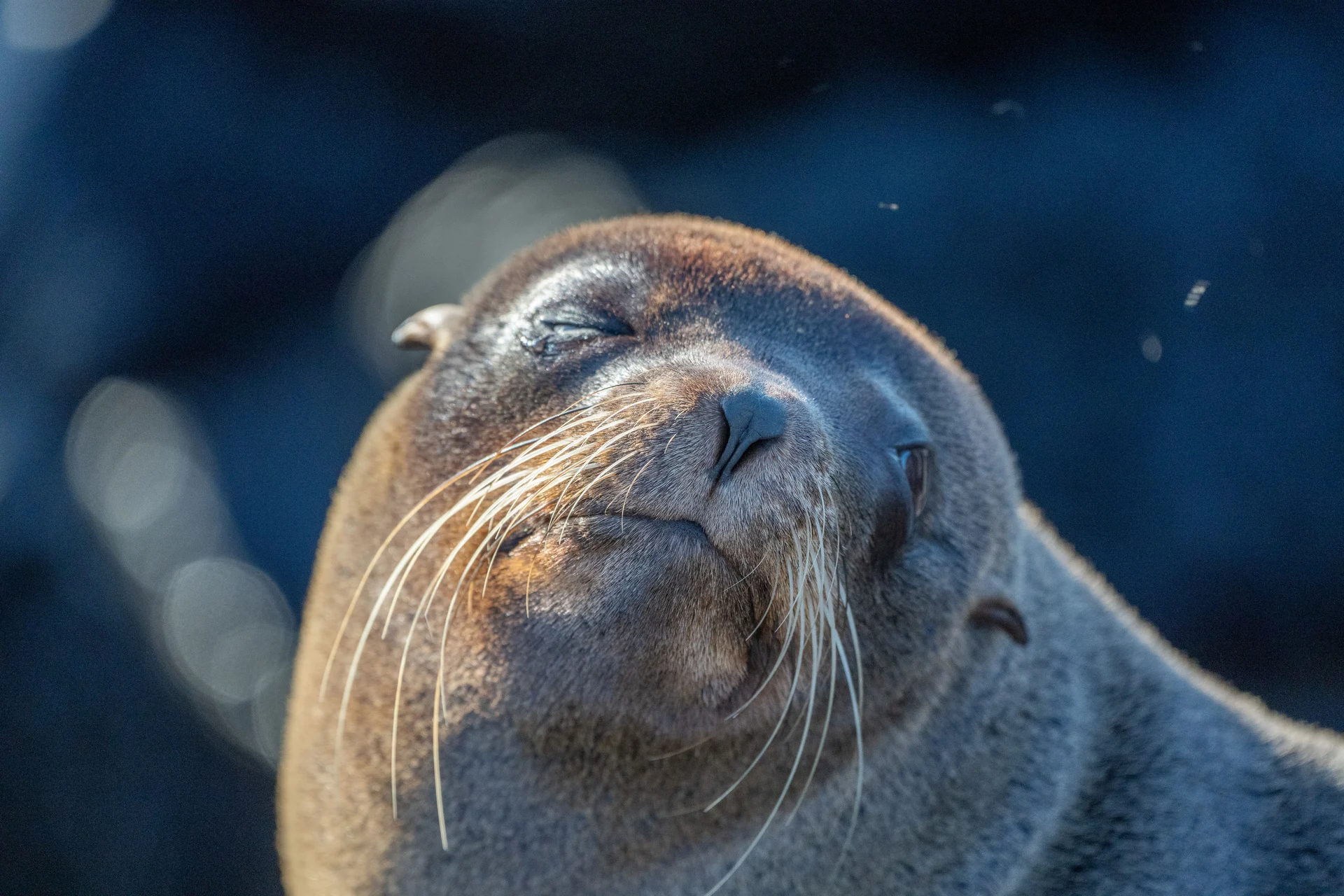
13. Galápagos Fur Seal
Galápagos fur seals are among the smaller and more elusive marine mammals in the islands. They give birth to just a single pup, and unlike sea lions, they favour shaded areas like rocky coves where they can stay cool.
Throughout the year, they’re most commonly found on Santiago and Fernandina, hauled up on shaded lava formations.
Interesting fact:
They are mostly nocturnal hunters, heading out at night to feed when cooler conditions make it easier to conserve energy.
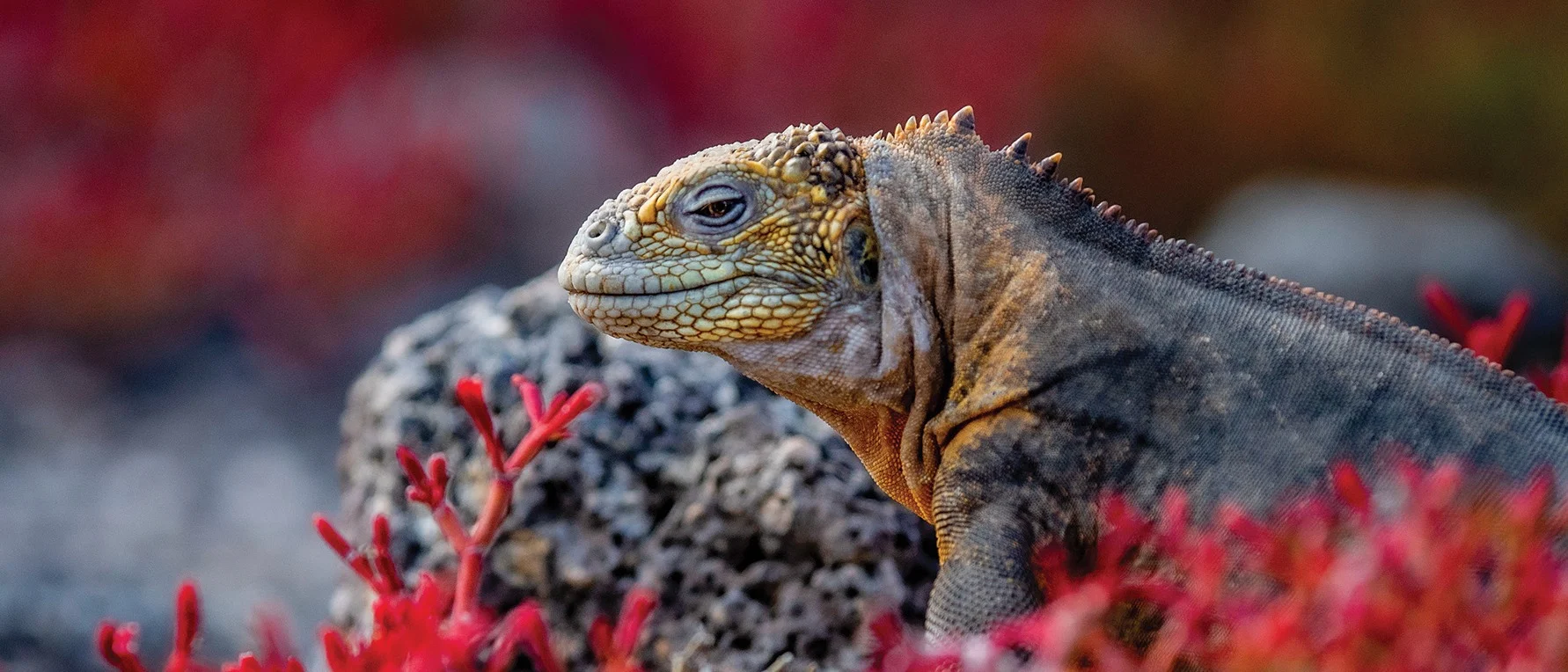
14. Land Iguana
These large reptiles can live for up to 60 years, growing to more than three feet in length. They’re often seen basking in small groups, absorbing heat from the ground. They prefer dry lowland areas with sparse vegetation and open terrain.
Land Iguanas are most often found on Santiago and North Seymour. Scan for them resting in the sun or moving deliberately between patches of shade and vegetation.
Interesting fact:
They feed largely on cactus, using their tough mouths to handle spines and pads that most animals avoid.
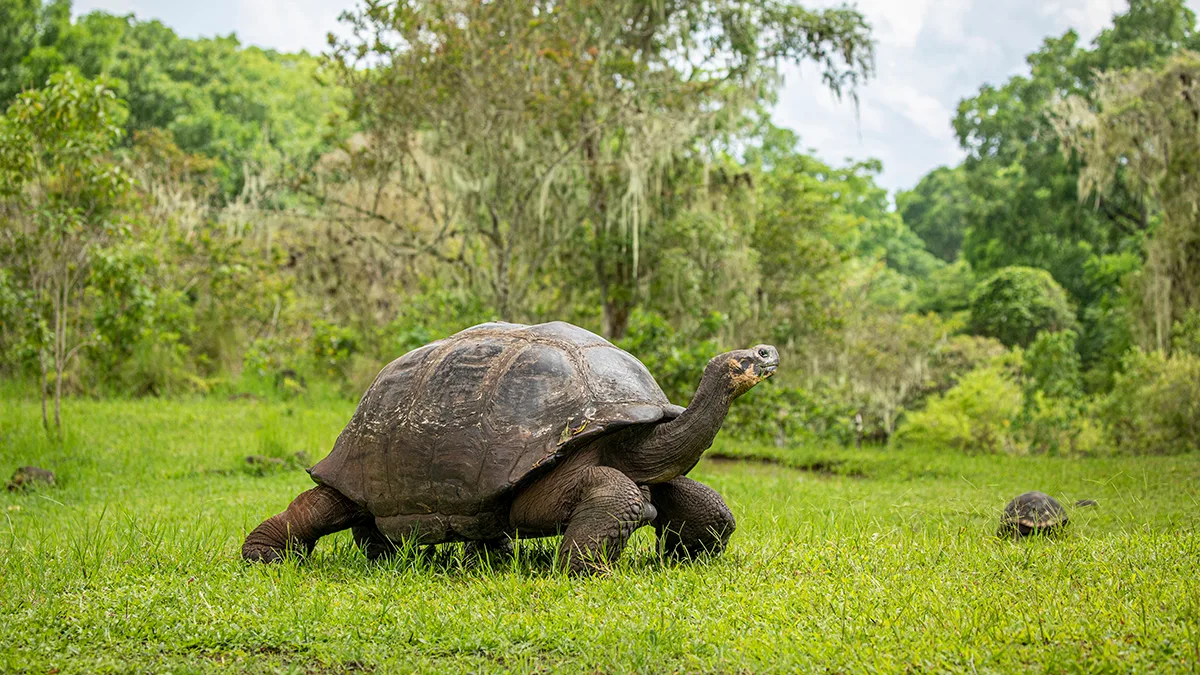
15. Galápagos Giant Tortoise
The Galápagos giant tortoise is one of the most iconic species in the islands, known for its impressive lifespan; they often live well over 100 years. Once heavily threatened, conservation efforts have helped protect their populations, and they remain one of the most sought-after wildlife encounters in the Galápagos.
They are most often found on Santa Cruz, Isabela, and San Cristóbal, particularly in the highlands where cooler, greener conditions support their diet.
Interesting fact:
These are the largest tortoises in the world, with some weighing up to 650 pounds.
Where to See Galápagos Wildlife
The archipelago is incredibly varied, and because animals evolved in isolation, each island has its own unique mix of wildlife. Here’s a quick summary of where you’re most likely to see some of the most iconic animals:
Fernandina Island: Flightless cormorants, Galápagos penguins, marine iguanas, and Galápagos fur seals
Española Island: Blue-footed and Nazca boobies, waved albatrosses, marine iguanas, and Galápagos hawks
Isabela Island: Flightless cormorants, Galápagos penguins, Galápagos hawks, and Galápagos giant tortoises
Santiago Island: Galápagos fur seals, land iguanas, Galápagos sea lions, and Galápagos hawks
Genovesa Island: Red-footed boobies, Nazca boobies, and great frigatebirds
North Seymour Island: Land iguanas, blue-footed boobies, and magnificent frigatebirds
San Cristóbal Island: Galápagos giant tortoises
South Plaza Island: Land, marine iguanas, and Nazca boobies
Santa Fe Island: Galápagos sea lions and Santa Fe land iguanas
Floreana Island: American flamingos
Santa Cruz Island: Galápagos giant tortoises
Rábida: Galápagos hawks, American flamingos
Bartolomé: Blue-footed boobies, great and magnificent frigatebirds

When is the Best Time to See Galápagos Animals?
The beauty of the Galápagos lies in its constant rhythm of life. Wildlife thrives here all year round, and there's no wrong time to visit. Whether you're snorkelling through clear waters, kayaking along gentle swells or exploring remote volcanic shores, there's always something (or someone) to spot.
Sitting on the Equator, the islands enjoy a tropical climate with little variation in temperature throughout the year. The two seasons offer their own rewards:
January to May: Slightly warmer, wetter months with calm, inviting seas. A perfect time to get into the water to spot marine life, and the peak breeding season for many birds, reptiles, and land animals, including the Galápagos giant tortoise.
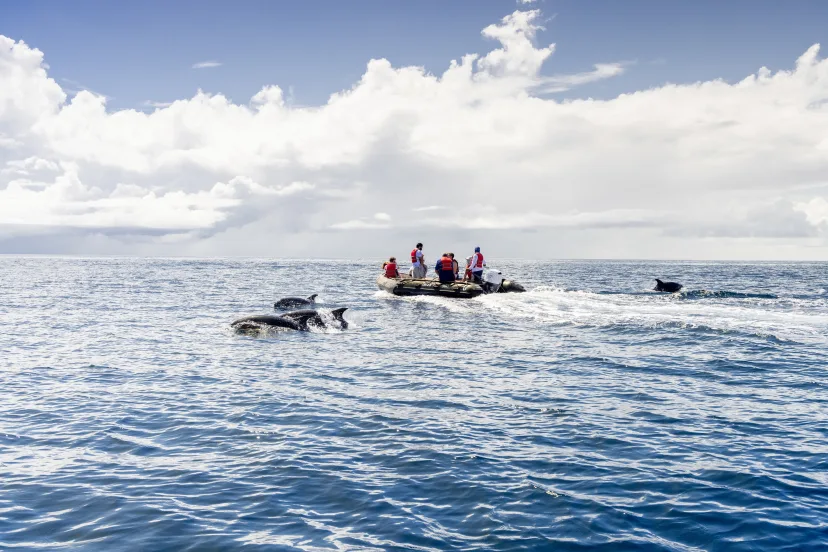
June to December: Slightly cooler, drier days and rougher seas, with the garúa mist drifting in. Nutrient-rich currents draw whales, dolphins, and penguins close to shore.
Many species call the Galápagos home all year round, and breeding cycles often follow food availability rather than the seasons. Whichever time of year you choose to explore these extraordinary islands, abundant wildlife awaits.
Find out more about visiting the Galápagos Islands in our travel guide, or get the answer to all your questions on our Galápagos FAQs.
Five Tips for Spotting Wildlife in the Galápagos
Our partner, Metropolitan, has been taking travellers to the Galápagos since 1969, and they’ve picked up a thing or two about finding its most iconic residents along the way. Here are our top five tips:
Make the most of your time. Choose a comprehensive itinerary that visits a diverse range of islands across the archipelago.
Opt for a smaller ship. They can reach the remote shores and quieter corners that larger vessels can't.
Take in the islands from every angle. Watch from the ship, paddle out in a kayak, head ashore on a nature walk, or slip into the water for a swim and snorkel.
Travel with experienced Naturalist Guides who know the local area and wildlife guidelines inside out.
Above all, keep your eyes open and your mind curious; you never know what might appear when.
Which Wildlife Will You See on Which HX Voyage?
HX offers two itineraries to view the Galápagos Islands. We have a voyage that explores the eastern islands of the Galápagos, and a voyage that explores those islands in the western and northern regions of the Galápagos.
Eastern Islands Route: In Darwin’s Footsteps
On this 9-day all-inclusive expedition cruise through the Galápagos Eastern Islands, you’ll encounter some of the archipelago’s most iconic residents, including:
Waved albatross
Blue-footed booby
Nazca booby
Red-footed booby
American flamingo
Frigatebirds
Galápagos hawk
Land iguana
Marine iguana
Santa Fe iguana
Galápagos sea lion
Galápagos fur seal
Galápagos giant tortoise
Northern and Western Islands Route: Nine of the Best Isles
This 11-day island-hopping tour across nine of the most beautiful islands in the Galápagos gives you a strong chance of seeing the following:
Blue-footed booby
Nazca booby
Red-footed booby
American flamingo
Great and magnificent frigatebirds
Galápagos hawk
Land iguana
Marine iguana
Galápagos sea lion
Galápagos fur seal
Galápagos giant tortoise
Witness the Animals of the Galápagos with HX Expeditions
From the slow grace of a giant tortoise to the courtship dance of a blue-footed booby, the Galápagos is home to wildlife encounters you'll find nowhere else, and the ‘Big 15’ are some of the most memorable.
Our 9 to 11-day all-inclusive voyages aboard MS Santa Cruz II take you to the heart of the archipelago, with expert local guides and access to some of its most remote corners. And throughout the journey, we honour conservation efforts and actively protect the islands’ remarkable biodiversity.
Explore our range of Galápagos Islands expedition cruises and start planning your next adventure.