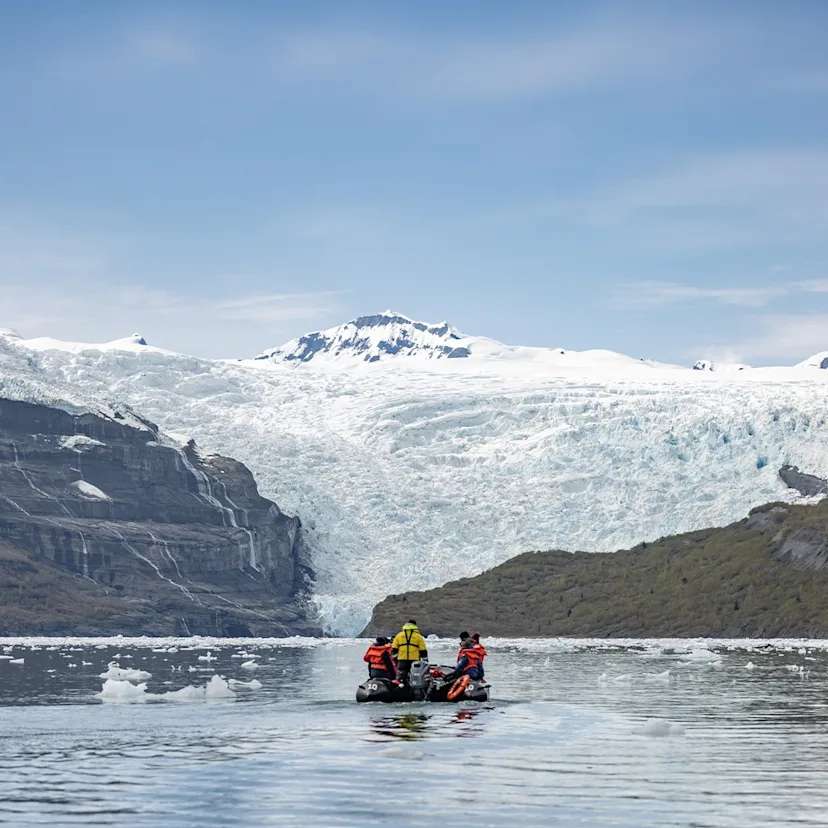
Wildlife in Alaska
With towering mountain ranges, deep fjords, and vast forests, Alaska supports one of the most diverse wildlife populations in the northern hemisphere. Encounters are shaped by season, location, and the natural rhythms of the landscape.
Tar 1 min å lese

What’s in this article?
Bears in Alaska
Whales and Orcas
Land Mammals
Marine Mammals
Birdlife
Wildlife by Region
Preparing for your expedition

Bears in Alaska
Bears are one of the defining presences in Alaska’s coastal wilderness, moving between forest, river, and shoreline in step with the seasons.

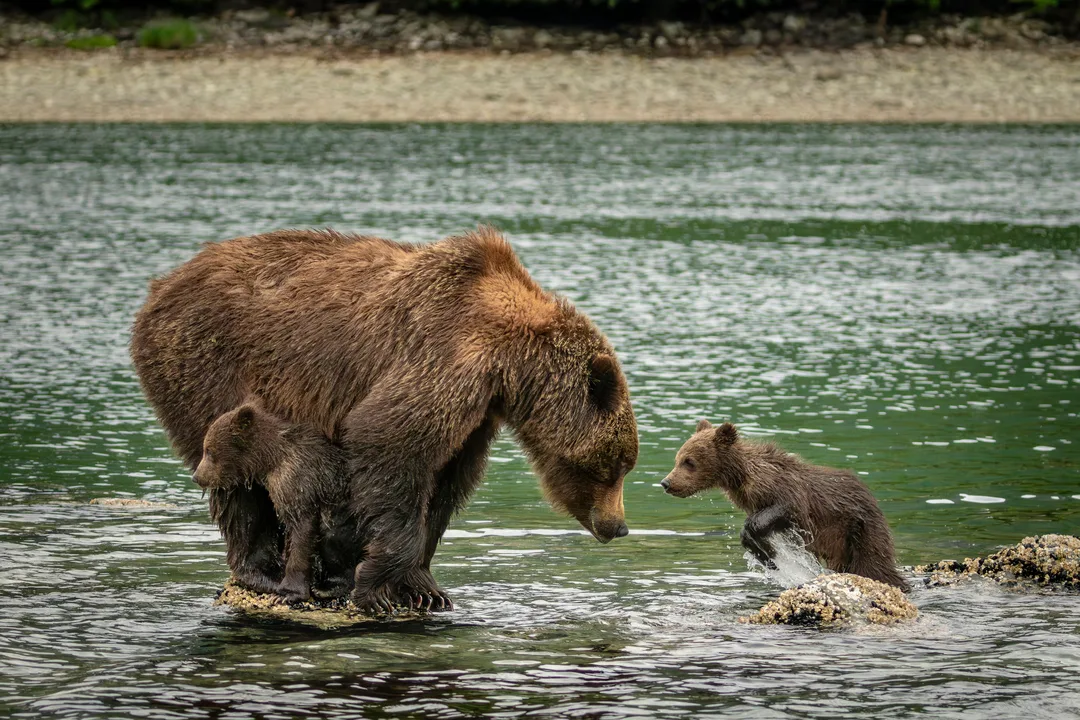
Brown & Grizzly Bears
Ursus arctos — Alaska's largest land predator
The same species, shaped by different worlds. Coastal "brown bears" grow enormous on Pacific salmon; inland "grizzlies" are leaner, more solitary, defined by tundra and river valley life. Males can reach 700 kg.
The salmon run
Each year, coastal bears return to the same rivers — wading into the shallows, waiting along the banks with quiet, practiced patience. It's one of Alaska's defining wildlife spectacles.
For many Indigenous peoples across Alaska and the North, bears are understood as deeply connected to human life — a relationship that shapes how they're observed and respected to this day.
Brown bears are found along the coast at Kodiak Island, Katmai National Park, and the Alaska Peninsula; grizzlies range across the interior tundra and river valleys.
Black Bears
Ursus americanus — agile, forest-adapted, and often fleeting
Smaller and more nimble than their brown bear cousins, black bears are highly adapted to forest life — strong climbers, with a broad diet of berries, plants, fish, and insects that keeps them moving constantly through their range.
On the move
They're usually encountered alone and briefly: crossing open ground, threading through woodland, or disappearing back into cover before you've fully registered what you've seen.
Black bears are widespread across Southeast Alaska, particularly along forest edges and coastal inlets — most commonly spotted throughout the Inside Passage, Misty Fjords, and the forests of the Southeast.

How You Encounter Bears
Bear sightings are never guaranteed, but timing, location, and access play a role.
HX’s smaller expedition ships, MS Roald Amundsen and MS Fridtjof Nansen, reach remote coastal regions such as Kodiak and the Alaska Peninsula. From the ship, Zodiac boats are launched to explore shorelines and river mouths where bears feed.
All encounters are guided by HX’s experienced and knowledgeable Expedition Teams, always at a respectful and safe distance.
Bears are a focus of several HX Alaska itineraries — most notably the 19-day Inside Passage, Bears & Aleutian Islands, which includes guided Zodiac landings at Kodiak and Katmai.
Whales and Orcas in Alaska
Alaska's coastal waters are a congregation point for some of the ocean's most extraordinary creatures — humpbacks breaching on the horizon, orcas hunting in disciplined pods, belugas ghosting through shallow inlets, and grey whales passing through on one of nature's great migrations.

Orcas
Orcinus orca — the ocean's most coordinated hunter
Despite the name "killer whale," orcas are actually the largest members of the dolphin family — intelligent, deeply social, and built for coordinated hunting. The name itself is a reversal of the original "whale killer," a nod to their prowess that was later softened in translation.
Life in the pod
Orcas travel in structured family groups with strong, lasting bonds. At the surface, they move in sequence — rising and diving in rhythm — steady and purposeful through coastal waters.
Found year-round in Alaskan waters, they are most reliably encountered in the Inside Passage, Prince William Sound, and the coastal fjords of the Southeast.

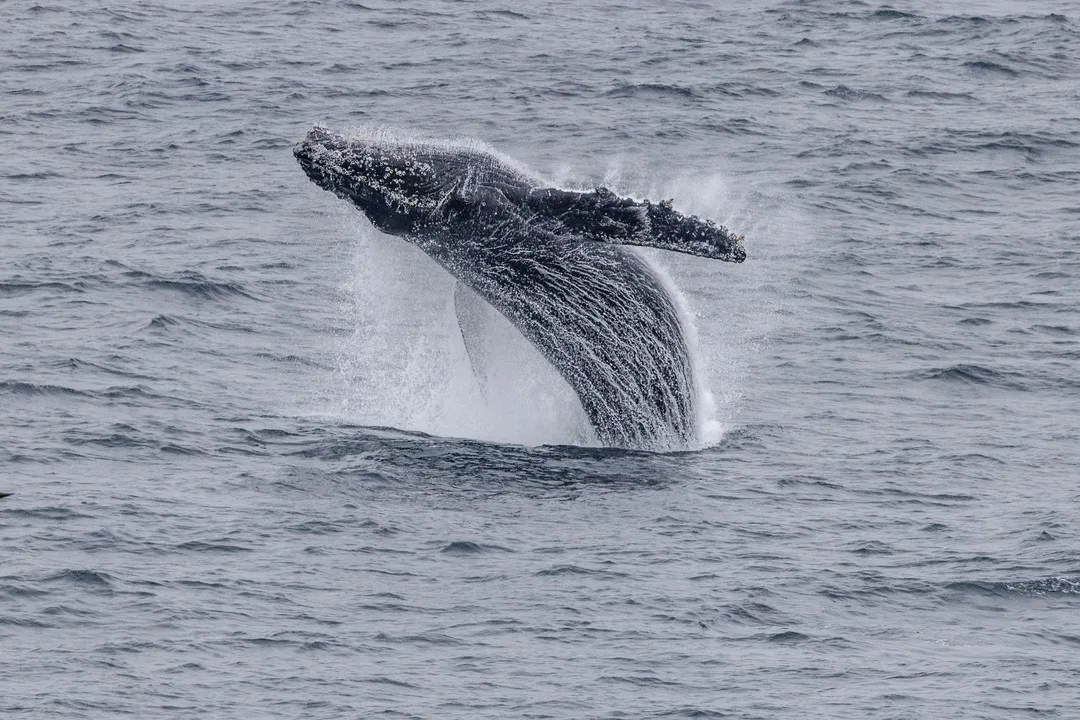
Humpback whales
Megaptera novaeangliae — acrobatic, cooperative, unmistakable
Up to 16 metres long, humpbacks are among the most acrobatic of all whale species — their name comes from the distinctive arching motion of their backs as they dive. In Alaska, they are most commonly seen feeding, often in groups.
Bubble-net feeding
One of nature's great cooperative spectacles: humpbacks work together to spiral upward beneath a school of fish, releasing a curtain of bubbles that traps prey at the surface before they lunge through it together.
Humpbacks are a reliable presence in Alaska from May to September, most often spotted in the Inside Passage, Icy Strait, and Prince William Sound.
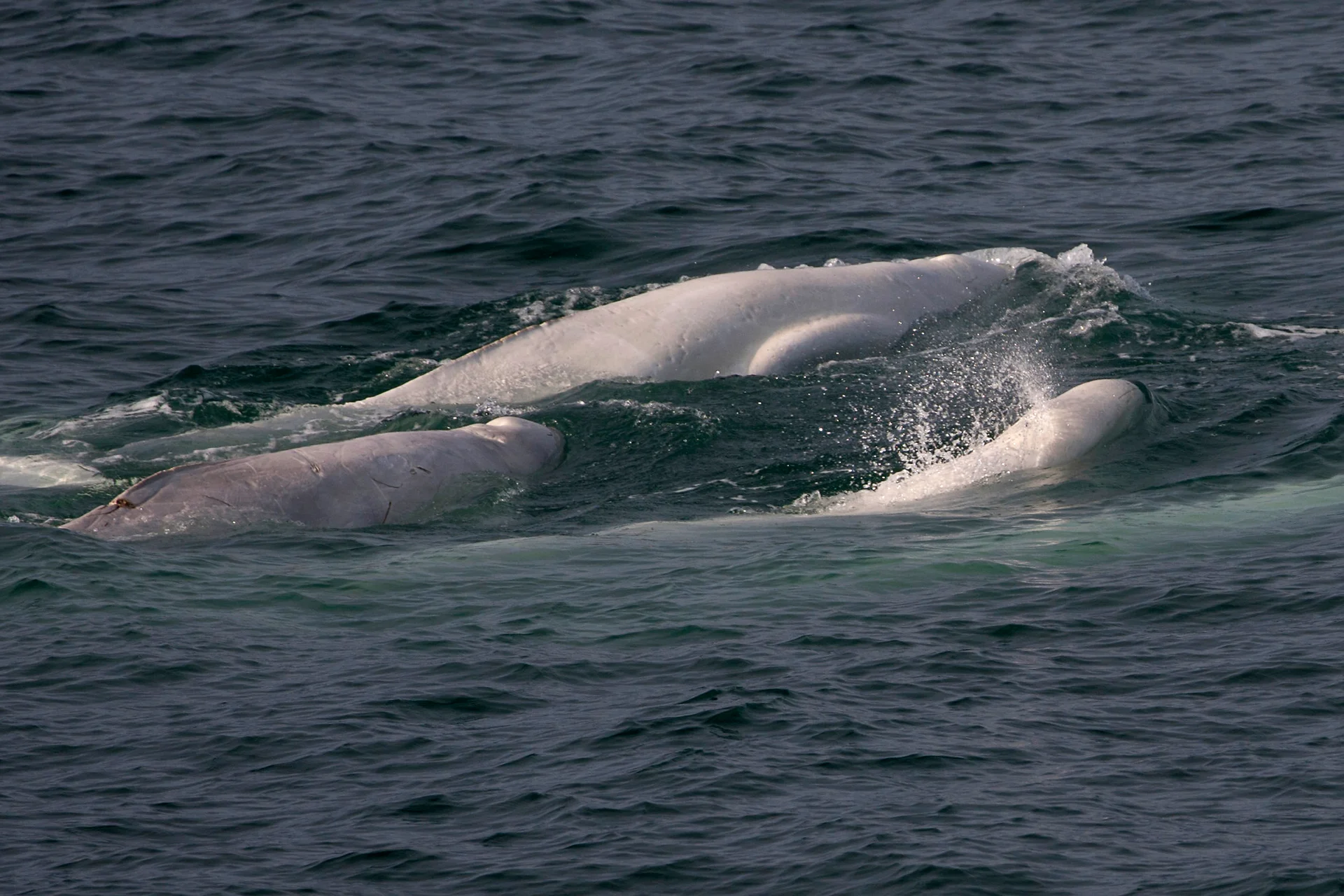
Beluga whales
Delphinapterus leucas — flexible, vocal, and distinctly pale
Belugas are highly social and among the most vocal of all cetaceans — their flexibility and animated behaviour give them a lively, unmistakable presence in the water.
Often found in estuaries and northern coastal waters, across the Northern Bering Sea and Arctic regions.
Blue whales
Balaenoptera musculus — the largest animal on Earth
Sightings are rare, but their scale is impossible to miss — most often announced first by a tall, vertical blow rising well above the surface before anything else comes into view.
Occasionally encountered in the Gulf of Alaska and around the Aleutian Islands during summer.
Grey whales
Eschrichtius robustus — coastal, shallow-feeding, and seasonal
Grey whales migrate close to shore and feed near the seabed — they may be seen rolling at the surface or leaving trails of disturbed sediment as they pass. Among the first large whales to arrive each season.
Spotted in the Gulf of Alaska during spring and autumn migrations.


How You Encounter Whales
Whale sightings depend on season, migration, and feeding patterns.
From your HX expedition ship, whales may be observed surfacing at a distance or travelling alongside the vessel. Zodiac boats launched from the ship can also offer a closer, water-level perspective.
At times, multiple whales may be visible across open water in active feeding areas and some curious individuals or pairs may even approach the ship.
Whale sightings are a regular feature of HX Inside Passage from May to September.
“Sitting on my suite balcony in Alaska, a whale appeared right in front of me and gave a whole show just for me.”
— Georgia, HX Guest, Cambridge, UK
Other Land Mammals of Alaska
Beyond the coastline, Alaska opens into forests, wetlands, and tundra where wildlife is shaped by distance and season.
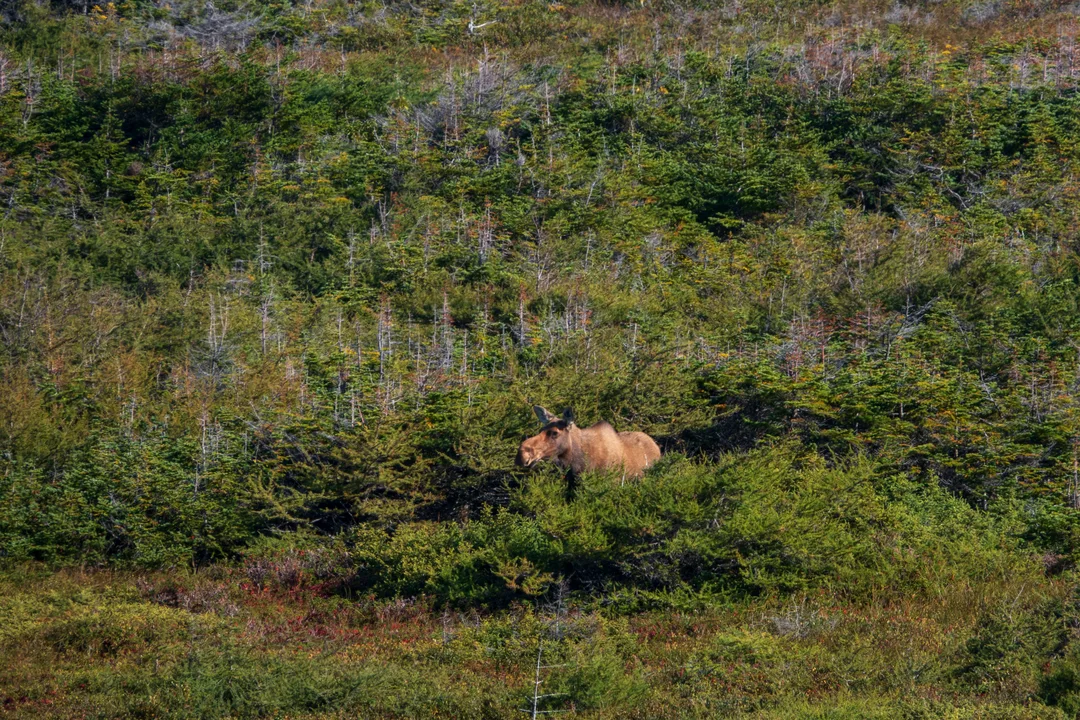
Moose
Alces alces — the largest member of the deer family
Moose are built for wetland life — strong swimmers, often seen with their heads fully submerged feeding on aquatic plants. Despite their considerable size, they move with surprising quiet through forest edges and river valleys.
Most commonly encountered across Interior Alaska, the Denali region, and the river valleys of the interior.
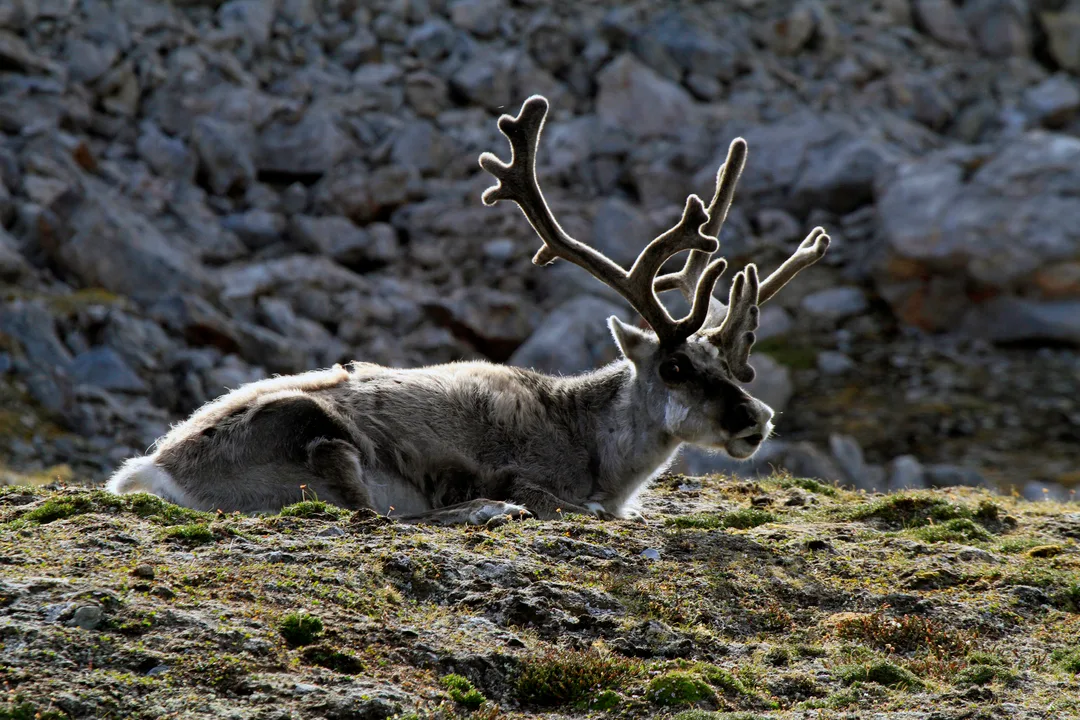
Caribou
Rangifer tarandus — built for distance, shaped by the tundra
Moving across the tundra with the seasons in some of the world's largest herds, Caribou are the only deer species in which both males and females grow antlers — and the backbone of many Indigenous communities' livelihoods and culture.
Found across the northern tundra regions and the Alaska Peninsula.
Arctic foxes
Vulpes lagopus — camouflaged for a shifting landscape
Arctic foxes move low and purposefully across open tundra, their thick coats changing with the seasons — white in winter, brown in summer — keeping them almost invisible against the surrounding landscape.
Most often seen across the Aleutian Islands and the Bering Sea regions.
Sitka deer
Odocoileus hemionus sitkensis — quiet, coastal, easily missed
Adapted to the dense coastal rainforest, Sitka deer move with a stillness that makes them easy to overlook — most sightings are brief, a figure stepping into a forest edge or shoreline clearing before blending back into the vegetation.
Found throughout Southeast Alaska and the Inside Passage.


How You Encounter Land Mammals
Moose, caribou, Sitka deer, and Arctic foxes are encountered across Alaska's interior, coastal forests, and tundra — sightings vary by region and route, with different species more prevalent depending on where you sail.
Wildlife is often first spotted from the ship at a distance, and in suitable locations, guided landings allow exploration on foot in small groups. Encounters tend to be quieter and more gradual, requiring time and attention.
Other Marine Mammals of Alaska
Along Alaska’s coastline, much of the wildlife is found in the water, particularly in sheltered bays and nearshore environments.
Sea Otters
Enhydra lutris — tool-users, kelp-dwellers, perpetually afloat
Sea otters spend almost their entire lives on the water's surface — eating, resting, and raising pups without ever needing to come ashore. They are one of the few animals known to use tools, routinely carrying stones to crack open shellfish while floating on their backs.
Often spotted in sheltered bays, sometimes anchored in place by kelp, across the Inside Passage, Prince William Sound, Kodiak Island, and the Aleutian Islands.

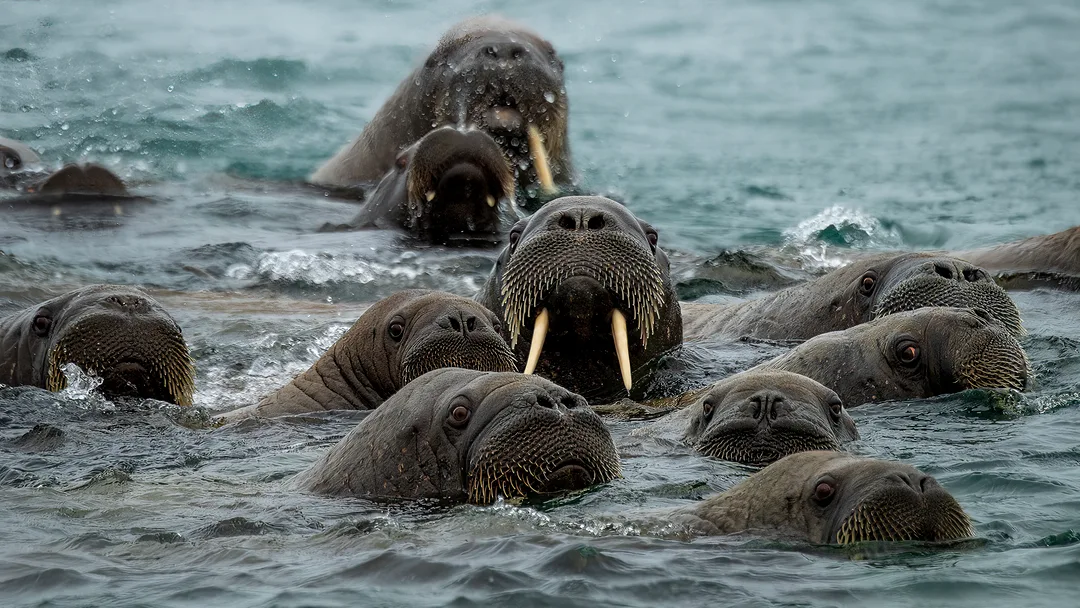
Walruses
Odobenus rosmarus — "tooth-walking sea horse"
Their scientific name says a great deal: odobenus rosmarus translates to "tooth-walking sea horse," a reference to the way walruses use their long tusks to haul themselves onto ice or rock. Weighing over 1,000 kilograms, they are highly social animals, gathering in dense, noisy groups along remote coastlines and sea ice edges.
They can be found in the Bering Sea and around the Aleutian Islands.
How You Encounter Marine Mammals
Sightings depend on sea conditions and location. From the expedition ship, animals may be observed along the coastline, while Zodiacs launched from the ship allow closer viewing in sheltered waters.
In calmer conditions, attention often shifts to smaller details at the surface — from drifting kelp to marine life below — and all encounters are managed carefully to avoid disturbance.
Both species are regularly encountered on HX Alaska expeditions, from sheltered Inside Passage bays to the remote Aleutian coast.
Sea otters are regularly encountered across Inside Passage routes; walruses are a highlight of the longer Aleutian itineraries.
Birdlife in Alaska
Alaska's coastline and offshore islands support large bird populations, with bald eagles a near-constant presence along coastal fjords, puffins nesting along cliff faces, and seabird colonies reaching their greatest concentration across the Aleutian Islands during the summer breeding season.

How You Encounter Birdlife
Birdlife is encountered from the ship, from Zodiacs, and on land. Eagles are a near-constant presence along coastal fjords and salmon rivers. Puffins nest in burrows along cliff faces and are typically seen in loose groups; seabird colonies are most concentrated across the Aleutian Islands and the remote coastal cliffs of the North, with the Expedition Team on deck to help spot and identify species as they appear.
Seabird colonies are a highlight of HX expeditions through the Aleutian Islands.
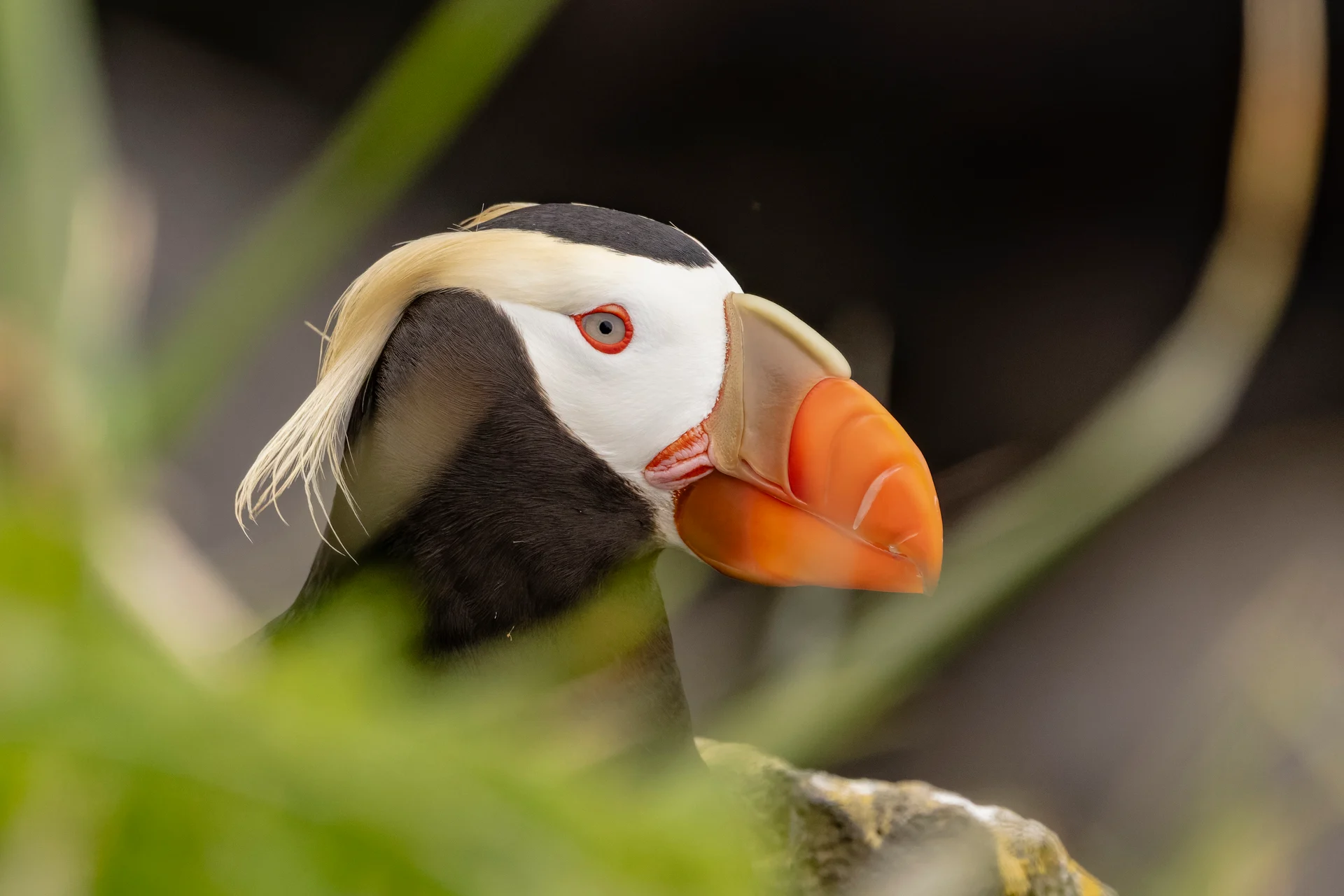
Puffins
Fratercula spp. — unmistakable, seasonal, and quietly comic
Puffins are among the most recognisable seabirds on the Alaskan coast — their beaks flushing into vivid colour during breeding season before fading again afterwards. They nest in burrows along cliff faces and are typically seen in loose groups, low over the water.
Encountered along coastal cliffs, Kodiak Island, and throughout the Aleutian Islands.
Eagles
Haliaeetus leucocephalus — the constant presence on Alaska's coast
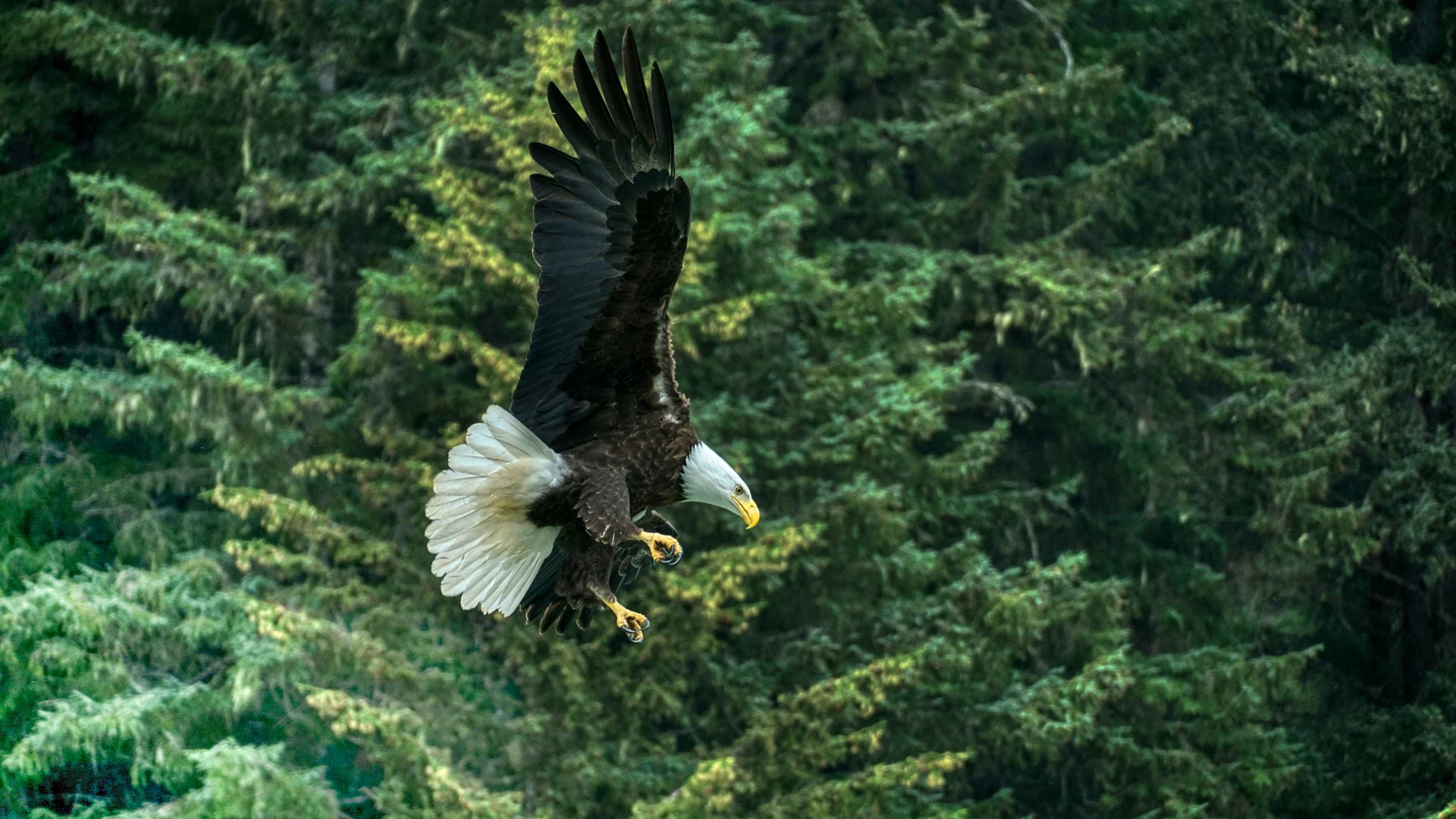
The U.S. national emblem since 1782, the bald eagle takes its name from its striking white head. With a wingspan reaching 2.3 metres, it is a skilled and patient fish hunter — less a fleeting sighting than a permanent fixture along Alaska's waterways.
Most reliably seen along coastal fjords and the salmon rivers of the Southeast.
Seabird colonies
Murres, kittiwakes, and auklets — cliff faces alive with sound and motion
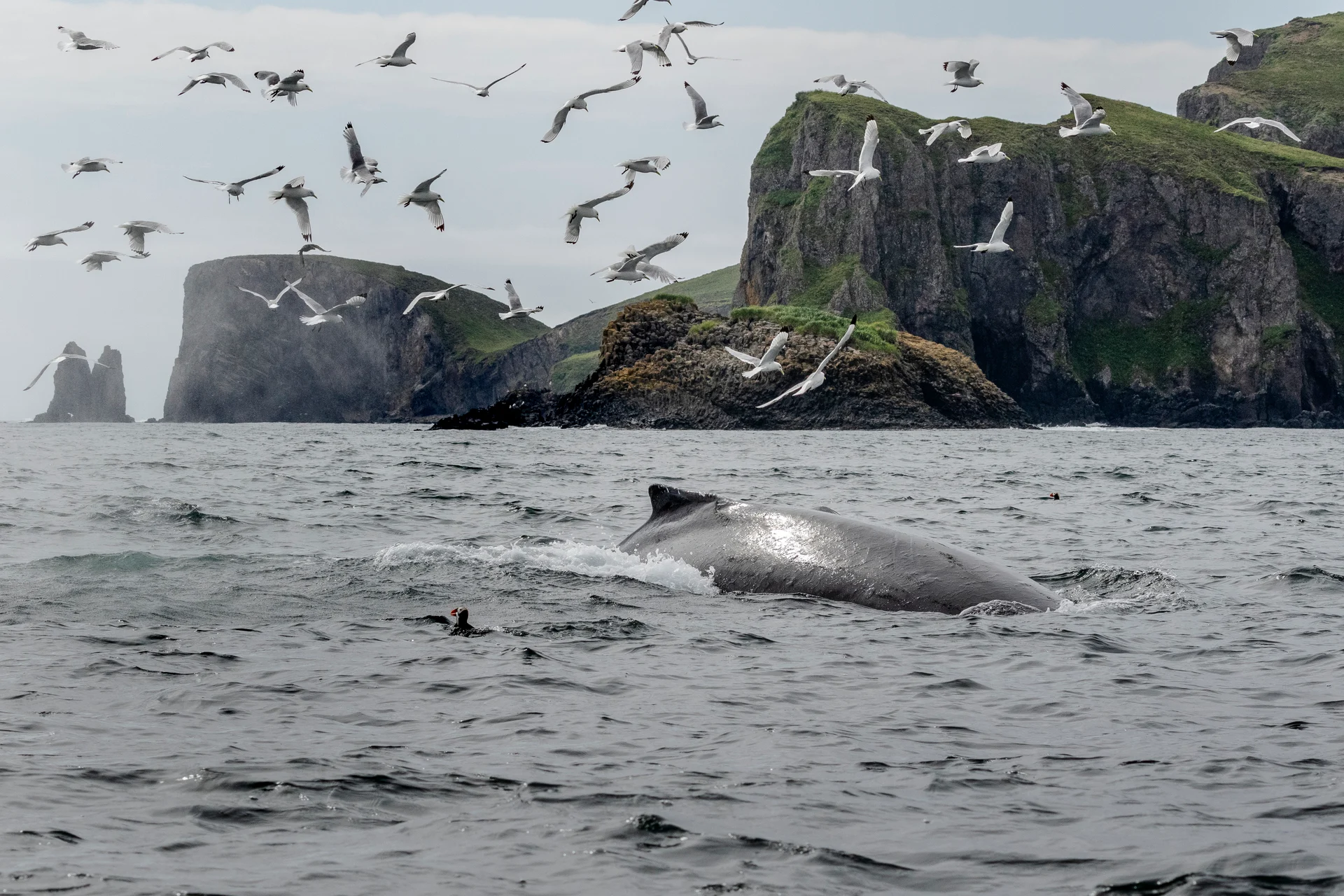
During breeding season, colonies can number in the thousands — birds stacked across sheer cliff faces in one of the most dramatic natural spectacles the Alaskan coast has to offer. The noise, movement, and sheer density of life is unlike almost anything else on the water.
Found at their most concentrated across the Aleutian Islands and the remote coastal cliffs of the North.

Wildlife by Region
Alaskan wildlife is shaped by region, habitat, season, and migration. Your route influences not only what you may see, but how you experience it.

Inside Passage
Sheltered fjords, dense temperate rainforest, and salmon-rich waters make the Inside Passage one of the most consistent regions for wildlife sightings. Bears, whales, sea otters, and eagles are all regularly encountered here.
All HX expeditions in Alaska explore the Inside Passage. Options include the 13-day Inside Passage: Where the Mountains Meet the Sea, and the 10-day Inside Passage: Fjords of the Great Land.

Aleutian Islands
Remote and exposed, the Aleutian Islands offer a different scale of experience. These volcanic islands are known for large seabird colonies, including puffins, as well as Arctic foxes and migrating whales.
HX expeditions through the Aleutians typically operate in July and September, linking the region with the Inside Passage on northbound and southbound itineraries, such as Inside Passage, Bears and Aleutian Islands.
Prepare for Your Alaskan Adventure
"It’s really the wildlife that struck me: the whales, the orcas. I found it magical."
– Valerie, HX Guest, France
Planning an expedition to Alaska is as much about understanding the environment as it is choosing your route. Season, region, and wildlife patterns all play a role in shaping what you may encounter.
To explore further, you can dive deeper into specific aspects of Alaska’s natural world, from detailed guides to seabirds and marine life to practical information on when to travel and what to expect throughout the year.
You may also wish to explore our Alaska expedition itineraries in more detail, comparing routes through the Inside Passage, the Aleutian Islands, and beyond into Arctic waters.
Taking the time to prepare allows you to approach the experience with greater context — and to recognise more of what unfolds once you’re there.