Alaska and British Columbia – Inside Passage, Bears and Aleutian Islands (Northbound)
18-day all-inclusive Alaska Expedition Cruise from Vancouver
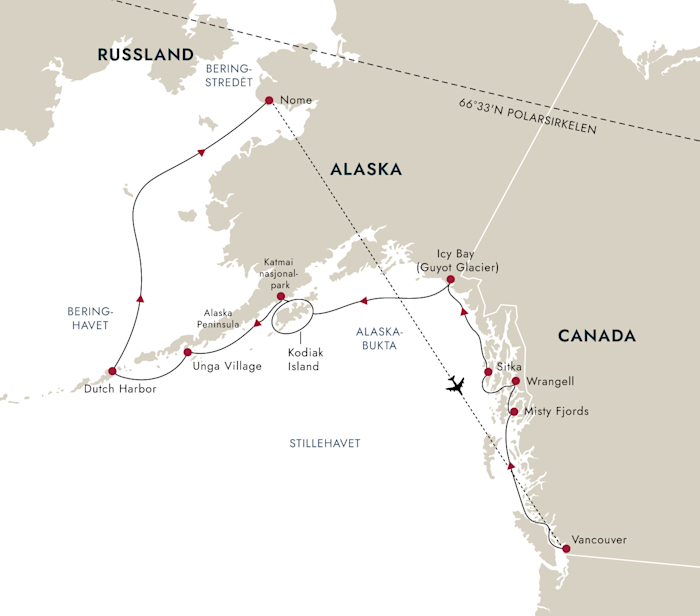
Explore Alaska’s rugged coastline and the remote Aleutian Islands on this expedition cruise from Vancouver to Nome.
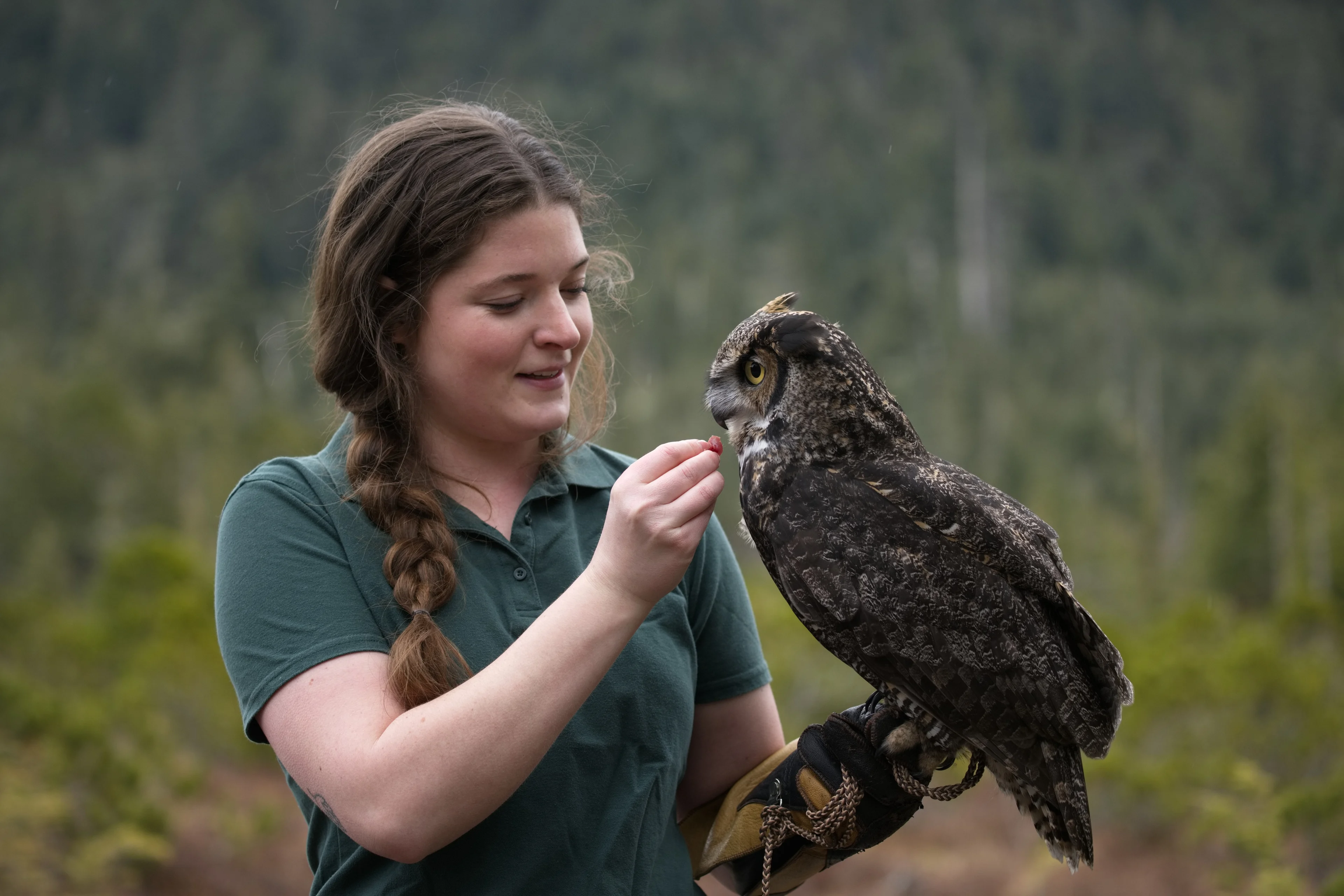
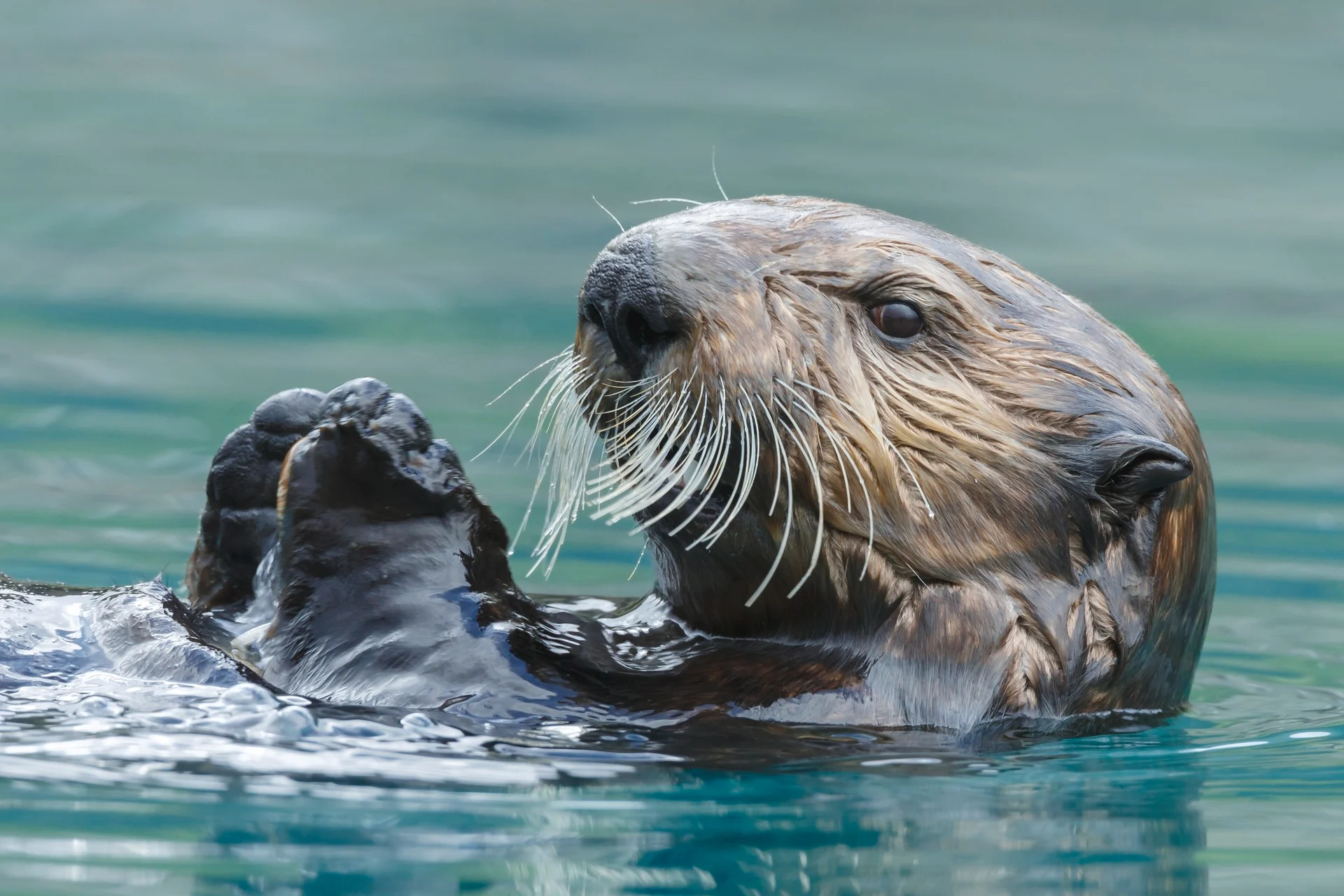
Scout for bears in Katmai National Park and on Kodiak Island, and look out for whales, seals, sea otters, and rare birds such as the red-legged kittiwake.
Join us as we attempt to land at the rarely visited islands of St Paul and St Matthew; places of rare wildlife, isolated scenery, and forgotten history.
Wild Pacific coastal beauty
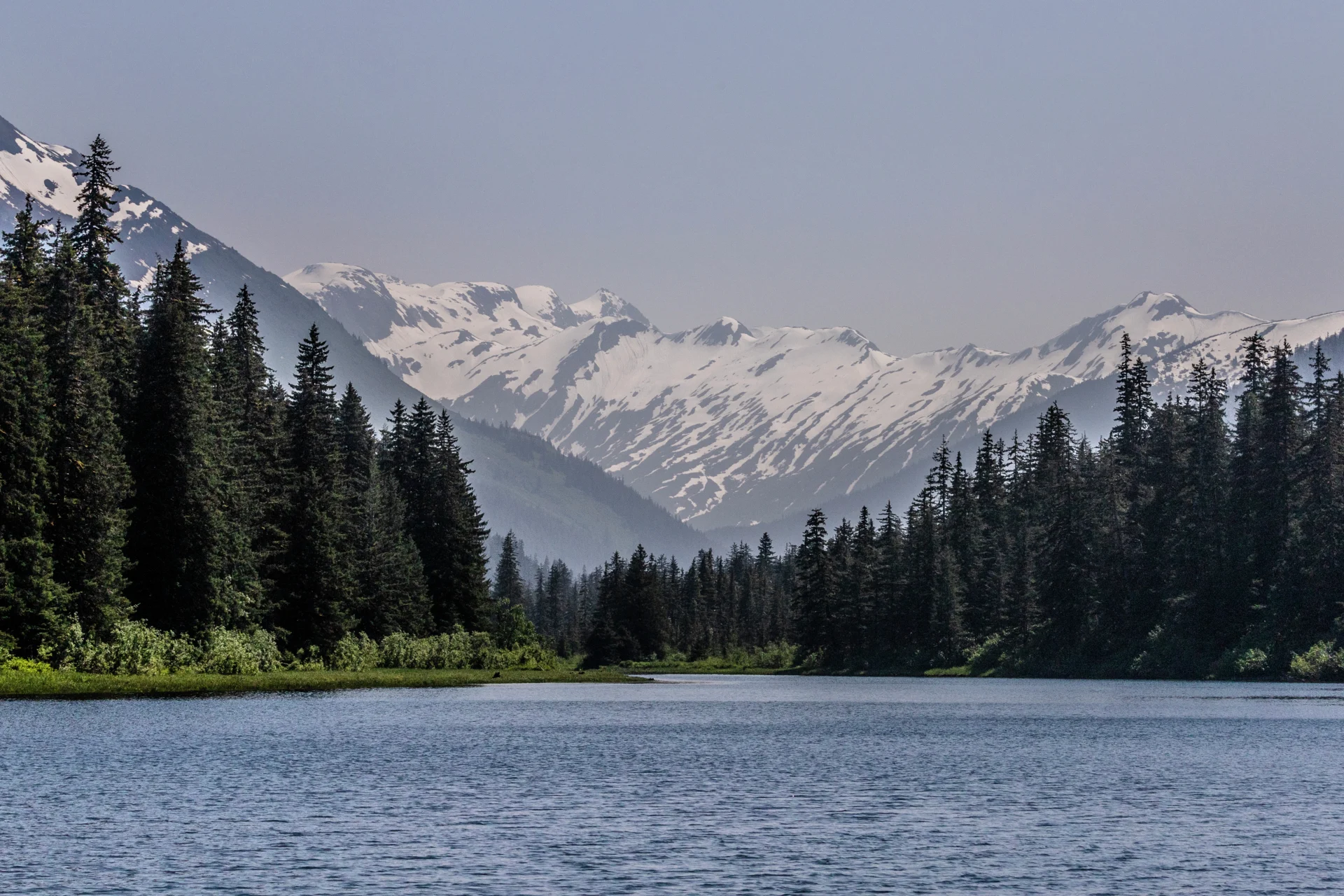
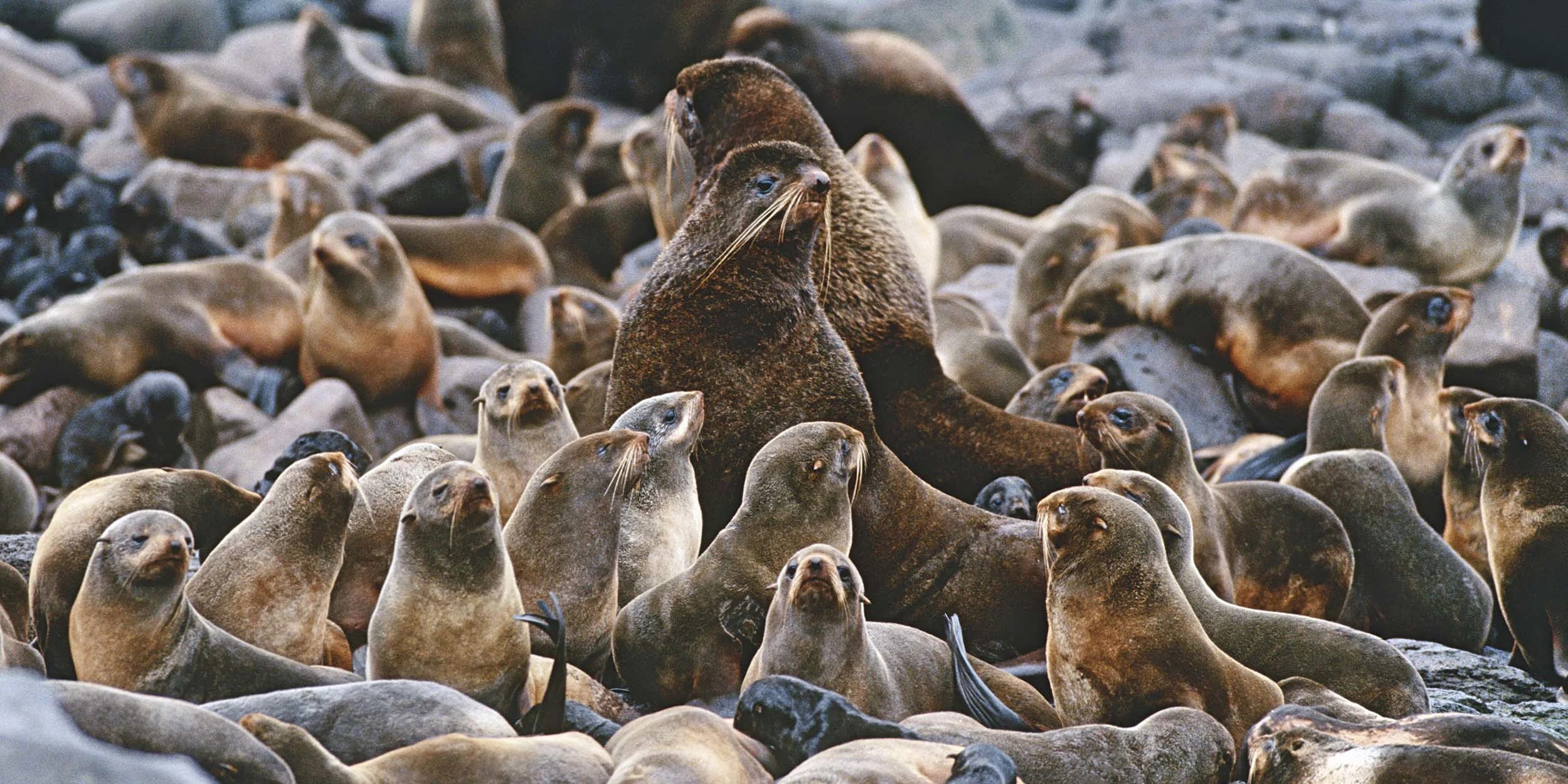
Discover the pristine beauty of Alaska’s rugged coast, as well as Canada’s Inside Passage and the Aleutian Islands. In Misty Fjords National Monument and on remote islands you’ll see where nature reigns free. As we go, keep an eye out for brown bears on Kodiak Island and in Katmai National Park, and scout for whales, fur seals and birds including Bald Eagles and rarities like the Kittlitz’s Murrelet as we voyage north.
Discover a living history
Meet people belonging to Indigenous Łingít and Unangan cultures, search for petroglyphs in Wrangell and follow in the footsteps of gold prospectors and explorers on your expedition cruise. Visit the fascinating ghost town of Unga and uncover ancient stories on mossy totem poles at Chief Shakes Tribal House, and go home with a better understanding of the culture, ecology and history of this beautiful region.
Expedition SuiterOppdagelsesreise på en enda bedre måte
Viktige detaljer om ekspedisjonen
Reiserute
Din reise i korthet. Daglige høydepunkter, inkluderte aktiviteter og valgfrie tillegg for å gjøre opplevelsen uforglemmelig.
Set sail from Vancouver
Your adventure begins in Vancouver, a Pacific seaport framed by steep mountains and dense coastal forest. Wander the Victorian streets of Gastown, or walk the seawall past the towering cedar groves of Stanley Park, a first taste of the wilderness ahead. The seafood and farm-to-table dining here is exceptional. We'd recommend arriving a day early to give yourself time to explore the city.
Come evening, your ship awaits. Settle into your cabin, meet the Expedition Team, and attend the safety briefing. Tomorrow, we sail north.

Marine wildlife along the Pacific coast
The Inside Passage is one of the great coastal routes of the world, with over 900 miles of sheltered Pacific waterway, carved by glaciers and fringed by ancient forest. Today we venture beyond its shelter into the open waters of Queen Charlotte Sound and Hecate Strait, where the island of Haida Gwaii lies to the west.
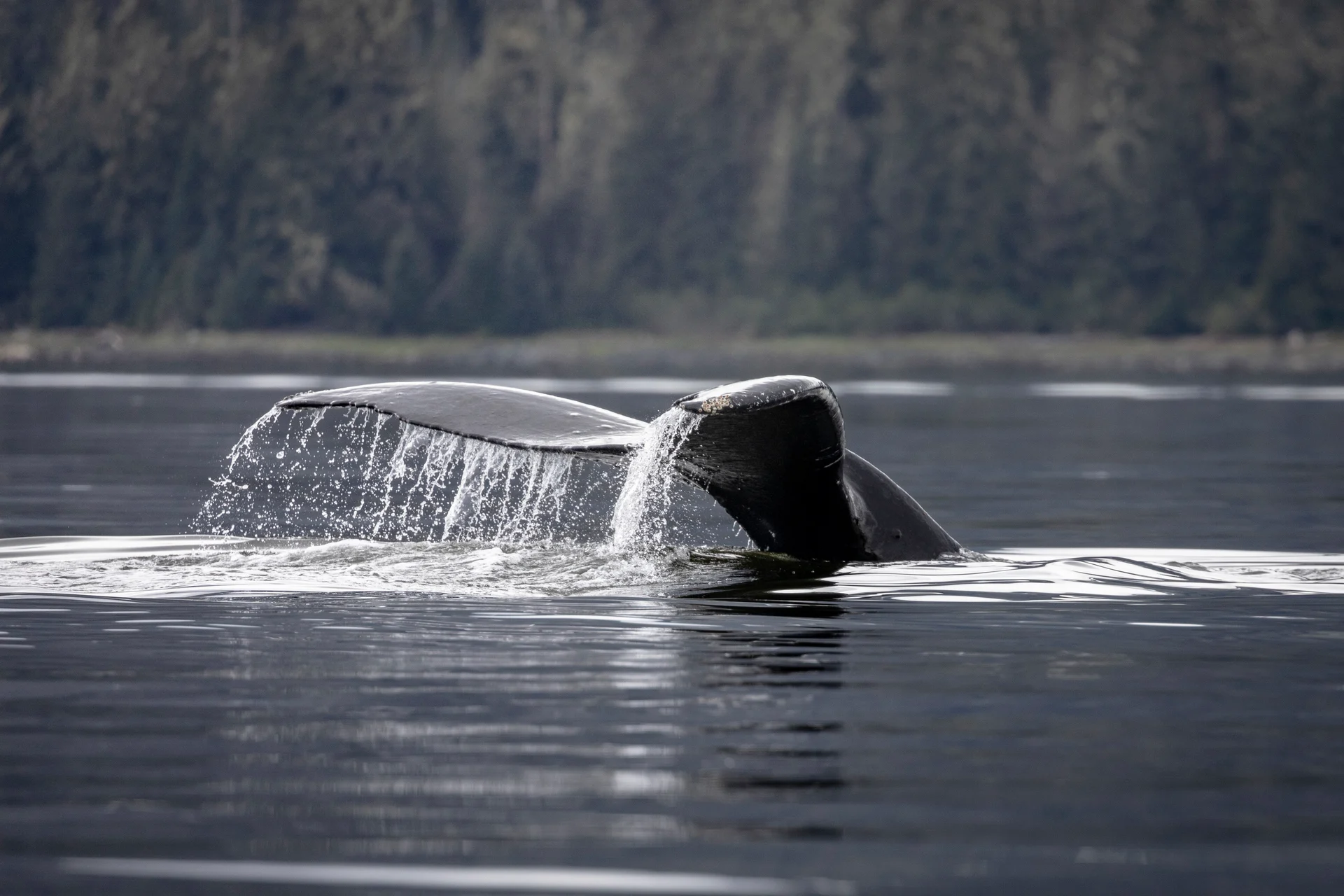
These are productive seas. Keep watch for humpback and fin whales, orcas, minke whales, and Pacific white-sided dolphins. This is a voyage that rewards those who keep their eyes on the horizon.

Towering cliffs, waterfalls, and snowcapped peaks
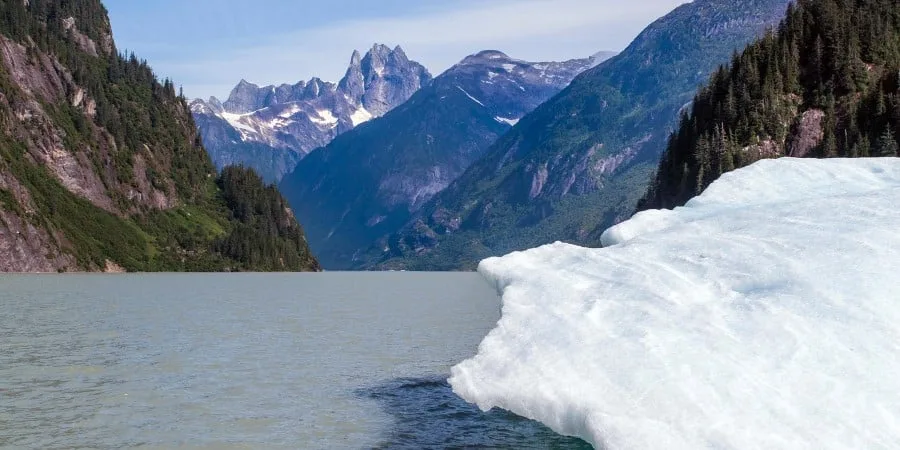
Misty Fjords is a pristine wilderness where glacier-carved fjords plunge deep into the Tongass, their cliff faces climbing 3,000 feet straight from the water. The revered naturalist John Muir described the area as one of the most beautiful places he’d ever seen.
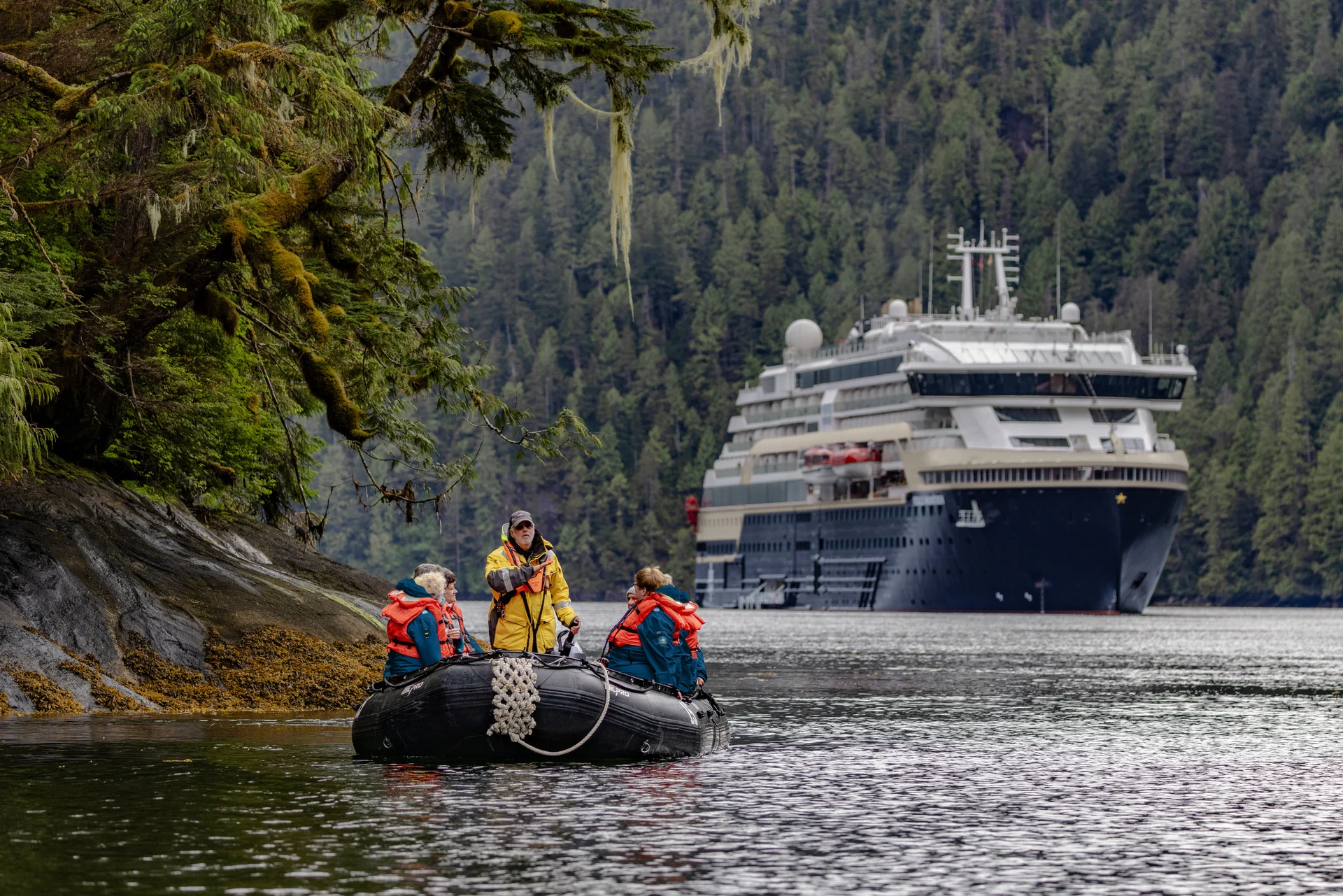
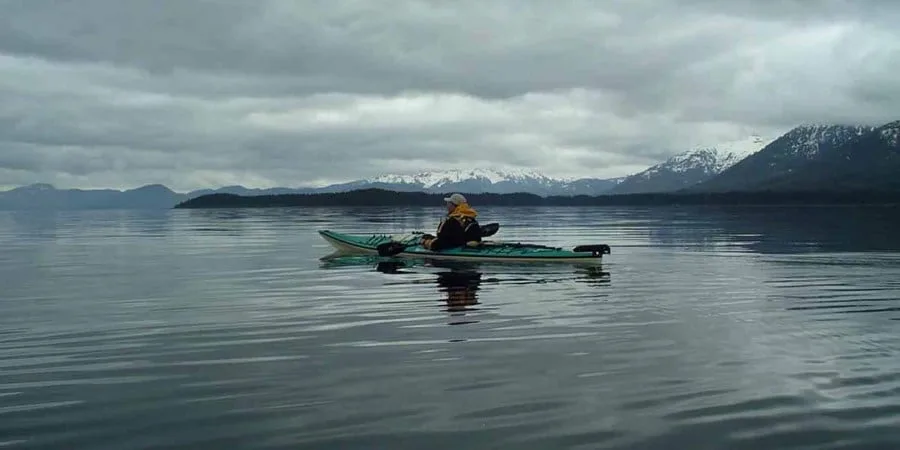
Weather permitting, you'll join the Expedition Team to tour Misty Fjords in our Zodiac boats or explore in a kayak. Watch for otters, Steller sea lions, harbour seals, orcas, and Dall’s porpoises in the water below, mountain goats on the ledges above, and bald eagles circling overhead.

Visit one of Alaska’s oldest harbour towns
We continue cruising the Alaskan islands towards Wrangell.
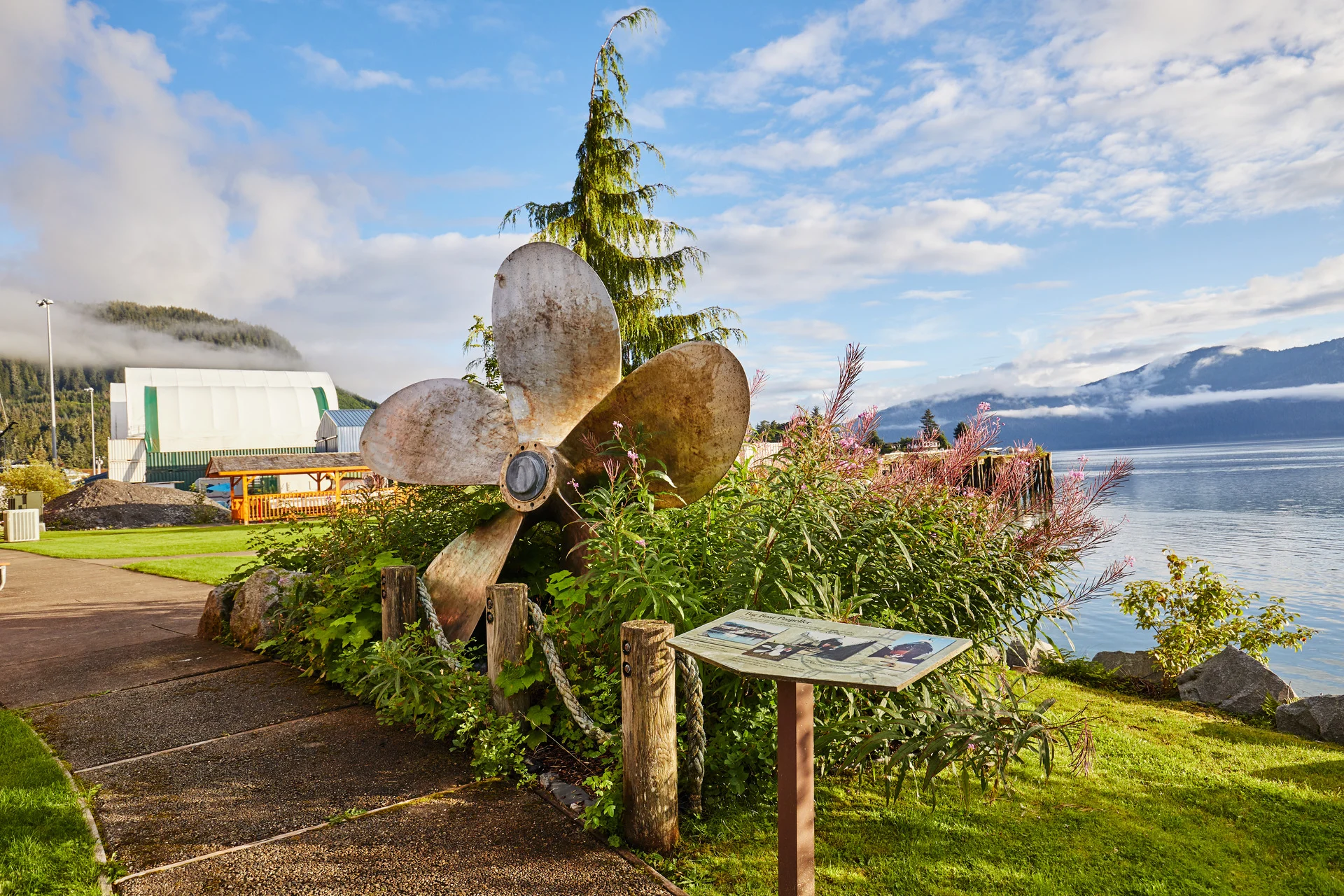
The traditional homeland of the Łingít people for 8,000 years, Wrangell has in the past two centuries come under the control of Russia, then Britain, and is now part of the US.
Visit the local museum to learn more about Wrangell's fascinating past. Cross over to Shakes Island, where the Chief Shakes Tribal House and totem poles tell the story of the indigenous Łingít people.
Only one mile out of town, you’ll find Petroglyph Beach, which has ancient carvings etched into the large rocks along the shore. Created by the Łingít people, they are believed to be over 1,000 years old.
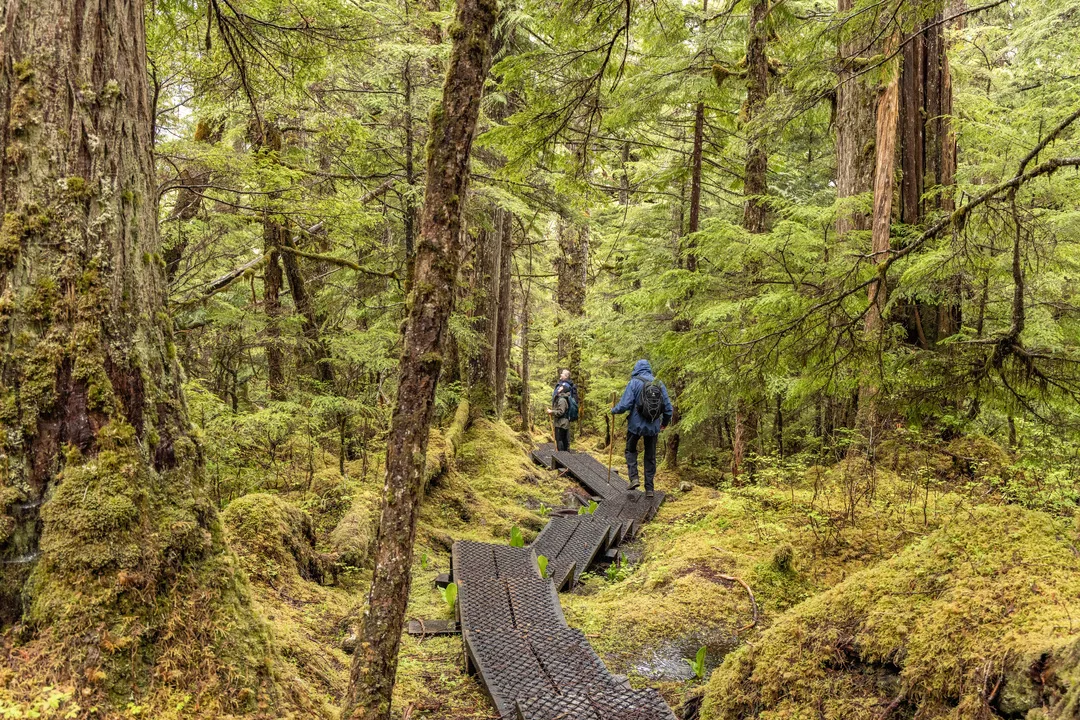
Hikers will enjoy the nature trails, surrounded by alluring scenery at the mouth of Stikine River, and the foot of Mount Dewey at the edge of the temperate rainforest.

Where cultures converge
As the dormant cone of Mount Edgecumbe rises into view, we reach Sitka, set in the heart of Tongass National Forest. This has been the ancestral homeland of the Łingít people for 10,000 years. Russian explorers settled here at the turn of the 19th century, and Russia, weakened by the Crimean War, sold the territory to the United States in 1867.
We see how those layers of history remain visible: at the Russian Orthodox Cathedral and Russian Bishop's House, and in the Łingít and Haida totem poles at Sitka National Historical Park.

Alaska's frozen amphitheatre
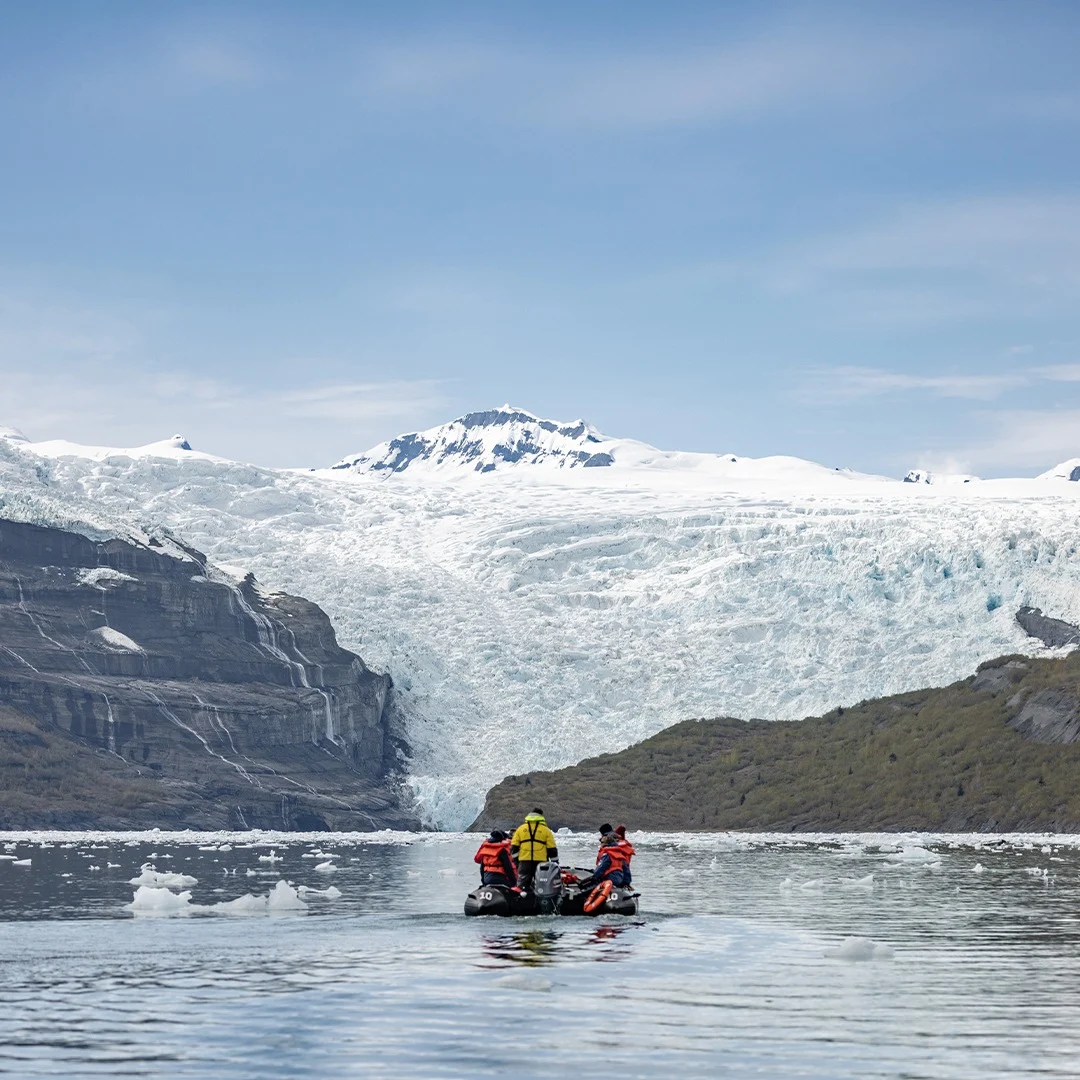
Today we explore Icy Bay, where three glaciers, Guyot, Yahtse, and Tyndall, calve ice into the blues below. Conditions permitting, you'll head out in Zodiacs or kayaks, venturing close enough to hear the crack and rumble of ice meeting the sea.
From the water, the jagged peak of Mount St. Elias dominates the skyline. At over 18,000 feet and just ten miles from tidewater, it is the second-tallest mountain in both the United States and Canada, one of the most dramatic vertical rises anywhere on Earth. It's the kind of view that stops conversation.
Out in the Gulf of Alaska, we scout for humpback whales, orcas, sea otters, and harbour seals, all commonly seen in these waters.

Birdwatching and relaxing at sea
Your cruise continues across the Gulf of Alaska. Enjoy the infinity pool, hot tubs, sauna, gym, or even treat yourself to a spa treatment.
In the Science Centre, the Expedition Team members invite you to join lectures on Alaska’s wildlife, geology, glaciology, and history.
From the open deck, scan the horizon for seabirds. Three species of North Pacific albatross inhabit these waters: the laysan and black-footed are regularly spotted, while a glimpse of the rare short-tailed albatross would be the ultimate sighting of the voyage.

Verdant Kodiak
Known as the 'Emerald Isle', Kodiak rises from the Gulf of Alaska in a sweep of lush temperate forest and rugged shoreline. This is the ancestral homeland of the Sugpiaq people, whose connection to these islands runs thousands of years deep.
We spend two days here, visiting Kodiak town and a small coastal community to learn about local culture and traditions first-hand. Out on the water, we search for humpback whales, sea otters, and harbour seals. The Kodiak National Wildlife Refuge, covering roughly two-thirds of the island, is home to around 3,500 Kodiak brown bears, a subspecies found nowhere else on Earth.

Spot brown bears on the Alaskan coast
Katmai National Park spans roughly four million acres of the Alaskan Peninsula. It’s home to around 18 volcanoes, including seven active since 1900, and shelters the world’s highest concentration of protected brown bears: around 2,000 in total.
We scout from the ship deck and in Zodiacs, watching bears work the shoreline: digging for clams, fishing in the shallows, moving through the coastal grasses with the unhurried confidence of a species at the top of the food chain. Depending on conditions, we’ll explore Geographic Harbor, Kinak Bay, or Kukak Bay. Patience is richly rewarded here.

Explore rugged scenery in an untamed wilderness
The Alaska Peninsula is an untamed wilderness and a haven for wildlife. The region is characterised by its raw coastal landscapes, towering mountains, and secluded bays.
Join your Expedition Team for close exploration of hidden bays and inlets along the shoreline, offering the opportunity to scout for bears, bald eagles, and marine species like sea otters and humpback whales. Learn about the geological evolution of the region, appreciating how natural forces have sculpted the unique topography around you.

Nature reclaims a forgotten settlement
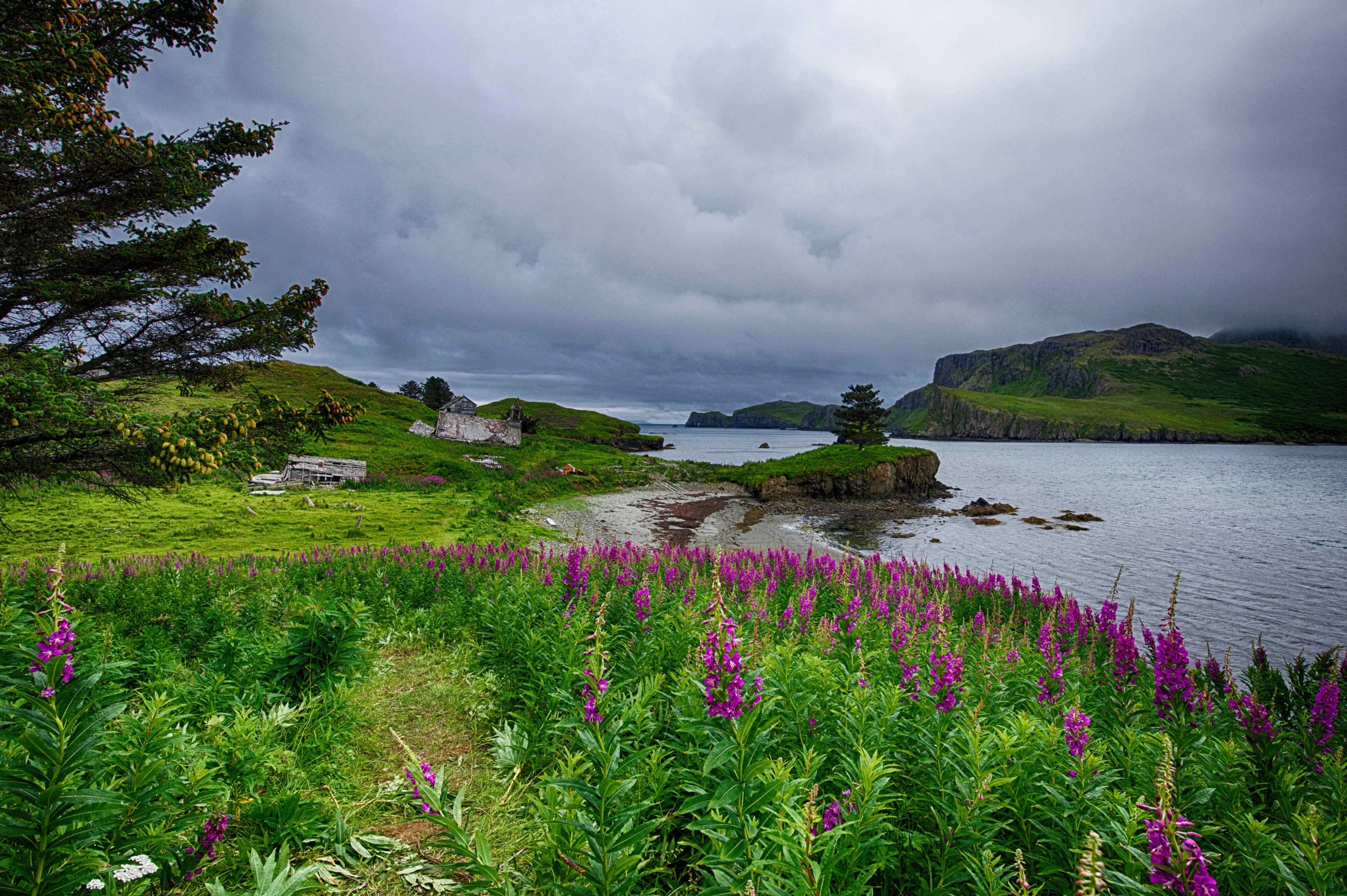
Wild and deserted, Unga Village is a haunting settlement on the southeast coast of Unga Island.
Formally established in 1833 as a trading post, it later became a small fishing and mining community. But as services dwindled, residents gradually left, the last family departing in 1969.
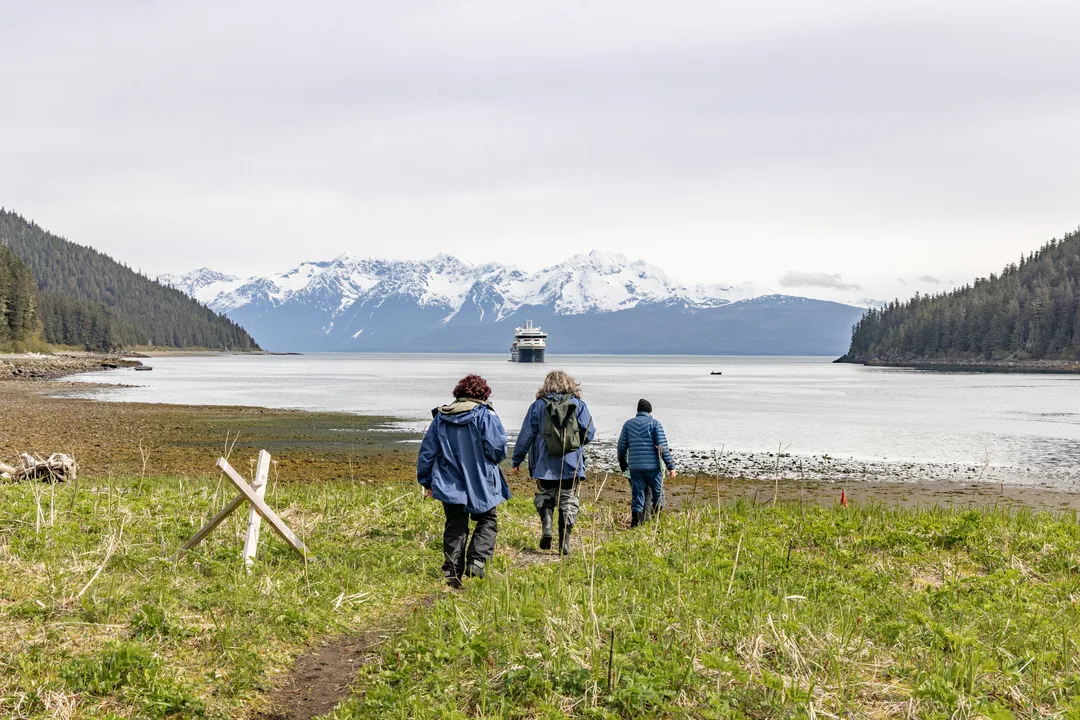
Today, the few wooden buildings that remain are the only evidence that people once lived here. Pink lousewort, fireweed, and other wildflowers surround the abandoned shacks as nature has gradually taken over. Experience the eerie beauty of this place during a nature landing by Zodiac.

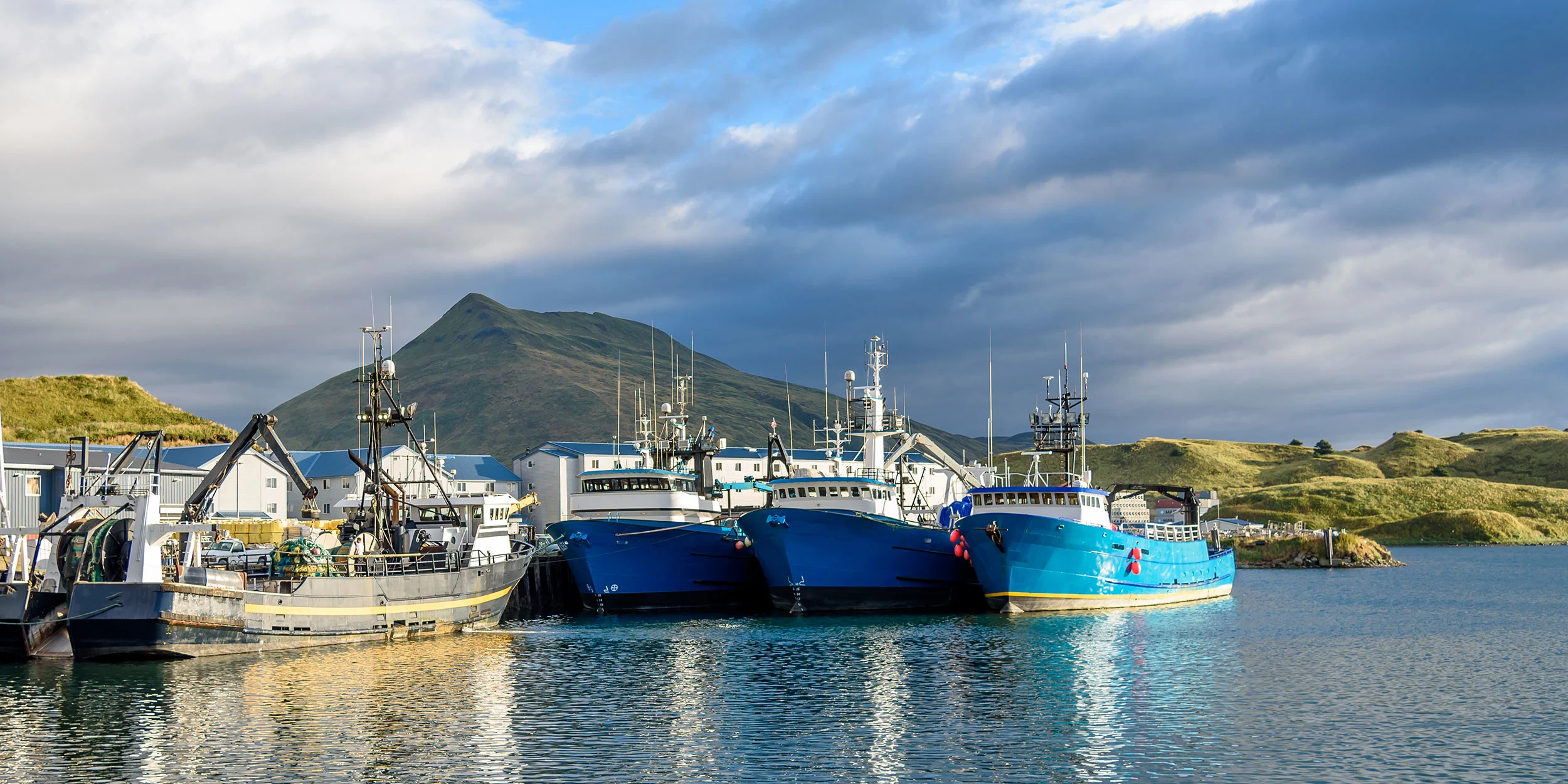
America’s biggest fishing port
You’ll learn about the Unangan people who have called these islands home for at least 9,000 years, visit the Museum of the Aleutians, the Russian Orthodox Cathedral, or the WWII museum commemorating the Battle of Dutch Harbor in 1942.
You also may see lots of wildlife here: bald eagles and puffins overhead, wild horses and foxes on land, and whales, sea lions, and porpoises in the surrounding waters.
This is also where the reality television series The Deadliest Catch was filmed, following crab fishermen at work under extreme conditions.

Wild nature and remote communities
Over the next four days, we’ll head across the Bering Sea towards Nome. You’ll have two exploration days and two days at sea.
For the exploration days, your Captain will choose the best location based on the conditions at the time. Possible destinations include the rugged island of St Paul, home to the largest Unangan community in the US. It’s also an Important Bird Area, with species such as the pribilof sandpiper and tufted puffin nesting here.
We might also explore wild St. Matthew Island where abandoned buildings lie between black sand beaches and wildflower-dotted tundra. You may even spot the rare McKay's buntings which breed and nest exclusively on this island.
During the sea days, look out for puffins, auklets, and murrelets, especially closer to the coast. If you’re lucky, you might glimpse the red-legged kittiwake, only found in this part of the world.
Enjoy panoramic views from our Explorer Lounge & Bar, the infinity pool, or the outdoor hot tubs. Or learn more about the region's geography, climate, and birdlife from the Expedition Team in the Science Centre.

A frontier town at the edge of the Arctic
Nome is a small coastal town on the edge of the Bering Sea. Once a boomtown of the 1898 Gold Rush, it still carries traces of its frontier past in rusting dredges, old steam engines, and railway remnants. The town also drew big names, including Wyatt Earp, who opened a saloon here, and it later became the endpoint for three of Roald Amundsen’s polar expeditions.
Naturally, Nome is a fitting place to bid farewell to our own MS Roald Amundsen, before flying back to Vancouver, where you’ll enjoy an overnight stay.

Back where it all began
Your expedition ends where it started, in the vibrant city of Vancouver. Take time to wander, revisit a favourite spot or anything you might’ve missed before departure.
Perhaps cross to Granville Island for the public market, hire a bike along the seawall, or head up Grouse Mountain for a panoramic farewell view of the city, ocean, and peaks you've explored on your voyage.

Hva er inkludert?
Inkluderte aktiviteter
Disse aktivitetene er inkludert i reisen. Ekspedisjonsteamet vårt vil informere deg om tidene om bord. Utvalgte aktiviteter kan også forhåndsbestilles før avreise.
Valgfrie tillegg
Gjør reisen enda bedre med valgfrie tillegg. Noen aktiviteter kan kun bestilles om bord og kan ikke reserveres online eller via telefon. Avhengig av tilgjengelighet.



Vår Alaska skip
Få en smakebit på hvordan livet er om bord på skipene som seiler på denne ruten
Expedition Suiter
Oppdagelsesreise på en enda bedre måte
Dette bør du vite før du reiser

Ofte stilte spørsmål
Kan jeg bestille mine internasjonale flyreiser med HX?
Ja. Internasjonale flyreiser er ikke inkludert i standardpakken, men flyteamet vårt kan arrangere flyreiser fra de fleste regionale flyplasser for å hjelpe deg frem til embarkasjonshavnen din. Du kan også booke selv — men det er gode grunner til å la oss håndtere det.
Flyreiser koordinert med ekspedisjonen din
Flyplanen din er tilpasset skipsoperasjonene og charterflygningene, slik at hver etappe av reisen din kobler seg sømløst til ekspedisjonen.
Støtte når planene endres
Hvis en flygning blir forsinket, avbestilt eller omplassert, vil teamet vårt samarbeide med flyselskapet om ombokingen din. Hvis en betydelig endring i seilasplanen betyr at du ikke lenger kan ankomme i tide til skipet ditt, vil vi arrangere et passende alternativ uten ekstra kostnad, under forutsetning av de gjeldende ordningene.
Hvis du booker dine internasjonale flyreiser selv, kan vi ikke hjelpe med omboking av disse flygningene. Alle endringer og tilknyttede kostnader vil være ditt ansvar eller må kanskje dekkes av reiseforsikringen din. Forsinkelser kan også påvirke din evne til å nå skipet i tide.
Et dedikert team for å hjelpe deg
Flyteamet vårt overvåker reiseordningene dine og hjelper til med å håndtere forsinkelser. Hvis noe endres, vil vi arbeide med deg for å finne en løsning og holde ekspedisjonsplanene dine på sporet.
Flyalternativer for reisen din
Vi kan arrangere flyreiser fra de fleste regionale flyplasser for å hjelpe deg frem til embarkasjonshavnen din. Endringer av avgangsflyplass og kabinoppgraderinger kan også være mulig, under forutsetning av flyselskapets retningslinjer, tilgjengelighet og eventuelle ekstra kostnader.