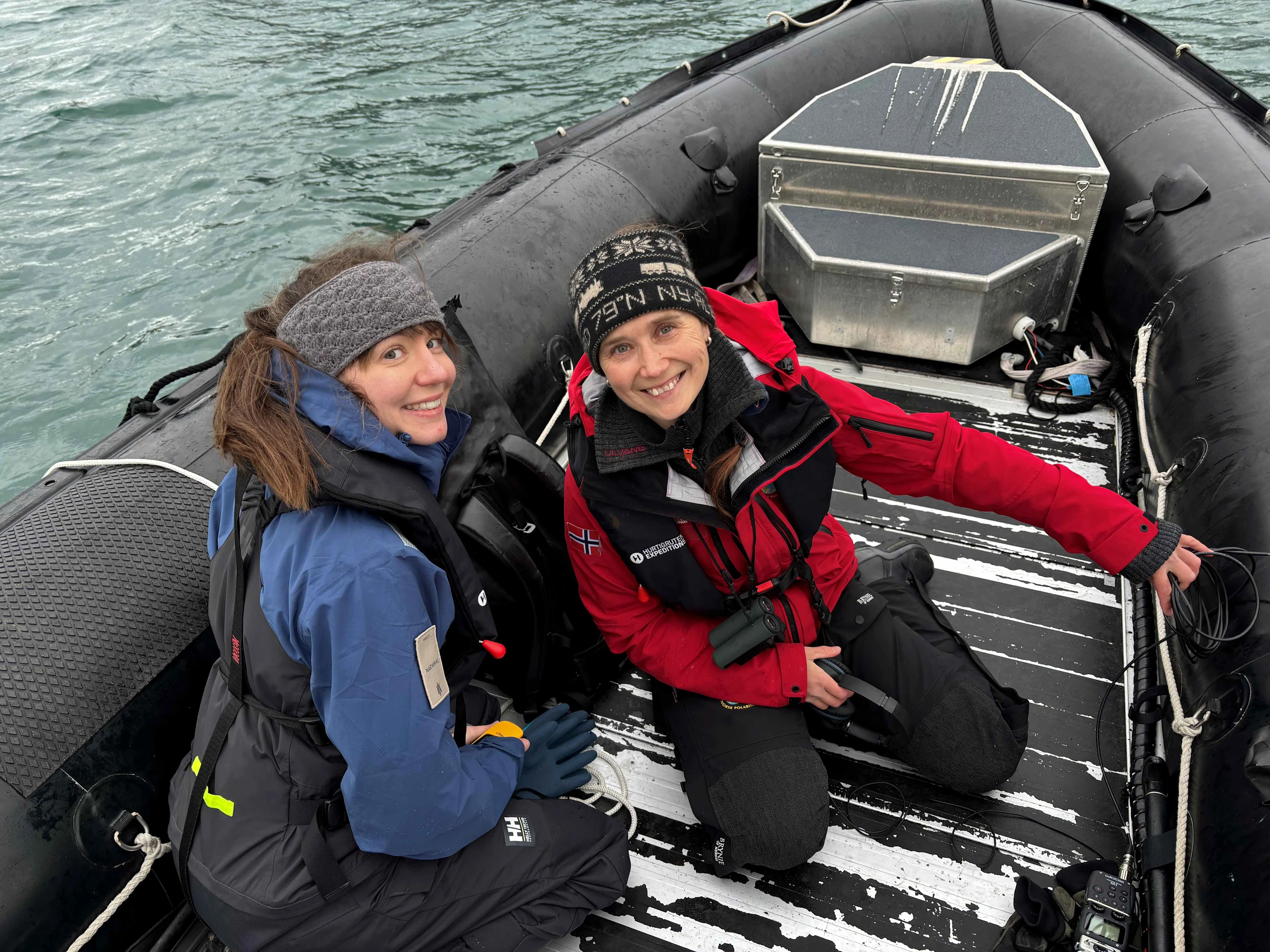
HX & Norwegian Polar Institute: Listening to the hidden world beneath polar seas
How passive acoustic monitoring from HX expedition ships is helping scientists study marine mammals and underwater noise across the Arctic and Antarctica, year-round.
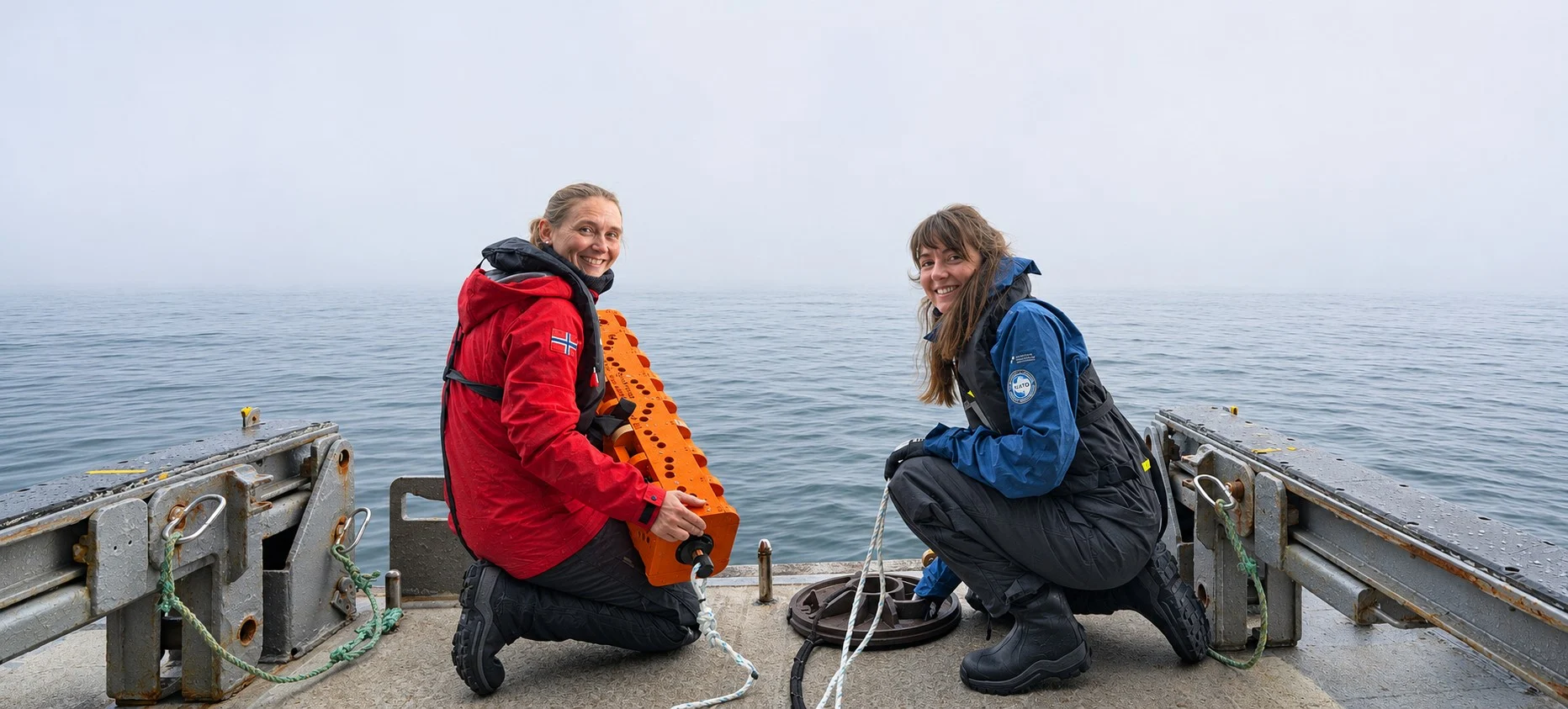
Through its collaboration with the Norwegian Polar Institute (NPI), HX supports pioneering research using passive acoustic monitoring (PAM) to better understand marine mammals and underwater soundscapes in the Arctic and Antarctica. By deploying underwater recording devices from expedition vessels, scientists can listen to marine environments long after ships have departed, collecting valuable information about wildlife presence, behaviour and human-generated noise. The partnership brings together scientific research, responsible expedition operations and guest education, helping reveal a world that is largely invisible beneath the ocean's surface.

Listening beneath the surface: Understanding marine mammals and underwater soundscapes
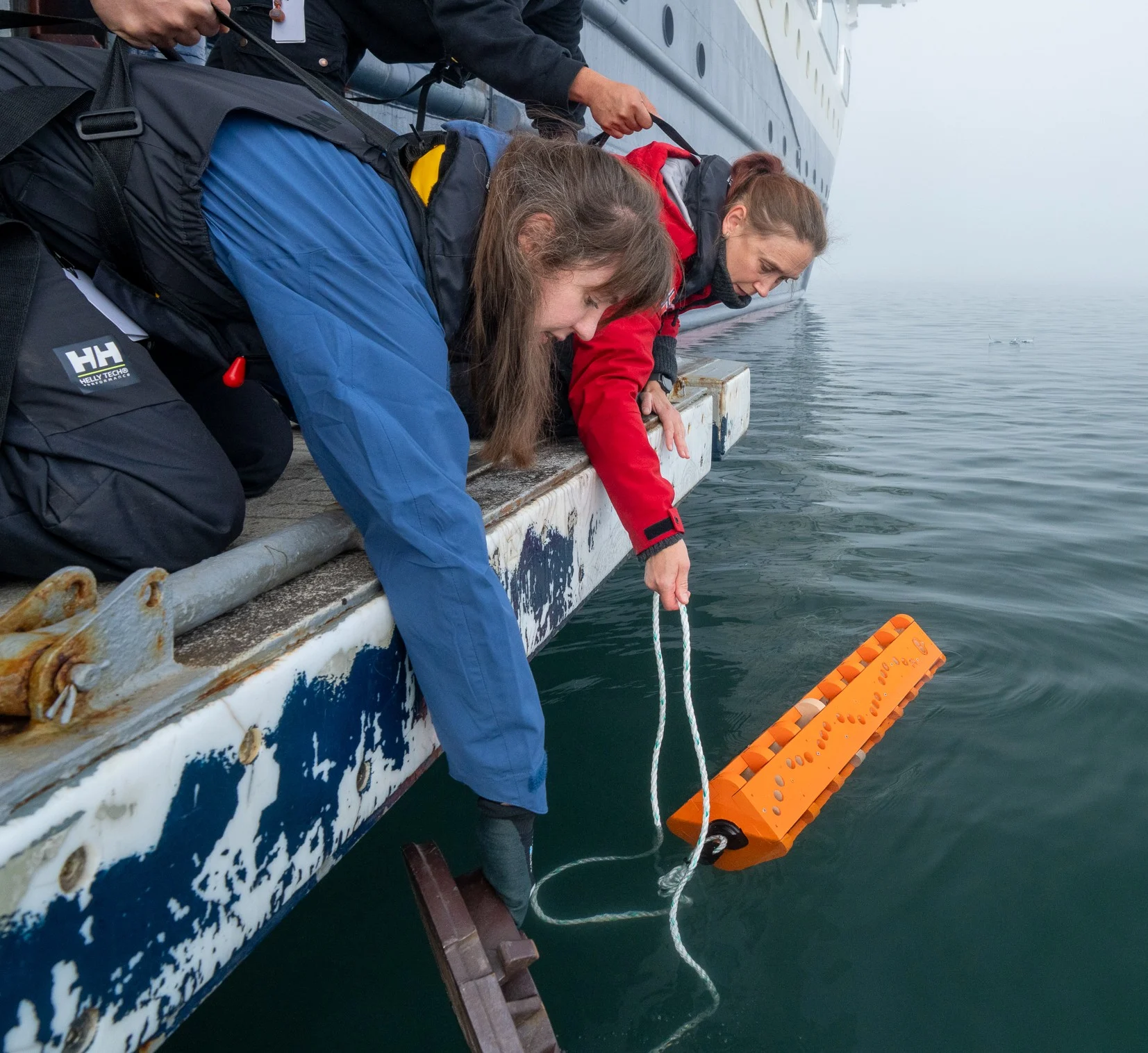
Sound plays an essential role in the lives of marine mammals. Whales and seals use it to communicate, navigate and interact with their environment, making underwater acoustics a powerful tool for understanding their presence and behaviour. Through passive acoustic monitoring, researchers deploy autonomous underwater recorders that capture sounds over extended periods, including during the polar winter when direct observations are extremely limited.
In Antarctica, NPI researchers are working alongside the Institute of Marine Research (IMR), HX Expeditions, the International Association of Antarctica Tour Operators (IAATO) and the Association of Responsible Krill Harvesting Companies (ARK) to investigate the seasonal presence of whales and other marine mammals in the Gerlache Strait and surrounding waters.
The project addresses an important knowledge gap: understanding when marine mammals are present in areas used by the Antarctic krill fishery, particularly during autumn and winter when tourism vessels are largely absent.
By combining underwater acoustic recordings with observations collected from fishing vessels, scientists aim to build a more complete picture of how marine mammals use these important feeding grounds throughout the year. This information can help inform the management of krill fishing activities and the conservation of Antarctic marine ecosystems.
In the Arctic, NPI's Sound-Cruising project investigates a different but equally important question: how do expedition vessels influence the underwater soundscapes of Svalbard?
Research has shown that certain operational activities, including dynamic positioning, can generate prolonged underwater noise across frequencies used by marine mammals. Using acoustic recorders deployed in three Svalbard fjords during summer 2025 and 2026, researchers are investigating how different vessel activities contribute to underwater noise and how these sounds compare with natural background conditions.
Together, these projects are helping scientists understand both the sounds produced by marine wildlife and the potential influence of human activities on their acoustic environments.
Unlike conventional shipping, expedition vessels often spend extended periods exploring fjords and coastal areas that overlap with important marine mammal habitats.
HX & NPI: Turning expedition vessels into platforms for year-round research
HX's collaboration with NPI demonstrates how expedition ships can support scientific monitoring in remote polar environments without relying exclusively on dedicated research vessels.
In Antarctica, HX has supported the deployment, recovery and maintenance of autonomous underwater recording stations, enabling scientists to collect data over extended periods, including throughout the winter. During the 2025/26 Antarctic season, researchers joined MS Fridtjof Nansen to recover recording devices that had spent approximately ten months collecting underwater sounds.
Two recorders were successfully retrieved, providing good-quality acoustic data from the Antarctic marine environment. The devices were subsequently prepared and redeployed during following voyages, allowing the monitoring programme to continue.

For guests, the experience offered a rare opportunity to witness scientific research in action. They could observe the recovery operations, see the recording equipment brought into the ship's Science Centre and follow researchers as they opened the instruments, retrieved the data and prepared them for redeployment. Guests were also introduced to recordings of Antarctic marine life, including humpback whale vocalisations and leopard seal calls, discovering how scientists use underwater sounds to investigate animals that are often impossible to observe directly. Through lectures, informal discussions and Science Centre demonstrations, researchers explained the methods, challenges and conservation relevance of passive acoustic monitoring. In Svalbard, HX has also supported the Sound-Cruising research programme, contributing to efforts to understand the underwater noise associated with expedition vessel operations.
These collaborations demonstrate how expedition vessels can provide practical access to remote research locations while creating meaningful opportunities for guests to engage with the scientists and technologies behind polar marine research.

From scientific monitoring to more responsible expedition operations
The scientific value of passive acoustic monitoring extends well beyond recording the sounds of marine mammals. In Antarctica, understanding when whales and other krill predators are present in fishing areas can help provide evidence for ecosystem-based management and inform discussions about the sustainable use of Southern Ocean resources.
The collaboration has also demonstrated the feasibility of deploying and recovering long-term underwater monitoring equipment from expedition vessels, offering a potentially cost-effective approach to collecting scientific data in remote regions. In the Arctic, the Sound-Cruising project has an additional practical objective: identifying opportunities to reduce the underwater noise generated by expedition operations.
By analysing acoustic recordings alongside vessel movement and operational information, researchers aim to establish a baseline for underwater noise in selected Svalbard fjords and identify activities that may contribute disproportionately to the local soundscape.
The findings could help inform future operational practices, technical improvements and management measures designed to minimise disturbance to marine mammals. Importantly, the research also creates opportunities for the expedition industry to better understand its own environmental footprint and contribute to developing more responsible approaches to operating in sensitive polar environments.
By supporting scientific monitoring in both polar regions, HX and the Norwegian Polar Institute are helping reveal what happens beneath the surface, strengthen the evidence available for marine conservation and explore how expedition travel can reduce its impact on the environments it visits.