Antarctica & South Georgia: Kingdoms of Ice and Wildlife
19-day all-inclusive Antarctica and South Georgia Expedition Cruise with round-trip flights from Buenos Aires
Follow in Sir Shackleton's footsteps to the 'Serengeti of the Southern Ocean', home to vast penguin colonies, sea lions, and elephant seals.
Savour the crisp light and pristine ice of Antarctica in the early summer sun.
Explore the landscape with daily landings, Zodiac cruises, and a Science and Education Programme.
Join the Expedition Team as they lead you on a journey of learning and adventure.
Where Antarctic explorers first set sail
Follow the explorer’s route across the Southern Ocean, reaching the wilderness of South Georgia, where mountains and glaciers plunge into the sea, and sailing onward to the icy realm of Antarctica.
Early summer in the far south
The southern light is at its most striking, and wildlife gathers for mating season. King penguins and elephant seals line the beaches of South Georgia in their thousands, humpback whales migrate south to feed on krill, and gentoo penguins begin nesting along the peninsula's ice-fringed shores.
Expedition SuitesExploration, Enhanced
Key Expedition Details
Itinerary
Your adventure at a glance. Daily highlights, included activities, and optional extras to make it unforgettable.
Argentina’s bustling capital
Home to a proud and diverse community of porteños, or ‘people of the port’, the city is a fusion of faded European splendour and Latin American panache. An overnight stay in Buenos Aires is the ideal way to start your adventure.
There are plenty of places to explore, including many parrillas serving authentic Argentine steak. Or maybe you’d like to practise your dance moves in the famous hometown of the tango.
We recommend arriving a few days early to see all enjoy the vibrant city, or perhaps joining our optional pre-voyage programme.

Starting at the end of the world
Your adventure begins with an early morning flight to Ushuaia. Set against the dramatic backdrop of the Martial Glacier, this bustling port city is the capital of Argentina's Tierra del Fuego Province and vies for the title of the world's southernmost city.
Your hybrid-powered expedition ship awaits in port. After a briefing from your Expedition Team and picking up your expedition jacket, settle into your cabin and explore the ship before enjoying the first of many delicious meals on board. Your journey is officially underway.

Sailing in the South Atlantic
Sailing from Ushuaia, we will journey towards the far-flung shores of South Georgia, one of the most wildlife rich places on the planet.
Our Expedition Team will prepare you for what lies ahead, from the history of the island to stories of Norwegian whalers.
The Expedition Team will also talk about the IAATO environmental guidelines and sustainability rules that we follow to make your visit as safe and low-impact as possible.


Visit a wildlife watcher’s paradise
South Georgia’s abundant wildlife has earned it the nickname ‘Serengeti of the Southern Ocean’. Its unique position, free from sea ice, makes the island a breeding site for large colonies of penguins, other seabirds, and seals. In fact, it’s an Important Bird Area, home to albatrosses, petrels, shags, skuas, and terns.
You'll spend four days exploring this remarkable area. We’ll also try to reach Grytviken, the final resting place of Antarctic explorer Sir Ernest Shackleton. We’re always guided by nature, responding to daily conditions to bring you the best possible experience.
While our itineraries are always flexible, they’re even more so during peak breeding seasons when the wildlife is most vulnerable to disturbance. When opportunities allow, we’ll land and wildlife watch. When our presence could disturb the animals, we’ll choose another place to visit. These decisions are made by our Expedition Team and are based on lifetimes of combined experience in these destinations. Sometimes we’ll land, sometimes we’ll cruise, it’s all part of the adventure.


Time to relax and reflect
After visiting South Georgia, enjoy some time while we head towards Antarctica to relax and reflect on your journey so far.
Antarctica is a symbol of global cooperation, dedicated to peace, science, and wildlife conservation. Protected by the Antarctic Treaty, it remains free of military conflict, preserving its pristine environment for future generations.
As a hub for scientific research on climate change and ecosystems, it offers unique insights into nature's resilience. Why not join one of our citizen science programmes to help collect data for global research projects.
Reaching the Seventh Continent
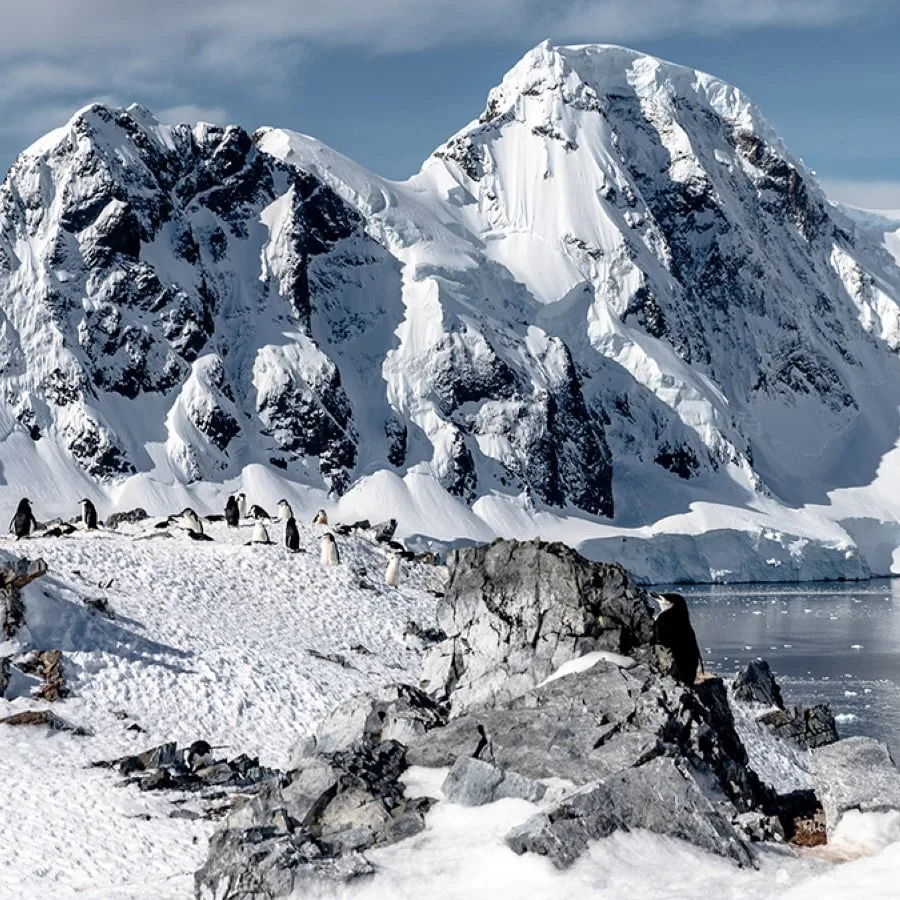
Nothing prepares you for your first sight of Antarctica’s immense, frozen beauty. Icebergs float in the straits. Gentoo, chinstrap, and Adélie penguins watch upright from the shores. Countless seabirds wheel overhead. Nature is in charge.
While we’re here, we’ll explore several possible landing sites, on and around the Antarctic Peninsula.
We might kayak among icebergs, watching for breaching whales, snowshoe to a stunning viewpoint, or cruise in Zodiacs to explore the ice up-close.
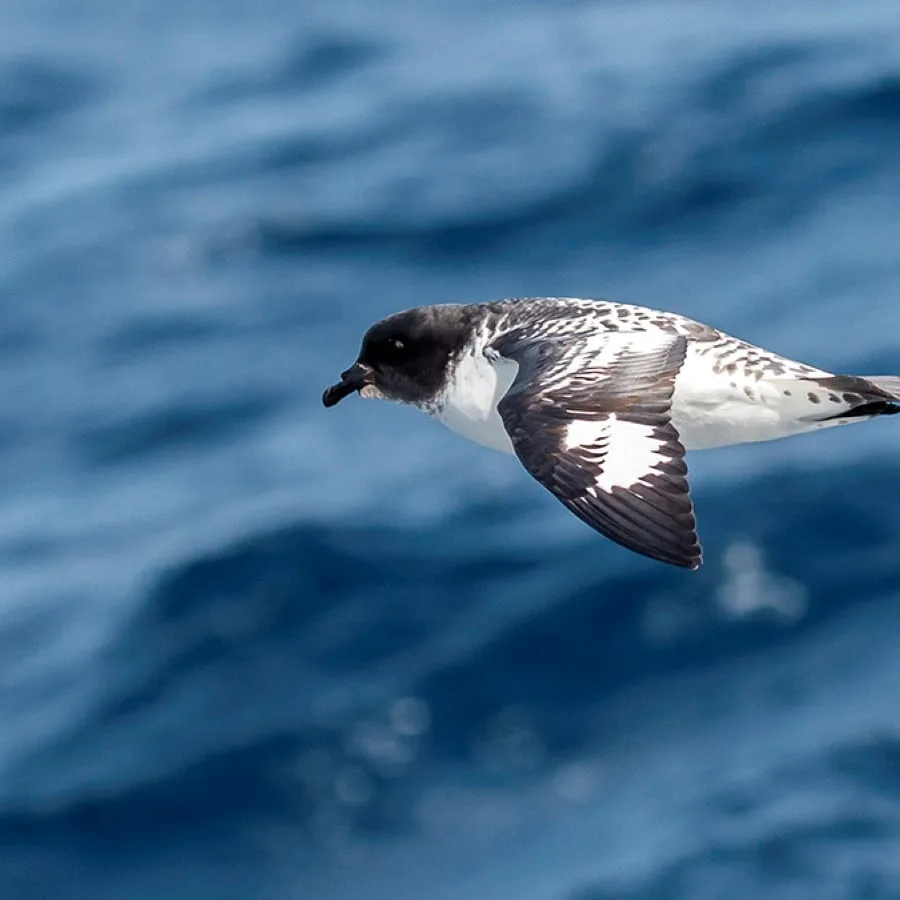
Bird enthusiasts should look skywards for Antarctic seabirds such as skuas, petrels, and terns. Through onboard lectures and onshore talks, you'll learn more about this precious habitat and how we can all protect it for the future.


Looking for land ahead
As we say goodbye to the Frozen Continent, we head north the Drake Passage and back to Ushuaia. This is the perfect time to go through your pictures and relive your experiences in South Georgia and Antarctica. Enjoy the onboard comforts. Relax in the hot tubs or sauna or unwind in our Explorer Lounge & Bar. When the Drake Passage is behind us, we’ll enter the scenic Beagle Channel, surrounded by mountains plunging straight into the icy water. Watch for Patagonian wildlife as we sail through this wild and remote area.

End where it all began
Your expedition cruise ends in Ushuaia, the main city in Tierra del Fuego, Argentina’s southernmost province. From here, you’ll take a flight back to Buenos Aires, but it doesn’t have to be the end of your adventure.
Why not join our optional post-voyage programme before heading home.


What's included?
Optional extras
Enhance your journey with optional extras. Some activities are only bookable onboard and can’t be reserved online or by phone. Subject to availability.



Our Antarctica ship
Get a taste of what life is like on board the ships that sail on this itinerary
Expedition Suites
Exploration, Enhanced

Frequently Asked Questions
Can I book my international flights with HX?
Yes. International flights aren't included in the standard package, but our flight team can arrange flights from most regional airports to help you reach your embarkation port. You're also welcome to book your own — but there are good reasons to let us handle it.
Flights coordinated with your expedition
Your flight schedule is planned around ship operations and charter flights, helping each leg of your journey connect with your voyage.
Support when plans change
If a flight is delayed, cancelled, or rescheduled, our team will work with the airline on your rebooking. If a significant schedule change means you can no longer arrive in time for your ship, we'll arrange a suitable alternative at no extra cost, subject to the applicable arrangements.
If you book your international flights independently, we cannot assist with rebooking those flights. Any changes and associated costs will be your responsibility or may need to be covered by your travel insurance. Delays could also affect your ability to reach your ship in time.
A dedicated team to help you
Our flight team monitors your travel arrangements and helps manage disruption. If something changes, we'll work with you to find a solution and keep your expedition plans on track.
Flight options to suit your journey
We can arrange flights from most regional airports to help you reach your embarkation port. Changes to your departure airport and cabin upgrades may also be possible, subject to airline rules, availability, and additional costs where applicable.
Why do I need to complete a Medical Screening Form?
At HX Expeditions - we explore some of the world's most remote locations and as such, in many of these locations, sophisticated medical services are few and far between. Medical care at sea is limited, and often emergency sea and air services may also be inaccessible, particularly in the polar regions. It is therefore vital that you make us aware of any current or past health issues, and as such we require a Medical Screening Form to be completed for Expeditions to Antarctica.
The Health, Safety and well-being of you our guests and our on-board crew are our top priority, and we want to ensure that all our guests are fit for travel. On board all our ships, we will have a qualified physician, which have a small, limited medical facility with basic medical supplies and equipment. Still, that makes it more difficult to diagnose and treat even the simplest conditions. This often leads to missed diagnoses, worsening conditions, a greater burden of chronic disease, and in some cases, unnecessary costly medical disembarkations.
How do I complete the Medical Screening Form?
We require all guests (including children) to submit and complete the Medical Form prior to departure to Antarctica.
Complete the form online through the Vikand Medical portal. It includes sections for both you and your doctor to fill out. You can begin the process up to 120 days before your sailing start date. Group bookings: access opens 90 days before your sailing start date. To start, Vikand will verify your name against our passenger list. If your name isn’t found, please contact HX or your local travel agent(if you booked through one) to ensure your name has been added to the booking exactly as it appears on your passport. For Doctor’s section - if your doctor can't sign the form, please consult an alternative or use Vikand’s online doctor service.
To make sure you receive important updates about your Medical Screening Form, we’ll send a verification email to the address you provided. Please check your inbox (and Spam/Junk folders) and click the verification link to continue. Once verified, you can complete the Guest Section of the form. If you don’t receive the email, try using an alternative address for future updates.
Please note: We only accept the Medical Screening Form available through Vikand portal and has been specially designed for HX sailings to remote destinations.
What is the Medical Screening Form Promise?
Our promise to you is that if your Medical Screening Form is declined for medical reasons as determined by Vikand Solutions, we will refund you of all bookings made by HX up until the date of declinature. This includes all applicable flights, hotels and ground transportation. Rebookings can be made at no additional cost, subject to applicable booking conditions.
For more detailed information on this topic, click here.
How do I travel to and from Ushuaia?
Getting to Ushuaia is a two-stage journey. You'll first take an international flight to Buenos Aires — these aren't included in the standard package, but we can arrange flights from most regional airports to help you reach the start of your expedition, or you're welcome to book your own. From there, you'll take an included HX charter flight to Ushuaia the following morning. We recommend staying overnight in Buenos Aires so you can begin your expedition feeling rested and allow a buffer for your connection.
Fly to Buenos Aires
Your journey begins with an international flight from your home country to Buenos Aires, the gateway city for Antarctica expeditions travelling via Ushuaia. These commercial flights are not included in the standard package, but we can arrange them for you from regional airports if you'd prefer to book through HX.
Stay overnight in Buenos Aires
We recommend arriving in Buenos Aires the day before your onward journey so you can begin your expedition feeling rested and allow a buffer for your connection. Check your travel documents or contact our team to confirm whether a pre-cruise hotel night is included in your package.
Charter flight to Ushuaia
The next morning, you'll board an HX charter flight from Buenos Aires to Ushuaia. These flights are operated by Aerolíneas Argentinas and are coordinated around your voyage schedule.
Charter flights from Buenos Aires to Ushuaia typically depart between 08:00 and 11:30. Final charter flight times are confirmed at your hotel on arrival and onboard.
Your return journey
On the return, HX charter flights from Ushuaia to Buenos Aires typically arrive by approximately 19:00. We recommend booking international departures from Buenos Aires Ezeiza Airport (EZE) after 23:00 or on the following day, to allow plenty of time for your connection.
How to choose an Antarctic cruise?
We recommend choosing an Antarctic cruise provided by a reputable company with modern ships and top experts to help you understand and get the most from your incredible opportunity. Coming to such a pristine wilderness, we also consider it of the utmost importance to take care to protect the environment and keep it unspoiled.
At HX Expeditions, we offer expedition cruises to Antarctica with a variety of different itineraries, so you can find one that suits you best. Simply get in touch with our knowledgeable experts – they’re always happy to help. They can talk to you and ask you about your preferences to help you choose your dream trip to Antarctica.
Once you’ve chosen a cruise, our friendly teams can give you expert advice on topics such as what you need to pack for Antarctica.
What animals live in Antarctica?
Antarctica is teeming with animal life. Even though it’s one of the least hospitable places in the world, the wildlife there is spectacular.
The largest animals of all are found around Antarctica – whales. The whales found here include blue, humpback, Minke, sperm, and beaked. It’s also thought that Antarctica has the largest population of orcas (a type of dolphin) to be found anywhere in the world. In addition, many other types of dolphins are found here. Seals abound, including fur seals, leopard seals, elephant seals and sea lions.
Penguins are the most common birds in the Antarctic, where there are about 20 million breeding pairs (40 million birds). There are 18 different species of penguins in Antarctica, and while most are migratory, the Emperor Penguin and Adélie Penguin remain on the continent year-round, hatching their eggs among the bare rocks. Other birds found here include albatrosses, petrels, skua, prions, fulmars, shearwaters, gulls, terns and cormorants.
Some of the most notable differences between Antarctica and the Arctic are the differences between the animals found there. While penguins are emblematic of the Antarctic, there are no penguins in the Arctic. Moreover, there are no land mammals, reptiles or amphibians in Antarctica, so there are no Polar Bears! In fact, the only terrestrial vertebrates in Antarctica are birds that are found on the sub-Antarctic islands – the South Georgia pipit and freshwater ducks.
Further down the food chain are huge numbers of krill, fish and squid that nourish the marine ecosystem. In fact, the vertebrates living in Antarctica are almost entirely dependent on the Southern Ocean surrounding the continent for sustenance.
Invertebrates in Antarctica include earthworms and molluscs, as well as spiders, beetles and flies – though these are mainly confined to the warmer sub-Antarctic islands. There are no flying insects on the Antarctic continent itself – only tiny nematodes and the Antarctic springtail arthropod are able to survive and complete their lifecycles there.
How cold is Antarctica?
It gets very cold. In fact, Antarctica is the coldest continent on Earth. The lowest temperature ever recorded at the surface of the Earth was recorded at Vostok research station, where the temperature once fell to −89.2 °C during winter.
However, the temperature varies considerably with the location, weather and seasons in Antarctica.
The coldest parts of Antarctica are in the interior of the continent, away from the coasts. Even during the summer, the interior remains below freezing with an average temperature of between −20 °C and −35 °C. The average temperature here during the coldest months is between −40 °C and −70 °C. It gets so cold because the sun doesn’t rise here in winter. Ever in summer, the sun remains low in the sky, so its rays are spread out over a wider surface area than they are in warmer parts of the world.
The warmest parts of Antarctica are the coastal areas, where the maritime climate keeps temperatures slightly higher. The average temperature during the coldest months here varies from −20 °C to −30 °C, while the mid-summer average temperature is about 0 °C on the coast.
The Antarctic Peninsula and the islands around it extend the furthest northwards towards the equator. Here, midsummer temperatures remain mostly below 0 °C, but can reach as high as 15 °C on occasion.
Research indicates the rate of climate change in Antarctica is greater than the global average.