Por El Mar & Instituto Antártico Argentino/CONICET: Exploring Antarctica's hidden underwater world
Using remotely operated vehicles from HX expedition ships, researchers are documenting the unexplored underwater ecosystems of the West Antarctic Peninsula, including the discovery of an extensive blackfin icefish spawning ground.
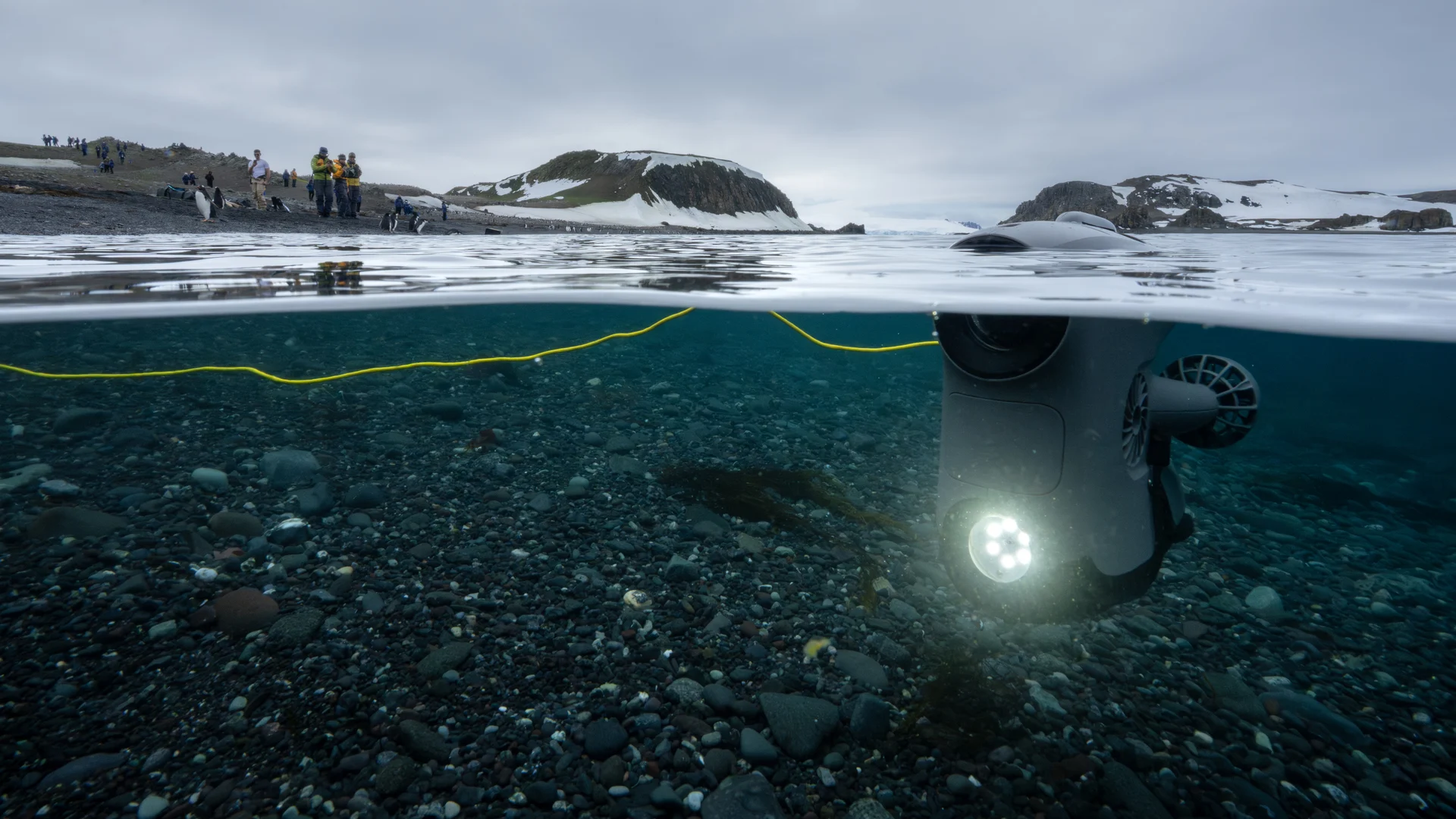
Through its collaboration with researchers from the NGO Por el Mar, Argentina's Antarctic Institute and CONICET, HX supports "Exploring the Unseen", a scientific project investigating the largely unexplored underwater ecosystems of the West Antarctic Peninsula. Using remotely operated underwater vehicles (ROVs), researchers document marine life beneath the surface, revealing habitats and species rarely observed in their natural environment. Supported by the HX Foundation, the project combines scientific exploration with immersive guest education and has already led to an important discovery: an extensive spawning ground of Antarctic blackfin icefish.

Exploring the Unseen: Revealing life beneath the Antarctic surface
While Antarctica's penguins, seals and whales are familiar to many travellers, the extraordinary ecosystems beneath its coastal waters remain far less understood.
The Exploring the Unseen project, led by Dr Manuel Novillo, aims to change this by developing accessible, scientifically rigorous methods for studying Antarctic fish and seafloor biodiversity.
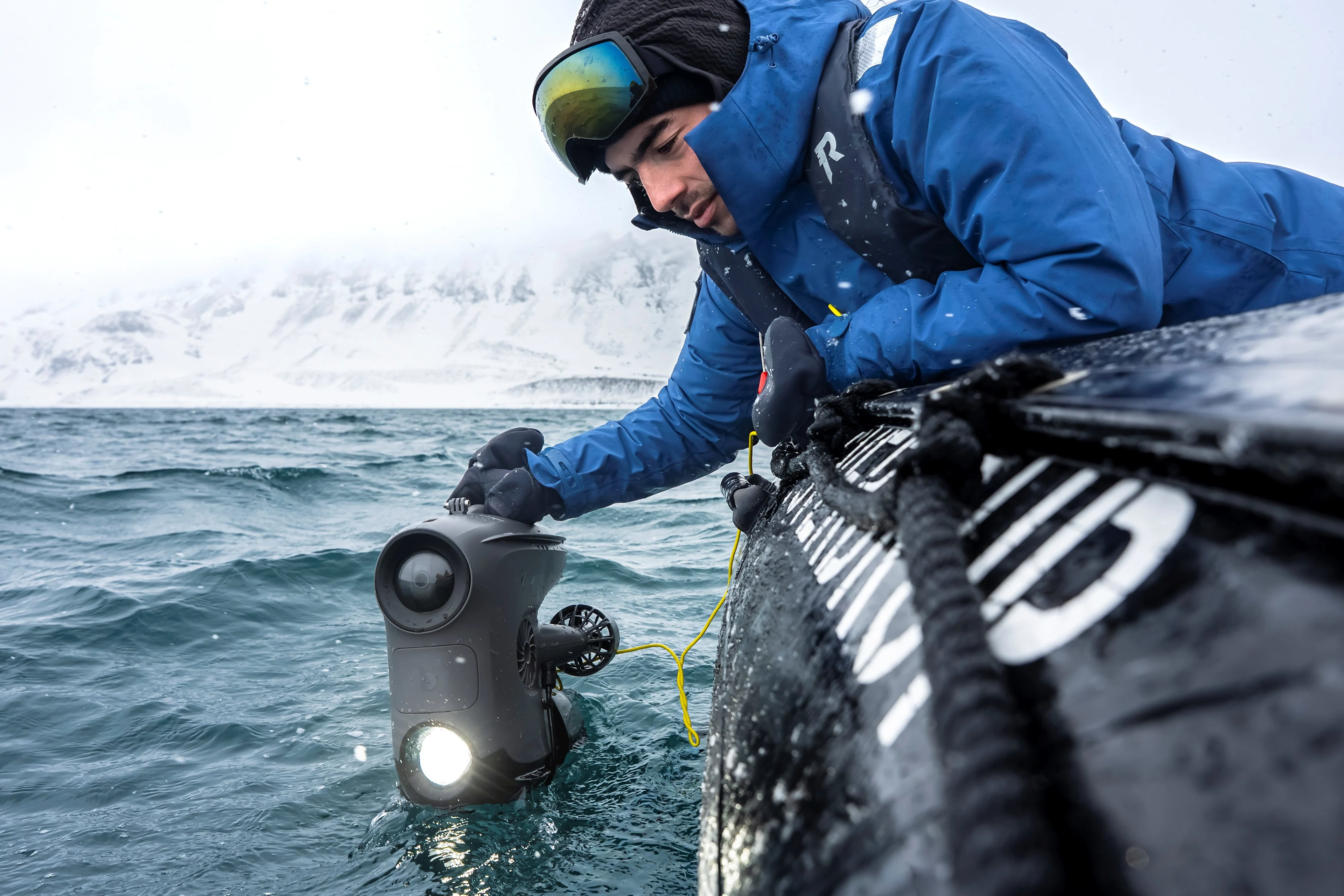
Using HX's Blueye X3 remotely operated vehicle (ROV) equipped with underwater cameras, researchers explore coastal habitats at depths that are difficult to access through conventional observation. The resulting footage provides valuable information about the distribution, behaviour and habitats of fish and other marine organisms, helping scientists understand how these ecosystems function and respond to environmental change.
During the 2025/26 Antarctic season, the team completed 14 underwater surveys at 14 locations along the West Antarctic Peninsula, reaching depths of 10–145 metres and collecting approximately 14 hours of video footage. Among the most remarkable findings was the discovery of an extensive spawning aggregation of blackfin icefish (Chaenocephalus aceratus) near Danco Island.
At depths of 60–80 metres, researchers documented numerous circular nests containing egg masses, with adult fish actively guarding them. These observations provide rare direct evidence of large-scale nesting and reproductive behaviour in this species, identifying an important coastal spawning habitat that had not previously been documented at this location.
The discovery adds valuable knowledge about Antarctic fish ecology and highlights the importance of understanding and protecting the underwater environments on which these remarkable species depend.
HX & Exploring the Unseen: Bringing underwater science into the expedition experience
Through its research collaboration and support from the HX Foundation, HX enables the Exploring the Unseen team to conduct underwater surveys from expedition vessels travelling along the Antarctic Peninsula.
During the 2025/26 season, researchers joined three voyages onboard MS Fram and MS Fridtjof Nansen, using the ships as platforms to deploy their ROV, document underwater habitats and collect scientific observations across a broad geographical area.
The collaboration also makes an otherwise inaccessible world visible to expedition guests. Through onboard lectures, live ROV demonstrations and footage review sessions, researchers introduce guests to the remarkable adaptations of Antarctic fish and the biodiversity of the seafloor.
Interactive activities, including a Southern Ocean food-web workshop and the creation of Antarctic underwater habitat dioramas, help guests explore the connections between species and understand why these ecosystems matter.
Guests can follow the research as it unfolds, discover the challenges of underwater exploration and, when conditions allow, observe the technology used to investigate life beneath the Antarctic surface. A short documentary developed through the project will further extend its educational reach, sharing the discoveries and the importance of scientific collaboration with audiences beyond the expedition.
By bringing scientists and travellers together, the collaboration transforms underwater research into an opportunity for scientific discovery, curiosity and a deeper appreciation of Antarctic biodiversity.

From discovery to conservation: Understanding Antarctica's essential habitats
The discovery of the blackfin icefish spawning ground illustrates why continued exploration of Antarctic coastal waters is so important.
As the West Antarctic Peninsula experiences rapid environmental change, identifying the habitats that marine species depend upon for feeding, reproduction and survival is essential for understanding potential ecological impacts. The observations collected through Exploring the Unseen contribute to this growing knowledge base, while demonstrating how relatively accessible underwater technology can expand scientific monitoring in remote environments.
The research team is working to build on these findings through further surveys, with the aim of strengthening the scientific evidence needed to understand the distribution of important habitats and support ecosystem-based conservation and management. The project's findings have also been presented at the 2026 Scientific Committee on Antarctic Research (SCAR) Open Science Conference, helping share this work with the international Antarctic research community.
By supporting innovative underwater research and connecting guests with the discoveries made beneath the surface, HX and Exploring the Unseen are helping reveal a hidden dimension of Antarctica, and contributing to the scientific understanding needed to protect it.


