Expedition to Exhibition: A Guest's Antarctic Story
On the deck of an HX expedition ship, Australian artist Annika Romeyn learned to read Antarctica's ice, and found a new way to paint it.
Something happens to people in Antarctica. You see it on deck: conversation falls away as the first iceberg slides past, strangers become friends over a shared sighting, curiosity sharpens by the day.
Every HX expedition leaves something with you. For many people, it's a story, a new sense of scale, a new respect for a fragile world. For Canberra-based artist Annika Romeyn, it inspired an entire exhibition.
"There is nothing static about Antarctica’s glacial ice. At any one time, parts of it are moving, and shapeshifting, forming and consolidating, flowing and fracturing, eroding and melting … Perhaps Antarctica’s ice should be thought of as a verb rather than a noun."
— Joy McCann, Heart of Ice, 2025

A Long-Held Dream, Met Head-On
The Canberra-based artist sailed with HX to the Antarctic Peninsula in the austral summer of 2025-2026, following a long-held dream to experience and respond to its remote environment firsthand.
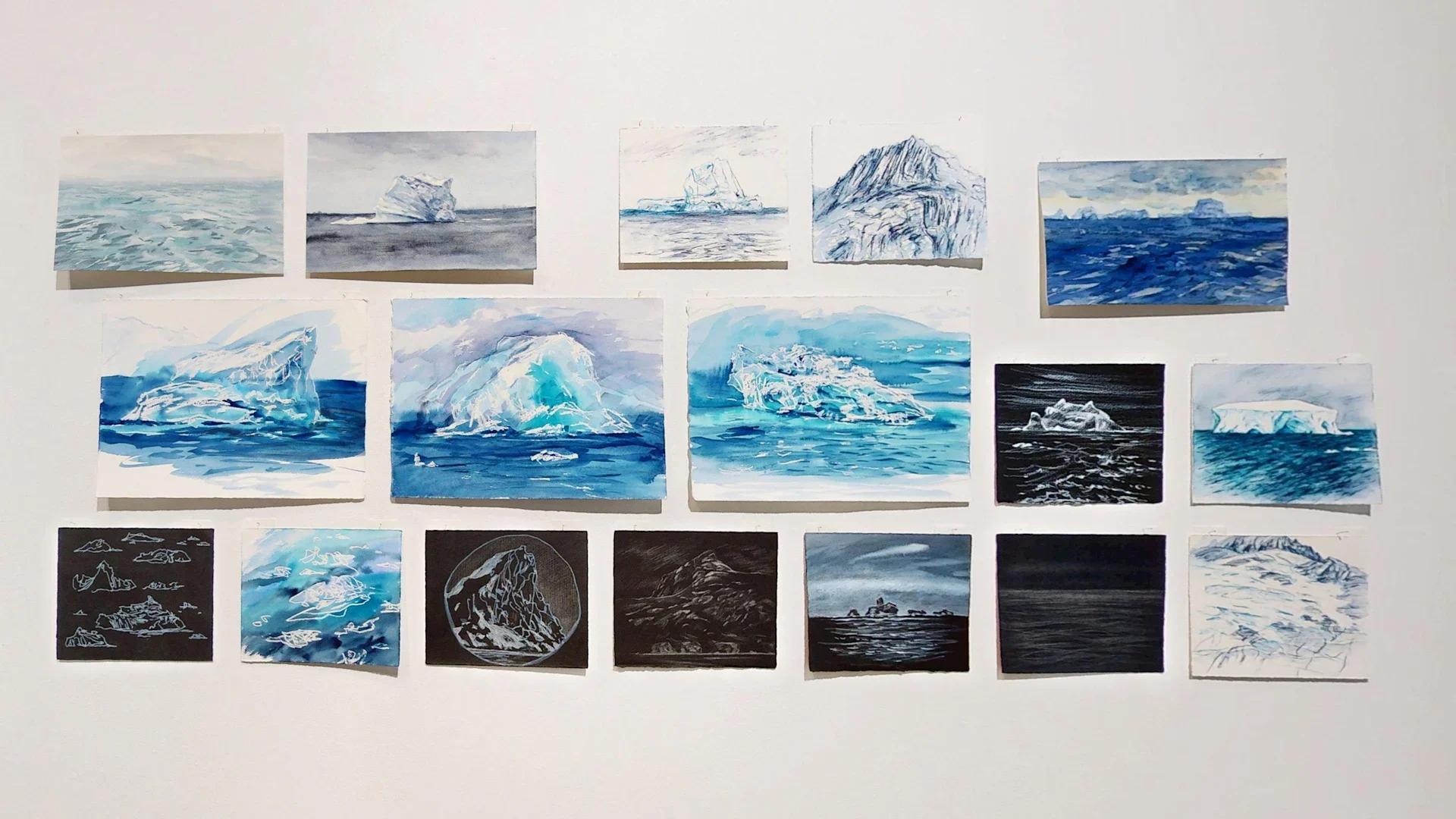
She sailed from Punta Arenas to the Antarctic Peninsula, by way of the Falkland Islands, South Georgia, and Signy Island, painting on deck every day she was at sea.
She came home with a palette rebuilt around Antarctic blues: ultramarine and Payne's grey for polar skies, Prussian blue for the deep water, an almost electric cyan for ice compressed over thousands of years, and an idea large enough to fill a gallery.
That idea became Flux, a new solo exhibition at Flinders Lane Gallery, on view in Melbourne, Australia through October 31, 2026.


"I was captivated by the striking blue glow of ice compressed over time, and the enormity and intricacy of a powerful and vulnerable environment full of life and motion."
— Annika Romeyn
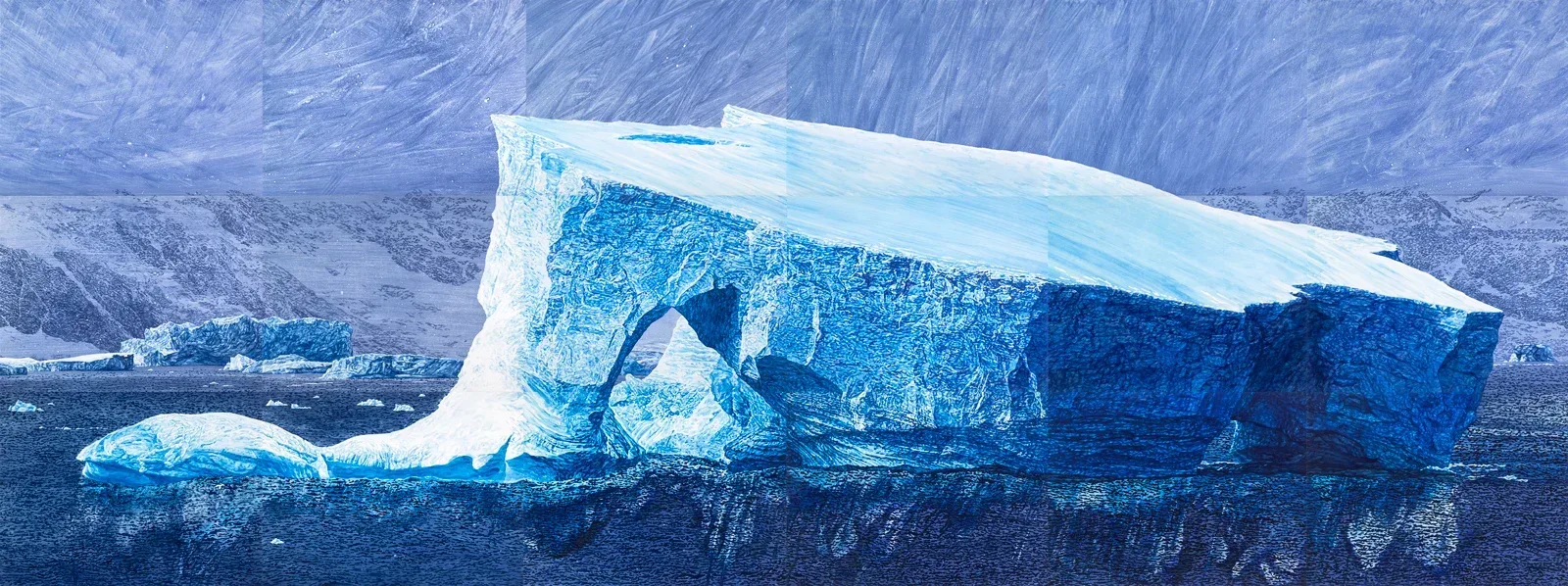
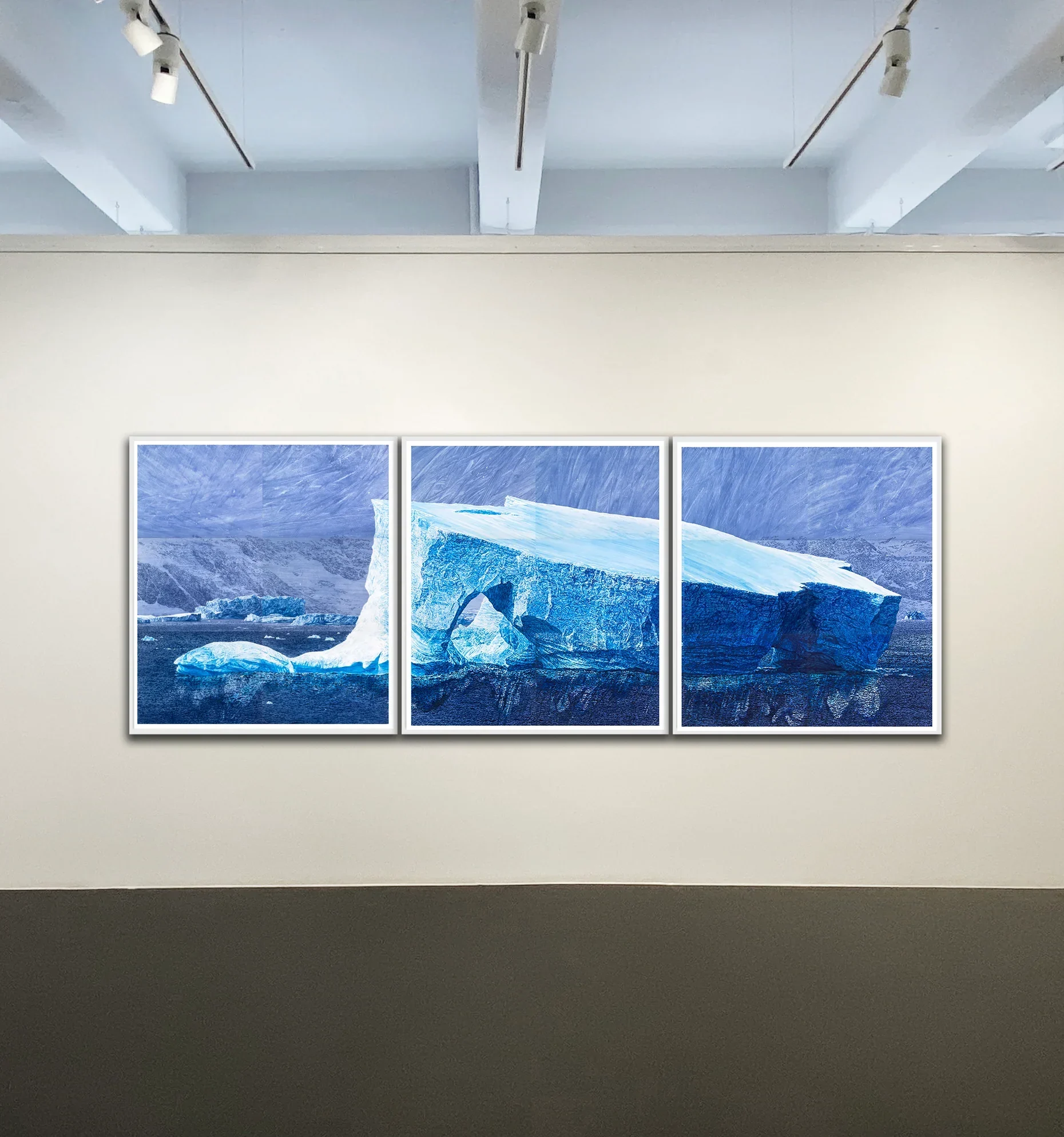
Flux gathers the full body of work: watercolour monotypes, paintings, and sketches from the journey, including a monumental centrepiece, Passing, printed across 18 sheets of paper. You have to stand back to take it in, much as you would before the real thing.
Other works carry the names of places she passed: Antarctic Light (Towards Charlotte Bay) and Memory of the Sky (South Georgia).
The Ice That Teaches
Antarctica is not a gallery wall or a documentary. It is a living, shifting, sounding presence. And on an HX expedition, you are immersed in it, not passing through.
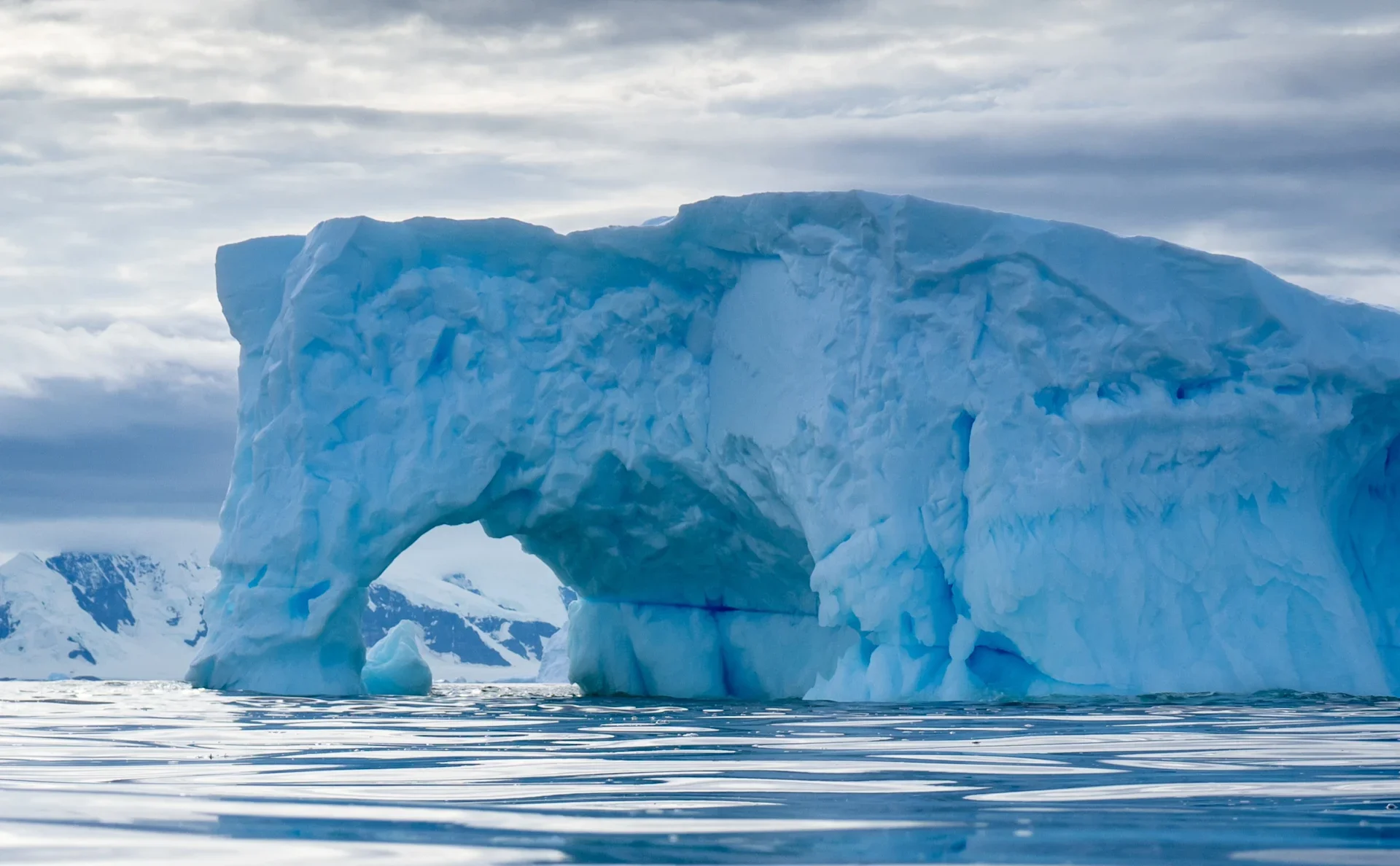
On board, the Expedition Team brings the landscape into focus in ways a traveller can't manage alone. Glaciologists, marine biologists, historians, and polar scientists run daily lectures and open conversations on deck, turning spectacle into something you begin to read. Icebergs stop being scenery and become biography - each one sculpted by wind and sea, carrying planetary history inside its dense, ancient ice.
"To understand iceberg movement requires looking at complex atmospheric and oceanic forces," she says.
"As an artist, my response is intuitive and poetic, but having access to the Antarctic science helped me imagine how these massive bodies of ice are connected to global weather systems, ocean currents, and ultimately to life everywhere."
She returns often to the idea that ice is not a thing but a process. "Perhaps Antarctica's ice should be thought of as a verb rather than a noun," she writes, quoting Joy McCann's Heart of Ice. The icebergs she saw were never still, they were always becoming something else.
Through this body of work, she hopes to draw this globally significant environment into closer proximity, honouring its beauty and its vital role in regulating the ocean currents and climate systems that connect us all.
What an Expedition Leaves Behind
An expedition may begin with a destination, but so much of what shapes it happens on board. There's the glaciologist standing on deck, explaining the ice as it drifts past, and the historian who can describe what happened on that same stretch of water a century earlier.
There's the Science Centre, where a scientist is on hand to show you how to use microscope and field guides, and daily lectures which feel less like a classroom and more like a long conversation with people who have spent their lives studying the places outside the window.
For many guests, curiosity turns into participation. Through citizen science projects, you could log whale sightings, collect phytoplankton samples, or photograph clouds for NASA, adding your own contributions to research that will outlast your voyage.
On selected voyages, our Artist in Residence Programme brings writers, visual artists, poets, and musicians on board to host workshops and talks, offering guests another way to respond to the places they're sailing through.
Off the ship, the days unfold through Zodiac cruises past calving glaciers, quiet walks among penguin colonies, and kayaks gliding between icebergs, along with encounters with wildlife.
What people carry home differs for everyone: for some it's the photographs; for others, the silence or the science, or simply the knowledge that they stood somewhere few people ever will.
For an artist like Annika, it became a palette and an entire body of work. What it becomes for you is yours to discover.