Greenland: A Land Untouched
HX Ambassador Dylan McBurney on the voyage that became his 2026 National Geographic Traveller shortlisted portfolio - the journey, the people, and the light that made it.
There are places that quietly rearrange your sense of scale. Greenland is one of them. It exists on a scale that is difficult to comprehend until you stand inside it, and even then, the mind struggles to keep up. I went expecting to be impressed. I came back changed.
This portfolio was captured during an expedition through the remote regions of Greenland with HX, travelling through Arctic waters between vast fjords and open sea, surrounded by drifting icebergs that rose from the water like fairytale castles constantly reshaped by time, light, and weather. But before any of the photographs, there was simply the experience of arriving somewhere that felt like the edge of the map.
Arriving in Nuuk
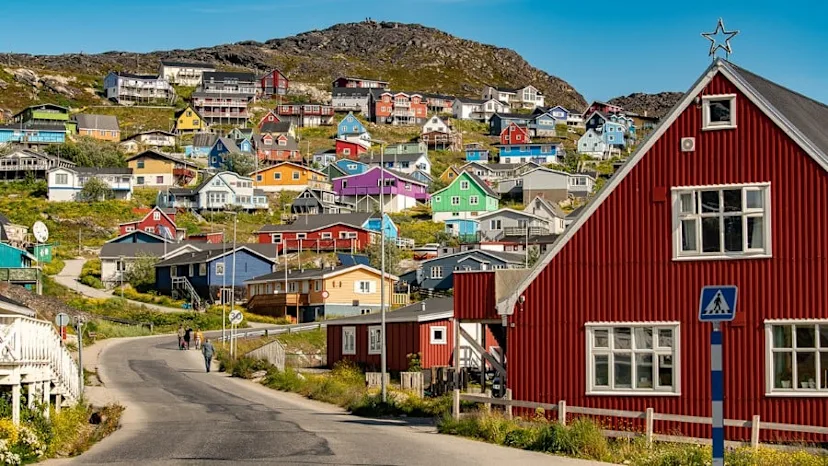
The trip was truly spectacular from the very first moment. As soon as we landed in Nuuk, the sun was shining, and we had the chance to experience the incredible capital that this small Arctic city is. Brightly coloured houses set against mountains and water, a place that is both remote and full of life. It was the perfect introduction to a country that, over the days that followed, would reveal itself slowly and never quite in the way I expected.
Aboard MS Fridtjof Nansen
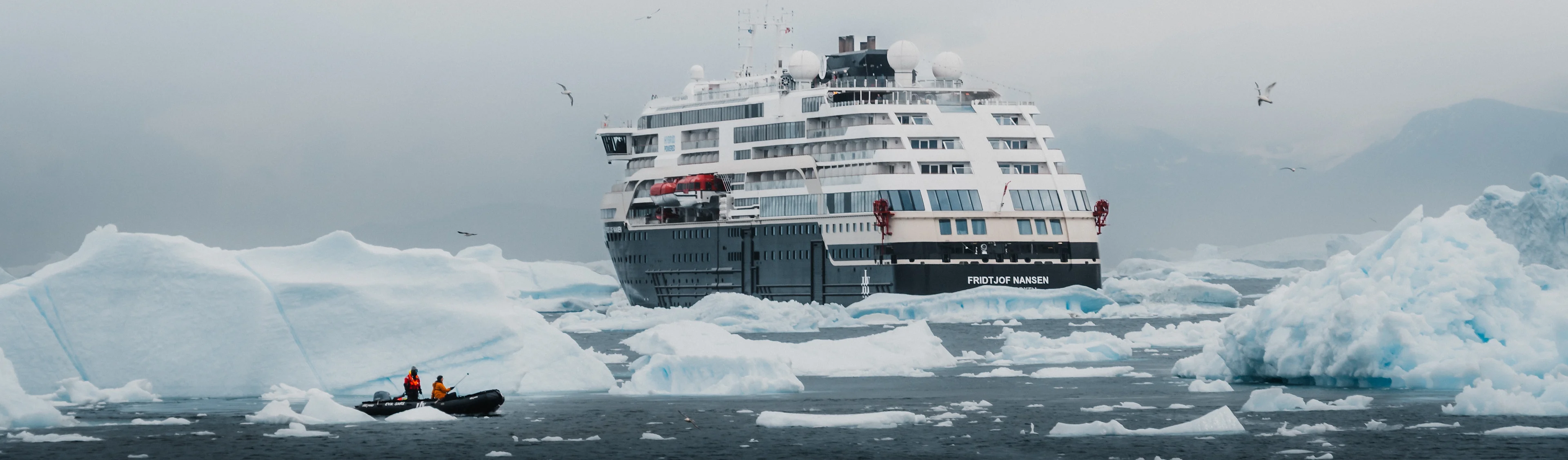
As soon as I boarded MS Fridtjof Nansen, I knew this was going to be an unforgettable voyage. It is an incredible vessel, and the entire HX team made us feel so welcome from the first step aboard. For a photographer, a ship like this becomes a kind of moving studio, a base from which the landscape constantly changes outside your window.
One of my favourite things, aside from all the extraordinary places we visited, was the science centre and the education programme on board. There is something special about travelling through an environment like Greenland while genuinely learning about it. Understanding the ice, the wildlife, and the forces shaping the place around you. It gave the whole expedition a depth that went far beyond sightseeing, and it changed the way I looked through the lens.

North into the ice
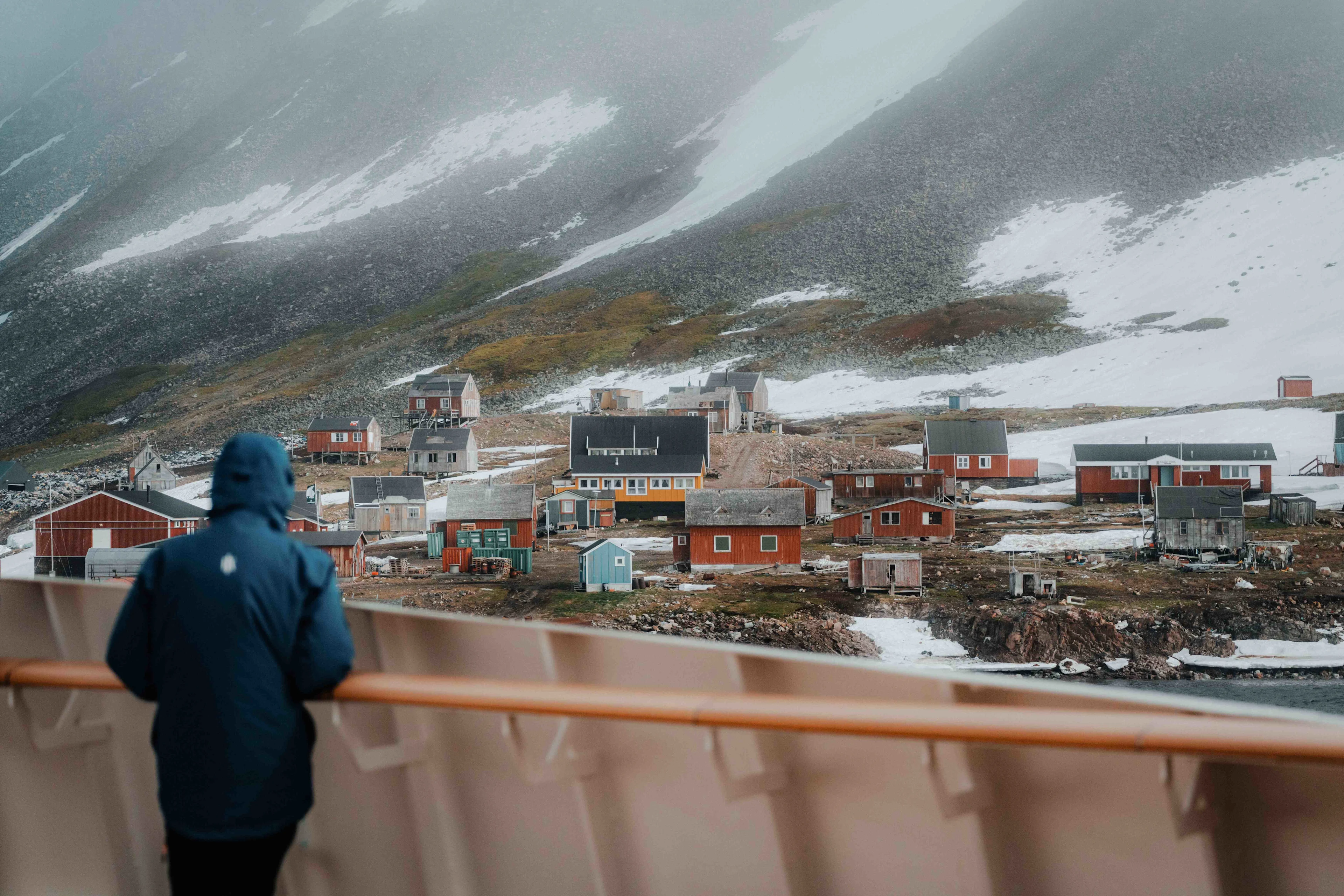
Greenland reveals itself gradually. From walks along the Icefjord, where the landscape feels frozen in motion, to visiting small, remote communities scattered along the coastline, there is a deep sense of isolation balanced by a strong human presence.
The Ilulissat Icefjord was truly one of the most spectacular things I have ever seen with my own eyes. What made it even better was the opportunity to see it from a small plane. To lift above the ice and finally grasp the sheer scale of what we had been sailing through. From the air, the perspective shifts entirely: you see how the ice moves, how it fractures and drifts, and just how small we are within it all.
We pushed the boundary of how far north we could venture. We met the sea ice at 78° north and had the chance to do a sea ice landing, stepping out onto the frozen surface of the Arctic Ocean itself. We went as far as Qaanaaq, one of the northernmost civilian settlements anywhere in the world. There is a particular kind of silence that far north. It is not empty, it is full, somehow, of weather and light and the slow movement of ice.

The people, and the heart of the land
For all of Greenland's scale, what stayed with me most were its people and the moments shared with them.
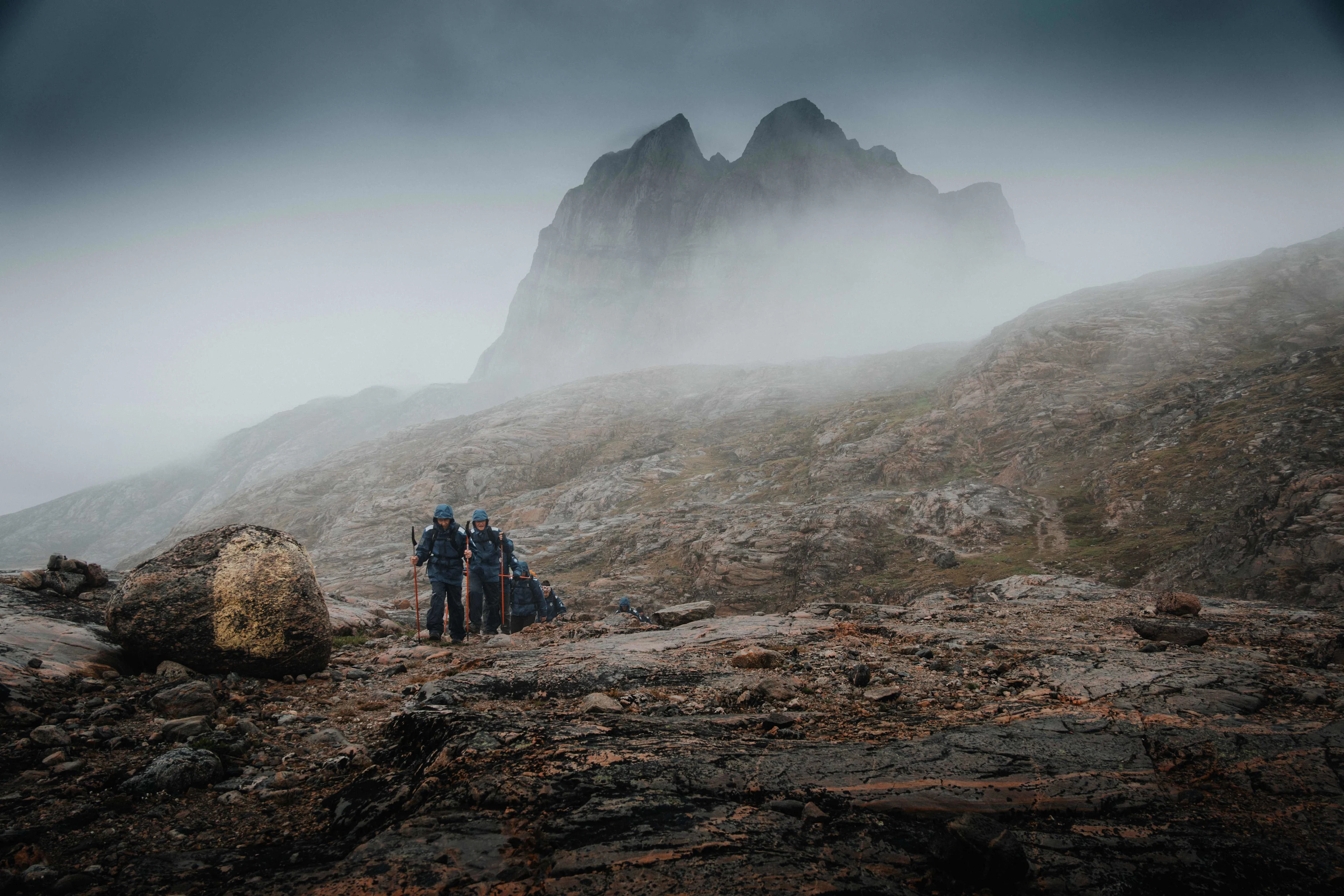
The hike to the heart-shaped mountain in Uummannaq was special. A fitting symbol for a place whose name itself speaks of that shape. Climbing across rugged terrain beneath cloud covered peaks, watching the mist lift and settle, I kept finding the landscape rearranging itself hour by hour as the light and weather transformed the scene.
And then there was Itilleq. Playing football with the locals there was truly memorable, for the community on board and for the locals alike. It is one of those moments that doesn't translate into a single photograph but defines an entire trip. A reminder that even in one of the most untouched corners of the planet, connection is universal. A pitch, a ball, and a shared game between people from completely different worlds. The laughter, competition, and shared experience created memories that I still tell friends to this day.
The inspiration behind the images
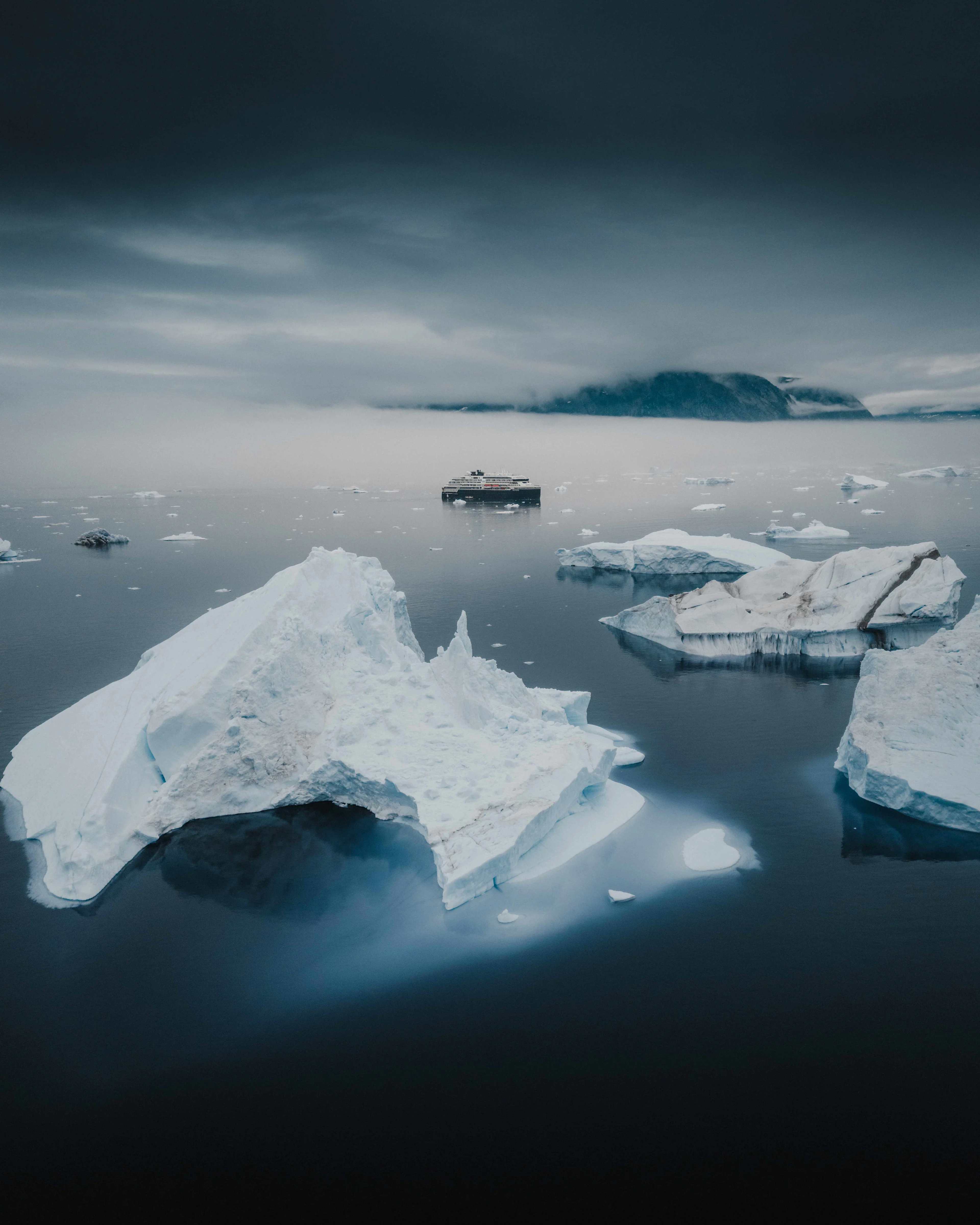
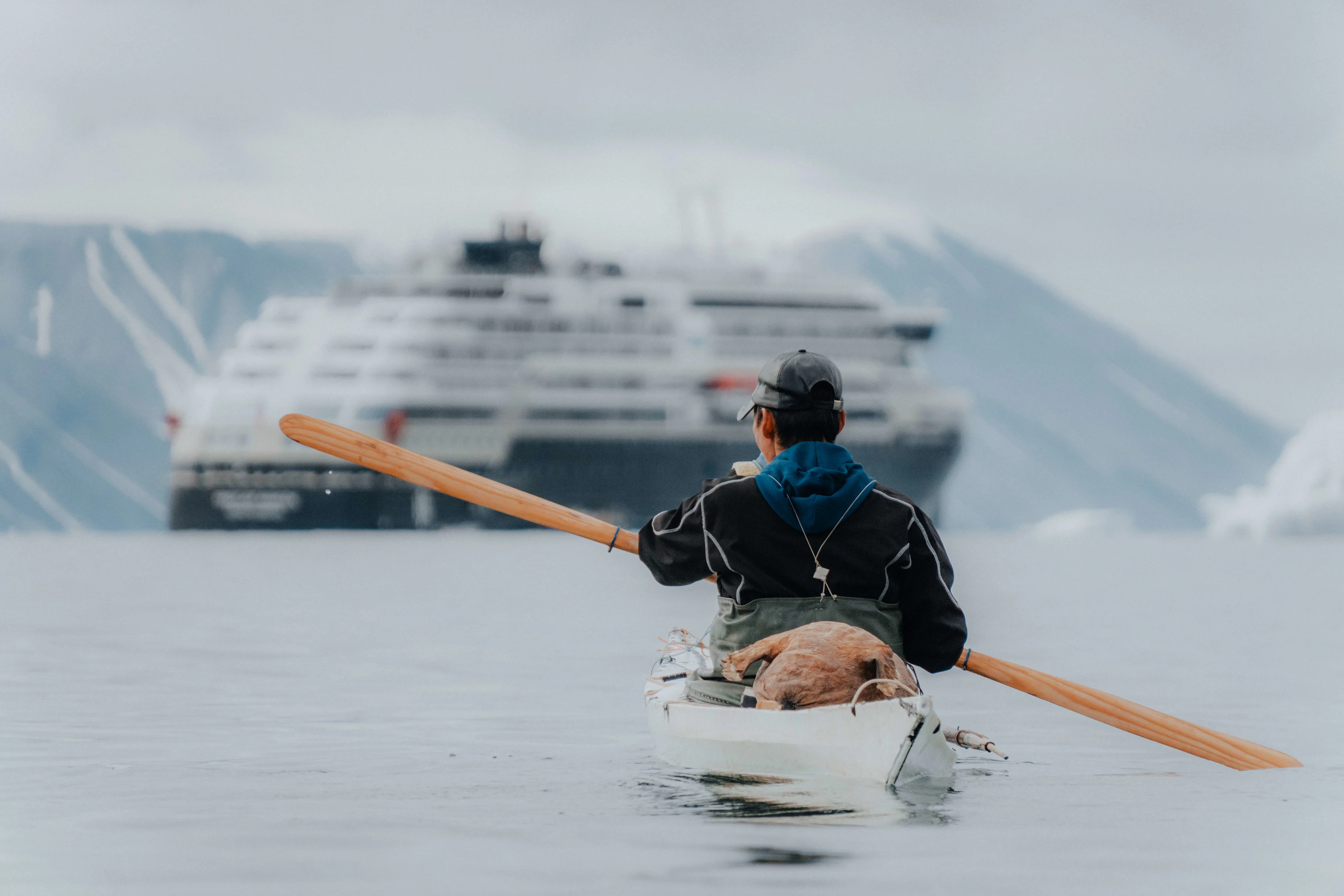
My work has always been about movement and time, and Greenland gave me both in abundance. This journey became a story of movement and time; kayaking alongside traditional hunters through still Arctic waters, hiking across rugged terrain beneath cloud covered peaks, and watching the landscape shift hour by hour as light and weather transformed everything around us. From above, drone perspectives showed just how small we were within it all, our vessel dwarfed by the immense ice drifting silently past.
The conditions never stopped changing, and that is exactly what I was chasing. Different sides of the same place, from quiet, misty mornings to dramatic skies and layered clouds wrapping around the mountains. At times, the peaks revealed subtle, heart-shaped forms through the mist, adding to the surreal quality of it all. I have never had to work so closely with the weather, and I have never been so grateful for it.

The camera kit I carried
People often ask what I shoot with, and an expedition like this is the ultimate test of any setup. Cold, salt spray, constant movement, and light that changes by the minute. Reliability matters as much as image quality, because you only ever get one chance to get the shot.
My body of choice was the Sony A7IV, paired with three SIGMA lenses that each earned their place in the bag.
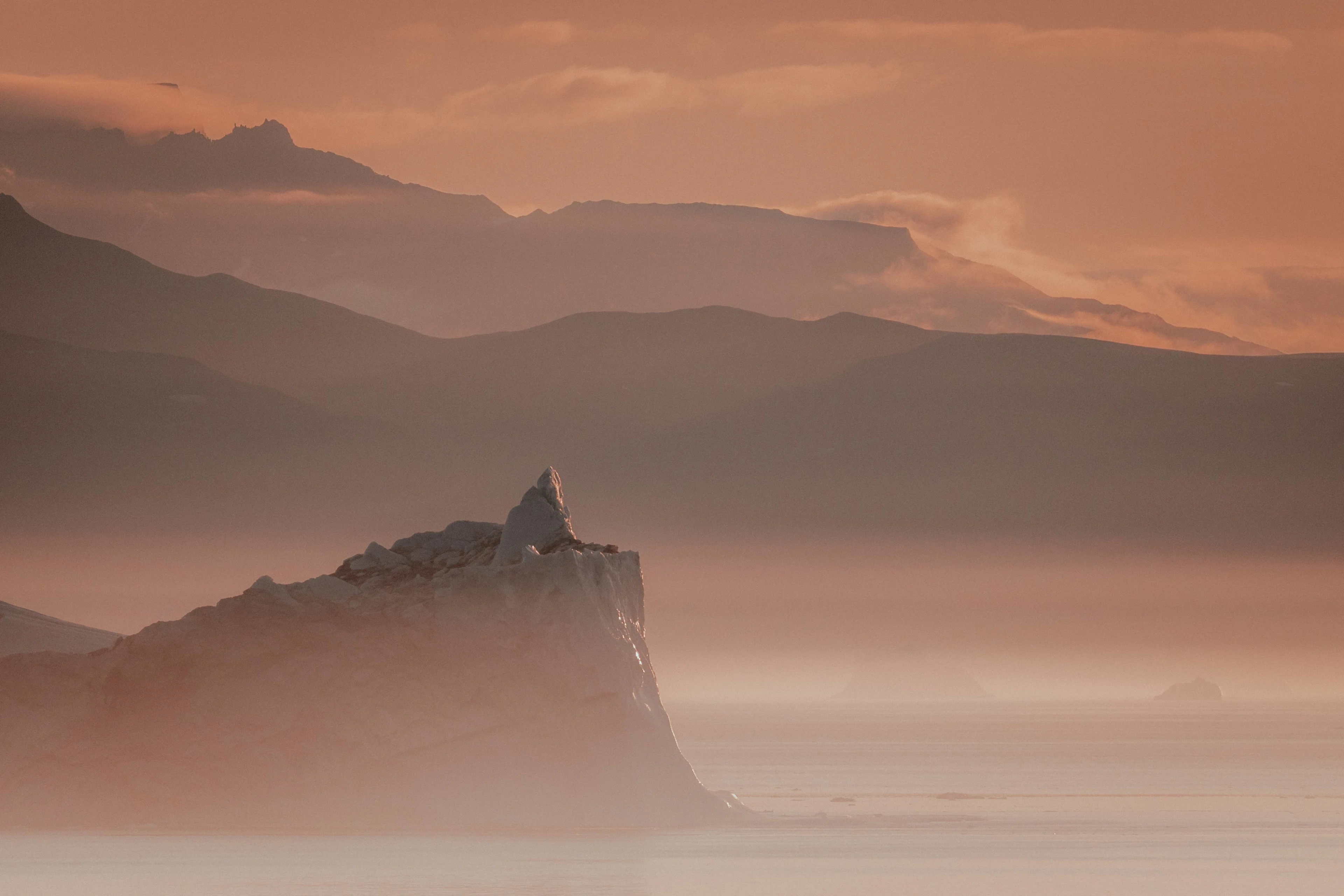
The SIGMA 100-400mm is my all-time favourite lens, and it stayed on the body for most of the voyage. It was the perfect lens for those incredible sunset shots of the icebergs, letting me pull in distant detail and compress the immense scale of the ice into a single frame. More than any other lens, it shaped how I saw Greenland.
The SIGMA 24-70mm was my documentary workhorse, the perfect lens for capturing everything on the expedition, from sweeping landscapes to the excursions and the moments shared with people along the way.
And the SIGMA 14mm f/1.4 was the lens I reached for in the most dramatic moments, like the heart-shaped peak of Uummannaq rising through the mist, where the sheer scale of the landscape demanded an ultra-wide.
Beyond the camera, the DJI Mini 4 Pro was my choice for the epic drone shots, lifting the perspective high above the ice to reveal just how small MS Fridtjof Nansen was against the immense scale of Greenland.
Across weeks in demanding Arctic conditions, the kit performed flawlessly, and that dependability is everything when the shot in front of you will never happen the same way twice.
One evening, everything aligned
And then, one evening, everything aligned. As the sun began to set, the entire scene was bathed in pastel light, reflecting across the water, ice, and mountains. It was the most magical sunset I have ever witnessed. A moment of stillness and silence that seemed to gather up everything this place represents and hold it, briefly, in the light.
That is the image I will always carry, an evening I will never forget.
A land untouched
This body of images is a reflection of Greenland's many facets - its scale, its atmosphere, its people, and its untouched beauty. It is a place that feels both timeless and constantly changing, and through these images I have tried to capture not just how it looks, but what it feels like to experience one of the most extraordinary environments on Earth.
I am hugely grateful to HX for the opportunity to witness it, and to have these moments recognised in the National Geographic Traveller competition. Some places you photograph. Greenland, you carry with you.
— Dylan McBurney