What is an Alaska Inside Passage Cruise?
The Inside Passage is one of the most established ways to experience Alaska. This coastal cruise route winds through sheltered waterways, forested islands, glacier-carved fjords, and classic ports in southeast Alaska.
Lesedauer 2 min
By travelling through a protected network of narrow channels, you remain close to the landscape throughout. Wildlife, coastal communities, and shifting scenery are part of the journey itself, not just the destinations.
What’s in this article
A quick overview of the Inside Passage
What and where the route is
Why it’s one of Alaska’s most popular cruise routes
What you can expect to see, from landscapes to wildlife
Key ports and places along the route
Differences between large ships and expedition ships
When to travel and how seasons vary
How it compares to more remote routes like the Aleutians
Inside Passage to Alaska: A Quick Summary
What it is: A coastal cruise route through southeast Alaska and the wider Pacific coastline
Where it runs: Along the Alaska Panhandle, between British Columbia and the Gulf of Alaska
Typical stops: Juneau, Sitka, Ketchikan, Skagway, Glacier Bay
Best for: Wildlife, fjord landscapes, and accessible coastal exploration
Trip style: Large ships follow established routes; expedition ships explore narrower channels and remote areas
Inside Passage vs Gulf of Alaska: Inside Passage cruises focus on southeast Alaska; Gulf routes cover a broader range of regions, including more exposed coastline
What Is the Inside Passage?
The Inside Passage is both a region and a cruise route, running through southeast Alaska, British Columbia, and the wider Pacific coast. It consists of a network of channels, islands, and fjords along the Alaska Panhandle.
Rather than crossing open ocean, ships travel through protected waterways, weaving between forested islands and coastal mountains. This creates a more continuous connection to the landscape, with changing scenery throughout the journey.
Where Is the Inside Passage?
The Inside Passage sits along southeast Alaska, often referred to as the Alaska Panhandle. It stretches between British Columbia and the Gulf of Alaska, forming a narrow coastal corridor of islands and waterways.
Most itineraries travel between Vancouver or Seattle and ports in southeast Alaska, with additional scenic cruising areas such as Glacier Bay and surrounding fjords.

Why Is the Inside Passage So Popular with Travellers?
The Inside Passage combines dramatic scenery with relatively calm sailing conditions. Protected waterways mean less exposure to open ocean, creating a more stable and comfortable journey.
Distances between destinations are shorter, allowing more time ashore or in scenic areas. At the same time, the route connects many of Alaska’s best-known locations, making it an accessible introduction to the region.

What Do You See on an Inside Passage Cruise?
Sailing the Inside Passage places you within Alaska’s coastal wilderness rather than at a distance from it. The route moves through sheltered channels, where forested islands, fjords, and steep mountain walls define the horizon. In calmer stretches, the water can reflect the surrounding forest and peaks with near-perfect clarity. The experience is shaped as much by the journey between destinations as by the stops themselves.
Glaciers, Fjords, and Rainforest Scenery
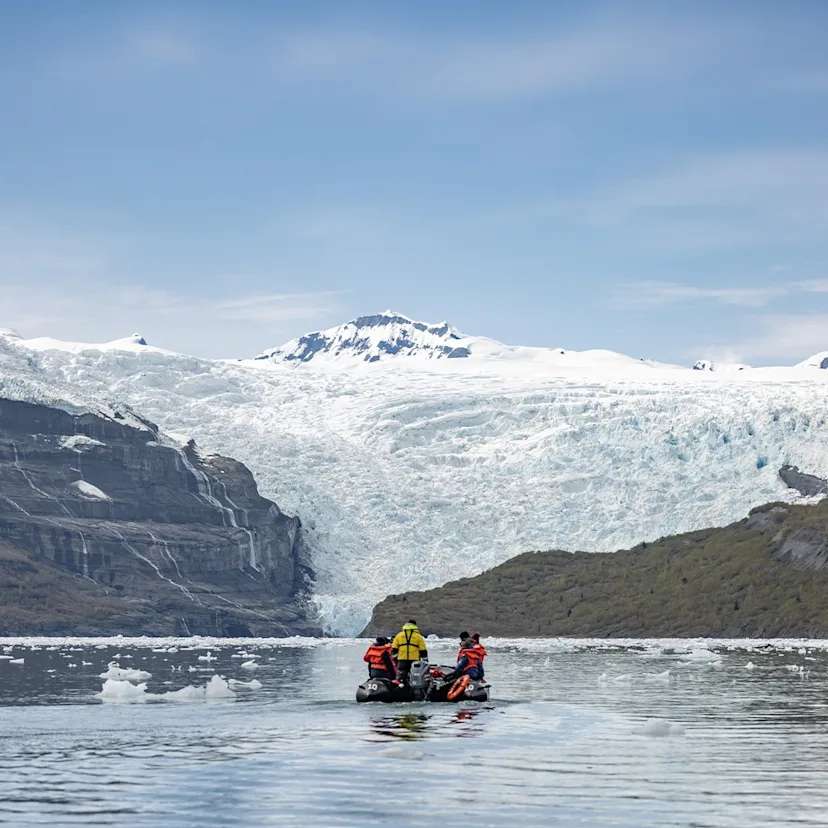
The landscapes of the Inside Passage are shaped by glaciers, coastal mountains, and temperate rainforest. Fjords cut deep into the coastline, while waterfalls fall from steep cliffs into narrow channels. At times, the ship moves slowly enough through these channels that the shoreline feels within close reach.
The Tongass National Forest stretches across much of the region, with dense evergreen forest meeting cold coastal waters. Conditions shift quickly, from clear views of distant peaks to mist moving through the islands.
Wildlife You May See
Wildlife is a defining part of the Inside Passage experience. From May to September, sightings may include humpback whales surfacing in sheltered waters, orcas travelling through deeper channels, and seals and sea lions resting along the shoreline.
On land, brown and black bears may be seen near rivers, while bald eagles and seabirds circle above forested coasts. Encounters often happen without warning, whether from the deck or your cabin.
Coastal Towns and Alaska Native Culture
The Inside Passage also offers insight into life along Alaska’s coast. Towns such as Ketchikan and Sitka reflect a mix of Alaska Native heritage, maritime history, and fishing culture.
Totem poles, carving traditions, and local storytelling remain part of daily life, providing context to the landscapes you travel through.
Which Places Does an Inside Passage Cruise Visit?
Most itineraries combine key southeast Alaska ports with at least one major scenic cruising area.
Juneau
Alaska’s capital is surrounded by mountains and waterways, with no road access from the rest of the state. Nearby, Mendenhall Glacier and coastal waters offer opportunities for wildlife and landscape exploration.
Ketchikan
Located along forested shores, Ketchikan is known for its Alaska Native heritage and totem traditions. The surrounding waterways and rainforest create frequent opportunities to spot wildlife.
Skagway
Once a gateway to the Klondike Gold Rush, Skagway retains its frontier character. Historic streets sit against a backdrop of steep mountains and glacial valleys.
Sitka
Sitka offers a different perspective, shaped by Alaska Native, Russian, and maritime influences. Its setting among forested islands creates a quieter, more remote feel.
Glacier Bay
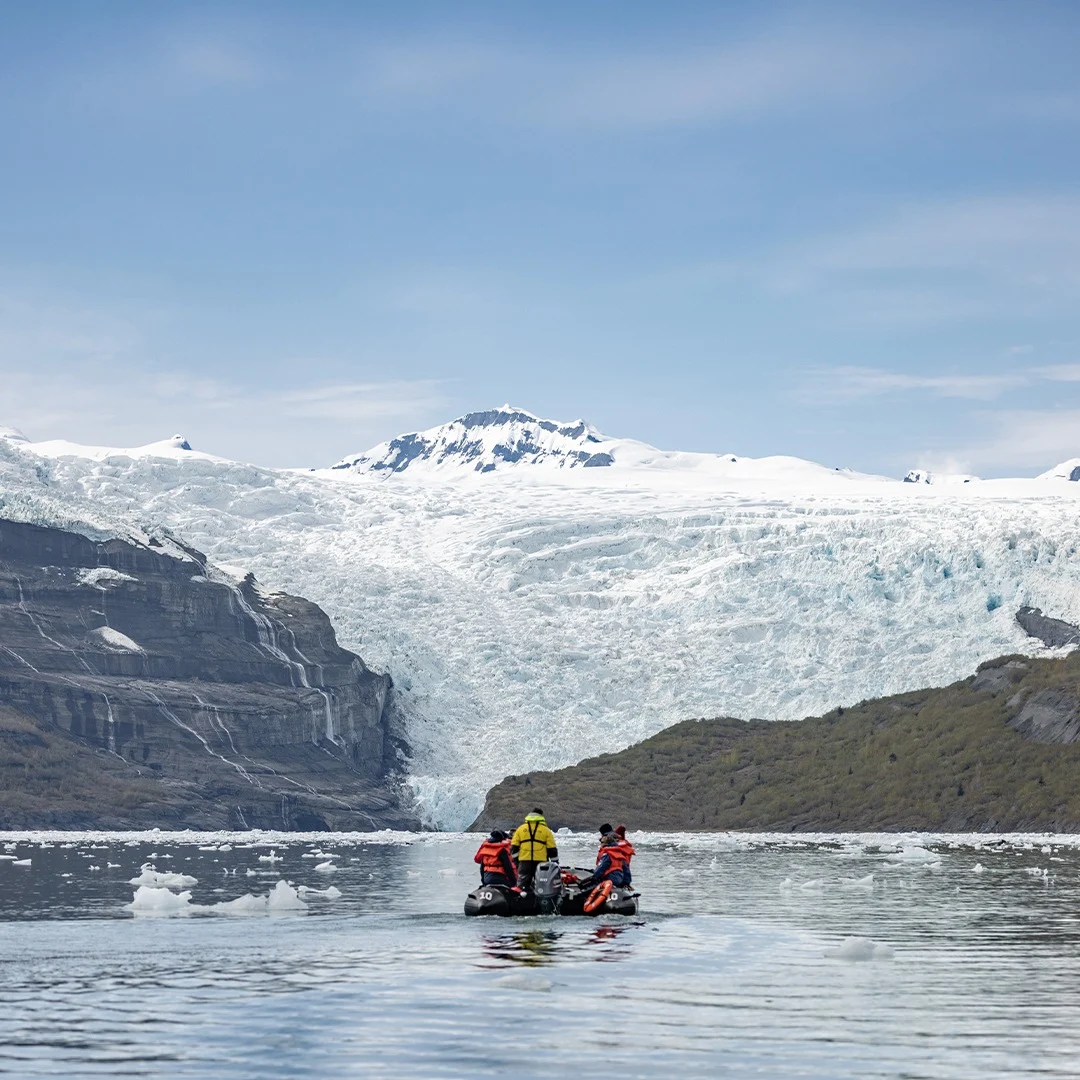
One of the highlights of the Inside Passage, Glacier Bay is home to vast tidewater glaciers descending into icy waters. The longer you spend in the bay, the more the scale becomes apparent, as distances and details shift with perspective.



Large Ship or Small Ship? Different Ways to Experience the Inside Passage
There are different ways to travel this route. Large ships typically follow established itineraries between major ports, focusing on onboard amenities and scheduled stops.
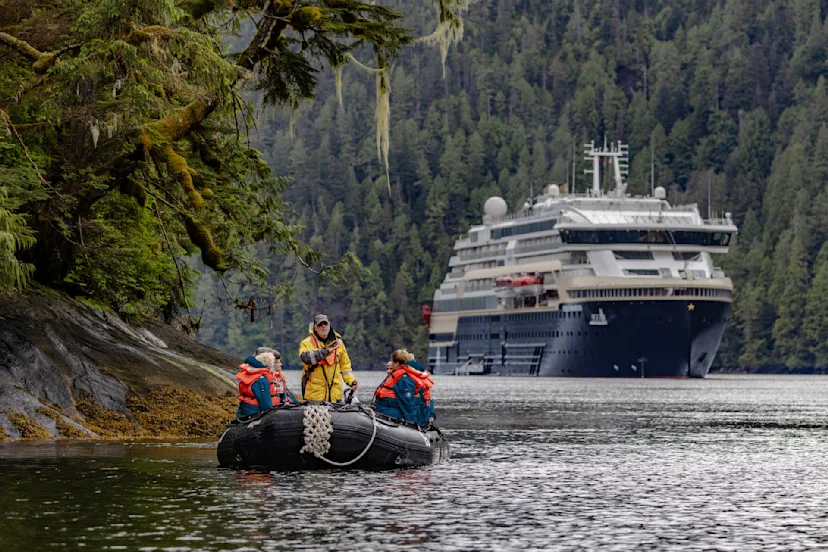
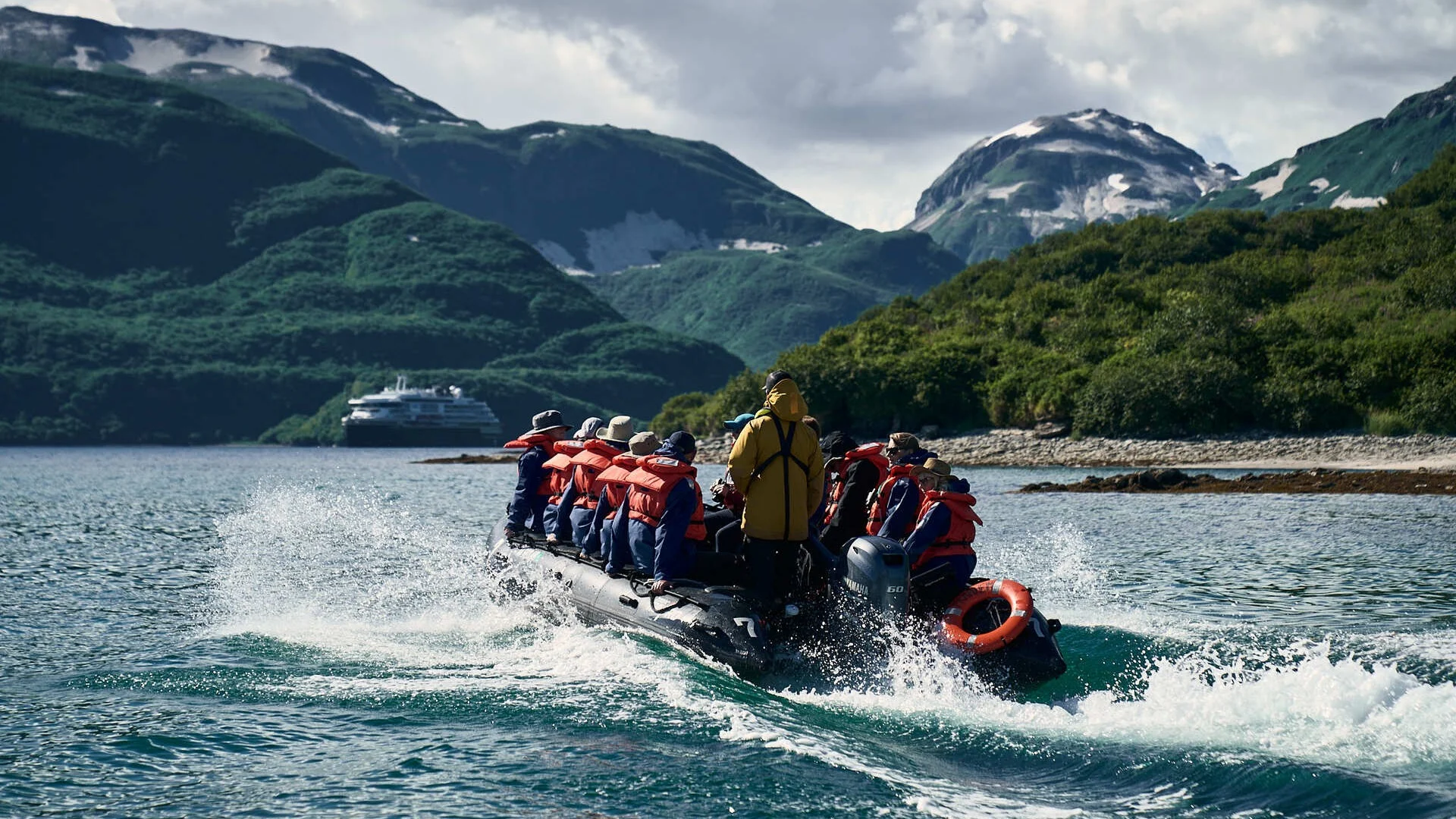
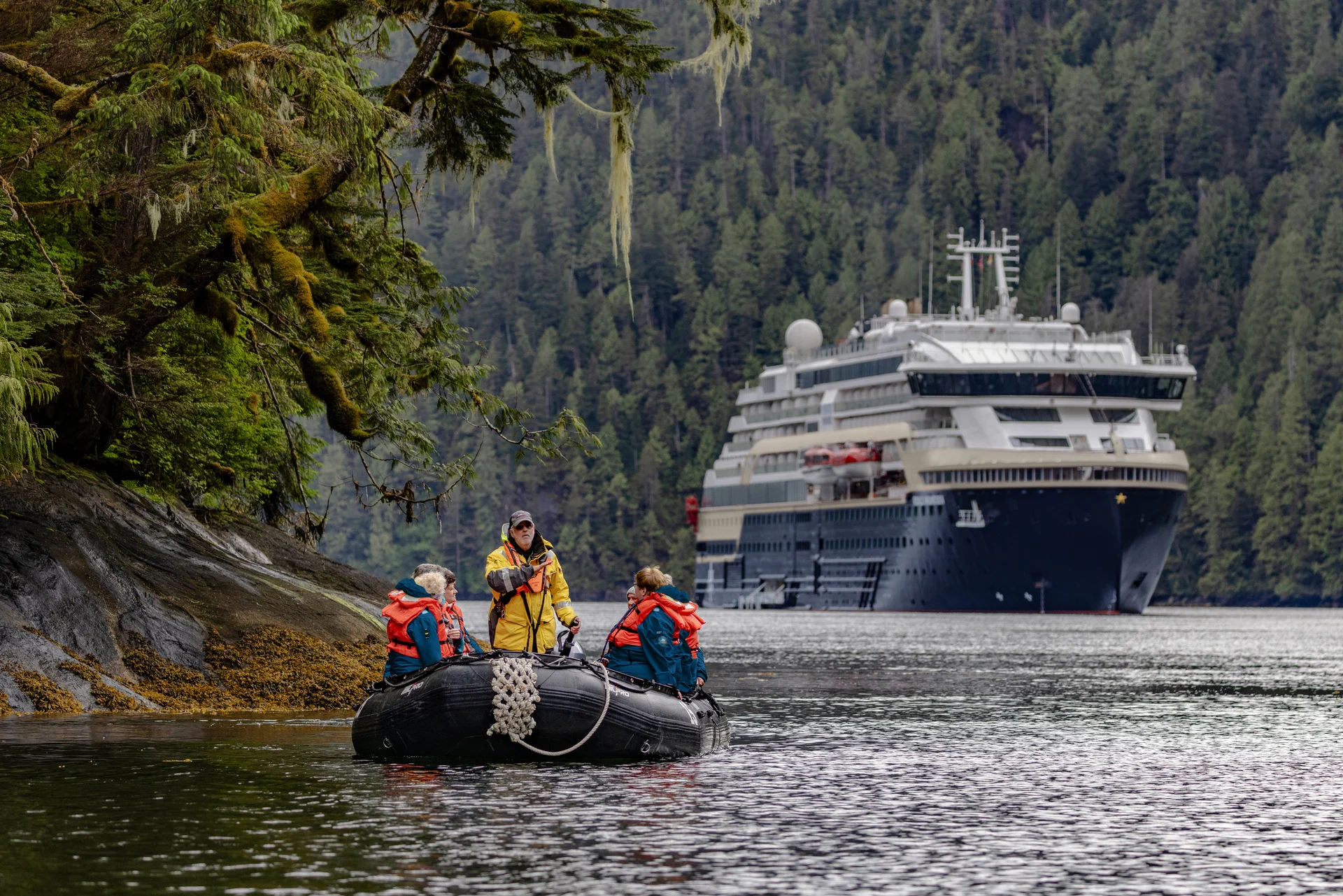
Expedition ships take a different approach. Smaller vessels can access narrower channels, quieter anchorages, and more remote areas. With fewer guests, there is greater flexibility to spend time where conditions are most favourable. Small-boat excursions and landings bring you closer to areas larger ships would simply pass by.
This style of travel places more emphasis on exploration, where the journey is shaped by access and proximity rather than fixed schedules or distance covered.
HX ships, including MS Roald Amundsen and MS Fridtjof Nansen, are designed for this approach, combining comfort with the ability to reach areas beyond the main cruise routes.
When Is the Best Time to Cruise the Inside Passage?
The Inside Passage is typically sailed from May to September.
May–June: Cooler conditions, fewer ships, and early-season wildlife activity
July–August: Warmer weather, longer days, and peak wildlife and visitor activity
September: Quieter atmosphere, changing light, and more variable weather
Light, weather, and wildlife activity shift noticeably across the season, shaping how the landscape is experienced.
The Inside Passage in Summary
The Inside Passage remains one of the most popular Alaska cruise routes because it combines accessible travel with varied scenery and wildlife.
It offers a strong introduction to Alaska’s coastal landscapes, with a balance of nature, culture, and well-known destinations. For many travellers, it’s the most straightforward way to experience the region.
Inside Passage or the Aleutians?
The Inside Passage focuses on southeast Alaska, with well-known locations and relatively sheltered conditions. It’s suited to those looking for a classic introduction to Alaska.
Aleutian itineraries, by contrast, are more remote and expedition-focused, exploring less-visited coastlines and open ocean environments.
Explore Related Alaska Routes
Explore our Alaska expedition cruises to find itineraries through the Inside Passage and beyond.
You can also learn more about Alaska’s landscapes and wildlife in our Alaska travel guide, or explore related articles on wildlife in Alaska and seabirds of the North Pacific.