Sara-Marie, the Dressmaker
This portrait follows a Greenlandic dressmaker whose work mends more than fabric: she weaves the traditions that sustain Kalaallit life and community across generations.
Inheriting Tradition
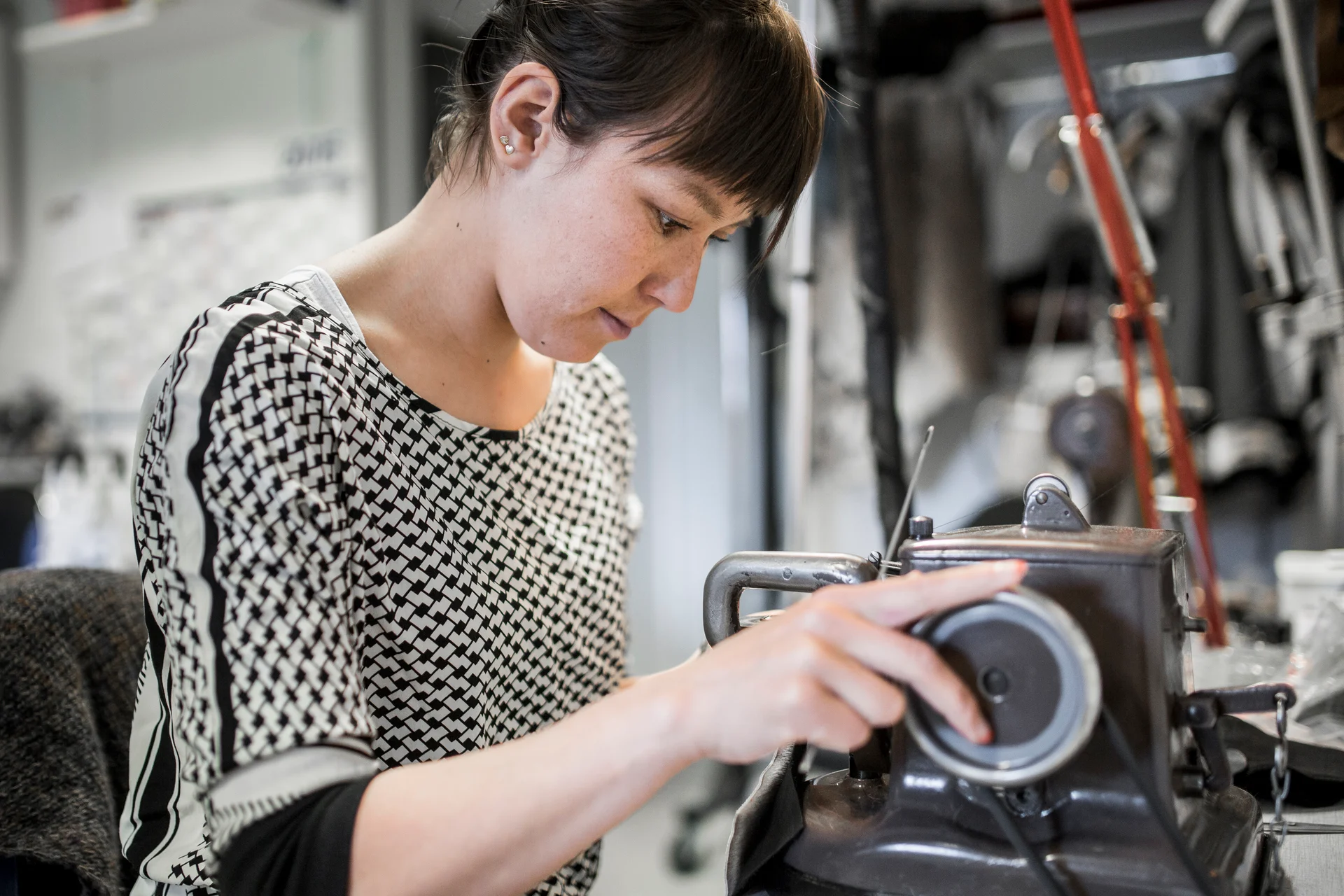
“It was passed on to me, and I will pass it on too.” In a small workshop in Nuuk, Sara-Marie sits at a table strewn with materials, beads, and spools of thread. Her hands move like clockwork, looping needle through fabric again and again with quiet, careful precision that she learned many years ago through watching her grandmother.
“I remember her calmness and creativity very fondly,” Sara-Marie tells us. Sewing is “something that comes from within…,” shaped by years of observing her grandmother. “I draw inspiration from her way of being, her carefulness, and her eagerness to work by hand.” Now, Sara-Marie has worked as a dressmaker at Kittat for over 20 years, specialising in the repair of kalaallisuut, Greenland’s national dress.
Garments through Generations
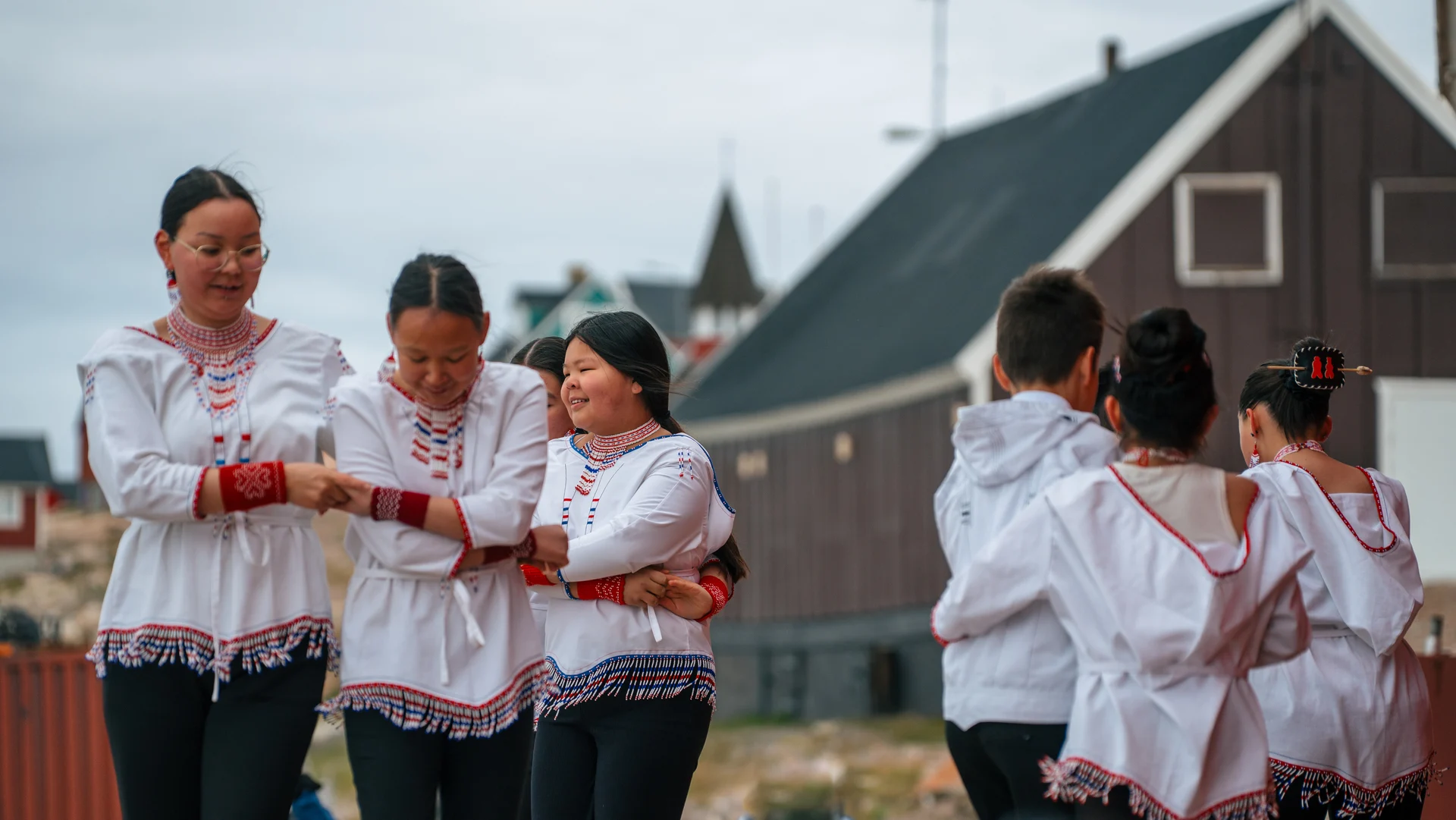
A full kalaallisuut is made up of multiple pieces: the timmiaq, worn beneath a decorated anorak, paired with short sealskin trousers known as seeqqerngit, kamik boots, and the nuilarmiut, a beaded collar.
Every garment tells a story: of who made it, who wore it, and the occasions it has witnessed. “We place great importance on wearing kalaallisuut... for happy occasions and sad ones.” Weddings, funerals, when a child starts school – the same garments move through life’s milestones.

Binding Community through Craft
Sara-Marie recalls a moment when a young girl was about to start school without a nuilarmiut, a beaded collar that can contain around 20,000 little pearls and take up to 64 hours to complete. With little time to spare, family members gathered materials and worked together through the night to ensure the outfit was ready by morning.
“If anyone needs help, we quickly step up for each other, because ultimately we are one community.”
In Greenland, there is a word for this kind of shared responsibility: ataatsimoorneq. At its core, it means ‘togetherness’ or ‘unity.’ Sara-Marie describes ataatsimoorneq as a way Greenlandic culture is preserved through the practises that formed it: like hunting, dancing, storytelling, and for her, sewing.
“In the past, people lived collectively. If they were hunting, the food was shared among everyone. Ataatsimoorneq is very important to me because, ultimately, we are one community.”
In Sara-Marie’s workshop, that idea takes a practical form. A seam is reinforced, a pearl replaced, a garment returned to circulation. Through maintenance, the dress remains part of everyday life rather
than a symbol removed from use. “The more I understand it, the more I learn about old Greenlandic ways of life,” she says. “I feel proud to be able to do it.”
The Fabric of Identity
In the work of people like Sara-Marie, the values that have and continue to sustain Greenlandic communities become clear. Through ancestral sewing practises, each garment becomes a metaphor for weaving together past and present, connecting people to traditions and to one another. It’s a reminder that who we are is inseparable from the ways we come together, care for one another, and carry our heritage forward. “Kalaallisuut is very meaningful to us as people, in our identity as human beings. It already lives within us, in our hearts, that’s why it means so much.”


