Science & Education Programme
Explore, question and discover with our Science & Education Programme – and see the world differently.

Dear fellow explorer,
Welcome to Science & Education at HX Expeditions.
There's a question I get asked more than any other: what's the difference between a tourist and an explorer? For me, it comes down to one thing – curiosity. Tourists visit places. Explorers ask questions. That curiosity is at the heart of everything we do. It's why we have a Science Centre on every ship, not a casino. It's why we carry microscopes and plankton nets alongside the binoculars. And it's why, on an HX expedition, you might find yourself examining a feather under a microscope one minute and helping a researcher log a wildlife sighting the next.
Our Science & Education Programme brings exploration and science together. Throughout your expedition, our team will help bring each destination to life through lectures, workshops, and hands-on discovery. You'll hear from experts in the Science Centre, meet scientists working on board, and take part in citizen science projects that contribute observations and data to research around the world.
Some of the wildlife you encounter may be endangered – and the data you help collect plays a part in understanding and protecting it.
Behind the scenes, there's another side to what we do. Our ships give scientists access to some of the most remote corners of the planet – places that would otherwise be impossibly expensive or difficult to reach. The research we support helps us all better understand the places we explore, the wildlife that depends on them, and the changes happening to both.
This is what curiosity means to me: not simply seeing more of the world, but understanding more of what we see – and finding more reasons to protect it. So ask questions. Look closer than you normally would. Take part in the science happening around you. And if you leave your expedition seeing the world even a little differently, we'll have done our job.
Dr Verena Meraldi | Chief Scientist | HX Expeditions

Explore, question, discover
This is where things get hands-on. Observe wildlife, investigate the natural world, engage with research taking place on board, and contribute to citizen science projects that help scientists better understand our changing planet.


From tracking whales and exploring marine ecosystems to observing sea ice and peering at the smallest forms of life under a microscope, there are opportunities to get involved throughout your expedition. Some of the wildlife we encounter is endangered, and the observations you contribute – from whale sightings to bird records – can play a small but real part in helping scientists monitor and protect it. It's about looking closer, asking questions and discovering more about the world around you – and maybe changing the way you see it.
Citizen Science Projects
We are proud to support many vital Citizen Science projects on board our ships as we venture to off-the-beaten-track locations.
In this modern, digital-savvy, and well-travelled age, researchers and scientists are turning to everyday travellers and communities to help build and develop their understanding of the world's most biodiverse habitats. Every year, thousands of people become Citizen Scientists participating in a range of global projects contributing to long-term research.
Be Citizen Science ready
Become a Citizen Scientist with the help of your smartphone and these easy-to-use apps. Get started before you join your expedition and start contributing to global research straight from your pocket.
Although our ships offer Wi-Fi on board, our expedition cruises travel to remote destinations meaning that internet coverage and speed can be limited at times. That’s why we recommend downloading some of the key Citizen Science apps on your mobile devices before joining your expedition cruise with us so that you are all set to connect to your inner scientist.

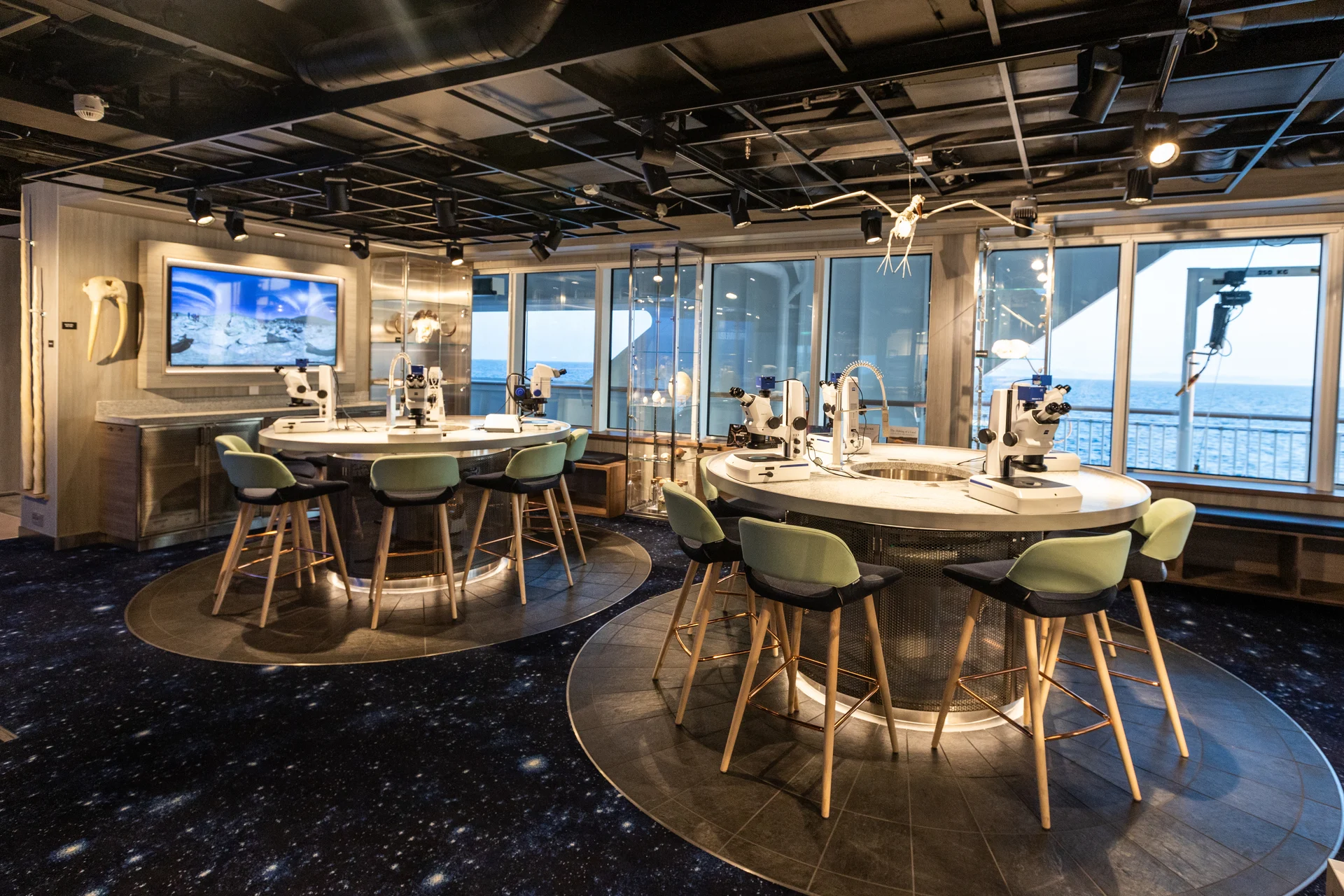
The Science Centre
Uncover a unique perspective of the people, places, and wildlife we discover around the ship. Packed with state-of-the-art technology and equipment, the Science Centre is at the heart of our onboard experience.
When you think of the features on board your traditional cruise ship, the first thing that comes to mind would be the spas, many restaurants, and cafes - it wouldn't be a state-of-the-art Science and Education Centre, that's because this is an expedition cruise ship. We like to think of our Science Centres and the adjoining lecture areas, as the core of the onboard experience, where you can gain a deeper understanding of the destinations you'll explore, and significantly enhance your experience and knowledge.

Scientific Partners & Collaborators
Science is rarely a solo endeavour. The best discoveries happen when people share knowledge, resources, and access – and that's exactly what we do.
We collaborate with scientists, universities, and research organisations around the world, using our ships as platforms to support research in some of the planet's most remote and difficult-to-reach regions. By providing access, logistical support, and opportunities to work at sea and in the field, we help researchers collect data that would otherwise be nearly impossible to obtain – data that contributes to the conservation and protection of the places we explore. But here's what makes this different from most research partnerships: we bring the science directly into the expedition. You get to meet the people behind the research, see their work up close, and in some cases, contribute to it yourself. Together, we support science in places where every data point matters – and bring you closer to the discoveries helping us understand and protect our changing planet.
Where ocean exploration and science come together
The ocean covers most of our planet. It shapes the weather, regulates the climate, sustains life on Earth – and we've explored less of it than the surface of the Moon. That gap between what the ocean does and what we know about it is exactly where HX comes in. Our ships travel repeatedly through remote ocean regions that research vessels reach only rarely, if at all. Through our Science & Education Programme, we support research ranging from whale populations and seabird ecology to ocean conditions, phytoplankton, underwater sound, sea ice, and atmospheric science. But the science doesn't stay locked in a lab. We bring it into your expedition – giving you the chance to meet scientists, explore their work, investigate the world around you and, through citizen science, contribute data of your own. The more we understand about these waters and the wildlife that depends on them, the better equipped we are to protect them. We're surrounded by ocean wherever we explore. It only makes sense to understand it.

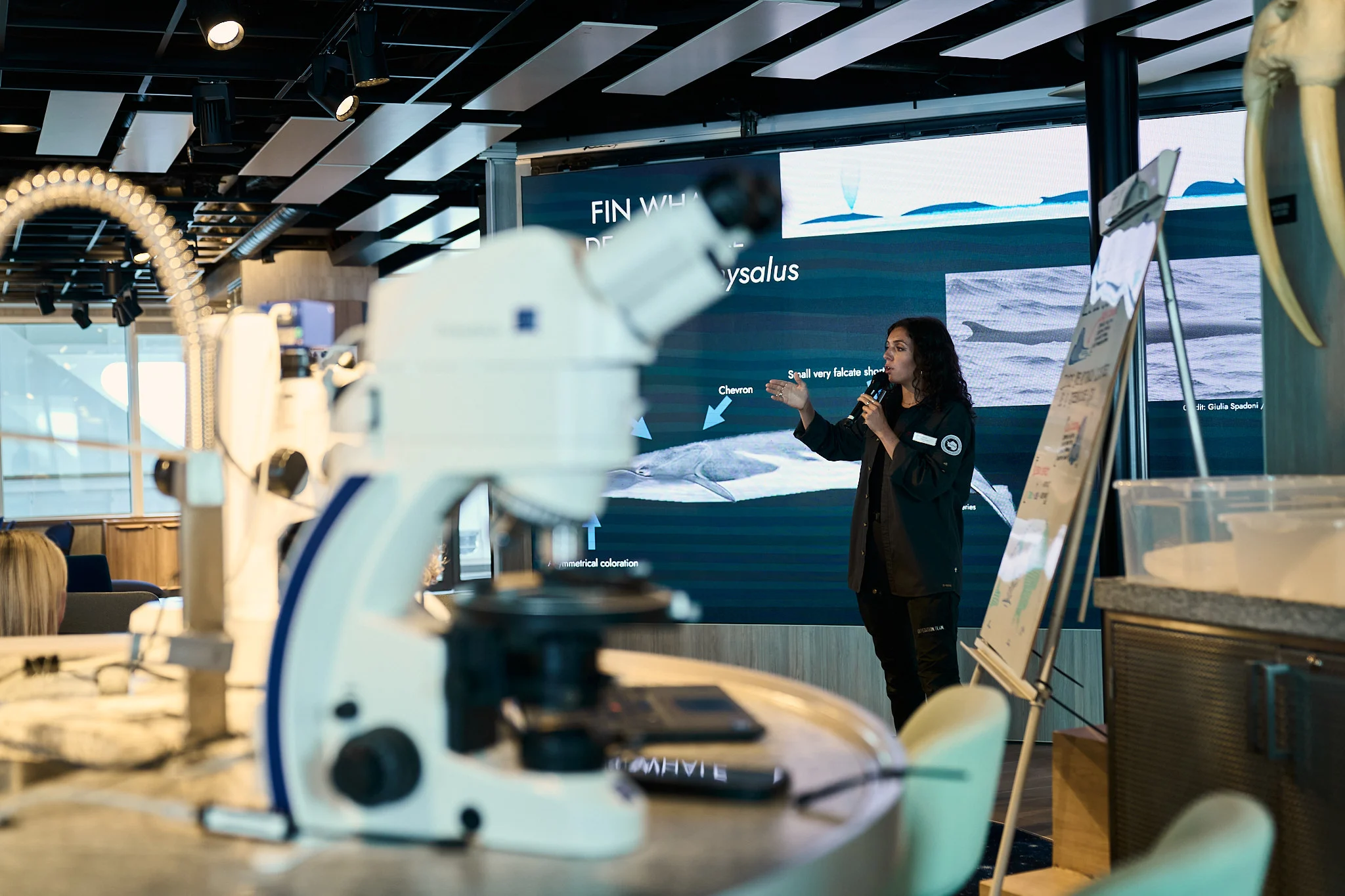
Meet the team behind Science & Education
Behind every HX expedition is a team working to connect science, exploration, and education – and to give our onboard teams the knowledge, tools, and opportunities to bring that connection to life for our guests.

Dr Verena Meraldi, Chief Scientist
Dr Verena Meraldi, Chief Scientist, leads the Science & Education Programme across HX. She sets its strategic direction and develops relationships with scientists, universities, and research organisations around the world. Think of her role as the bridge between the research we support and the experiences we create for guests.
Dr Emily Baxter, Science & Education Senior Manager
Dr Emily Baxter, Science & Education Senior Manager, leads the operational delivery of the programme across the fleet. Working closely with our on board Science & Education Coordinators and Expedition Teams, she turns strategy into reality – from educational content and hands-on activities to citizen science, scientific collaborations, and the practical logistics that make them work on a ship.

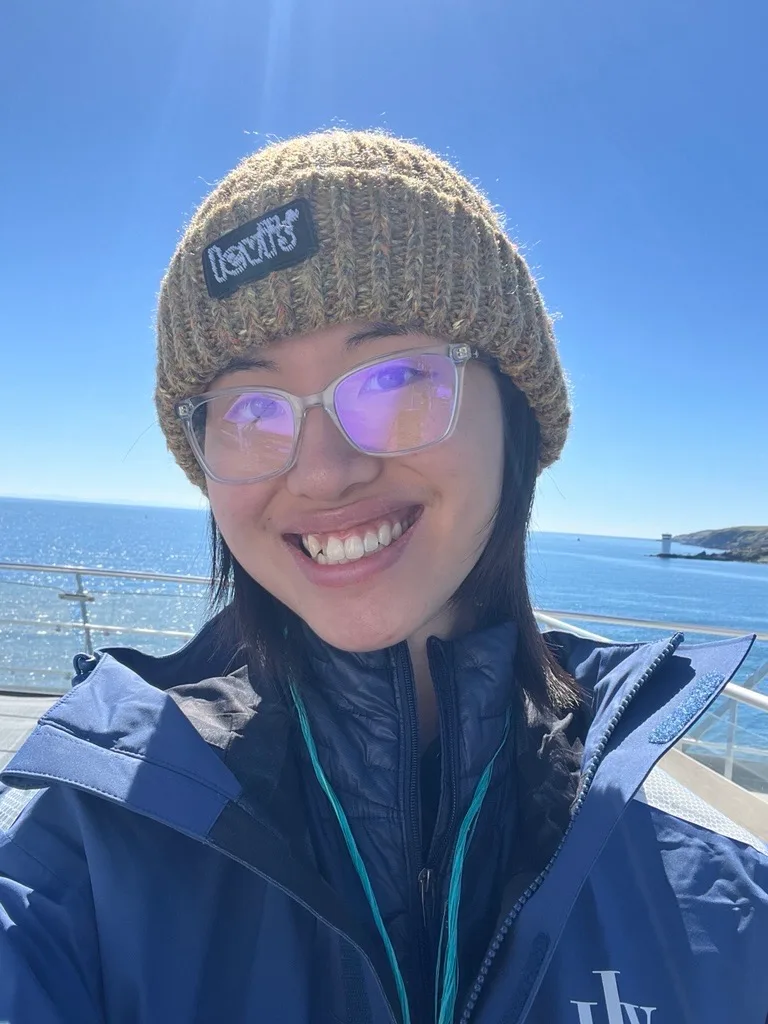
Kathryn Choi, Science & Education Programme Coordinator
Kathryn Choi, Science & Education Programme Coordinator, is the person who keeps the whole thing running behind the scenes. She coordinates the content, information, systems, and resources our teams need to deliver the programme effectively – from educational resources and scientific project information to documentation, reporting, and programme coordination.
Together, the shoreside Science & Education Team supports our onboard teams with scientific partnerships, educational content, training, resources, and operational guidance. Special recognition is due to Tudor Morgan, with whom Verena worked closely over many years to design, develop, and grow the Science & Education Programme into what it is today. Together, they helped establish science and education as defining elements of the HX expedition experience. Although Tudor is no longer part of the Science & Education Team, he remains closely engaged, and his experience and guidance continue to shape the programme's evolution. But ultimately, it's our onboard teams, visiting scientists, and scientific partners who bring the programme to life – inviting you to look closer, ask questions, get involved, and become part of the science happening around you.
