Alaska Native Cultures
Alaska Native peoples are the indigenous peoples of Alaska, with histories extending back more than 10,000 years. Here’s an introduction to their diversity, history, and living traditions.
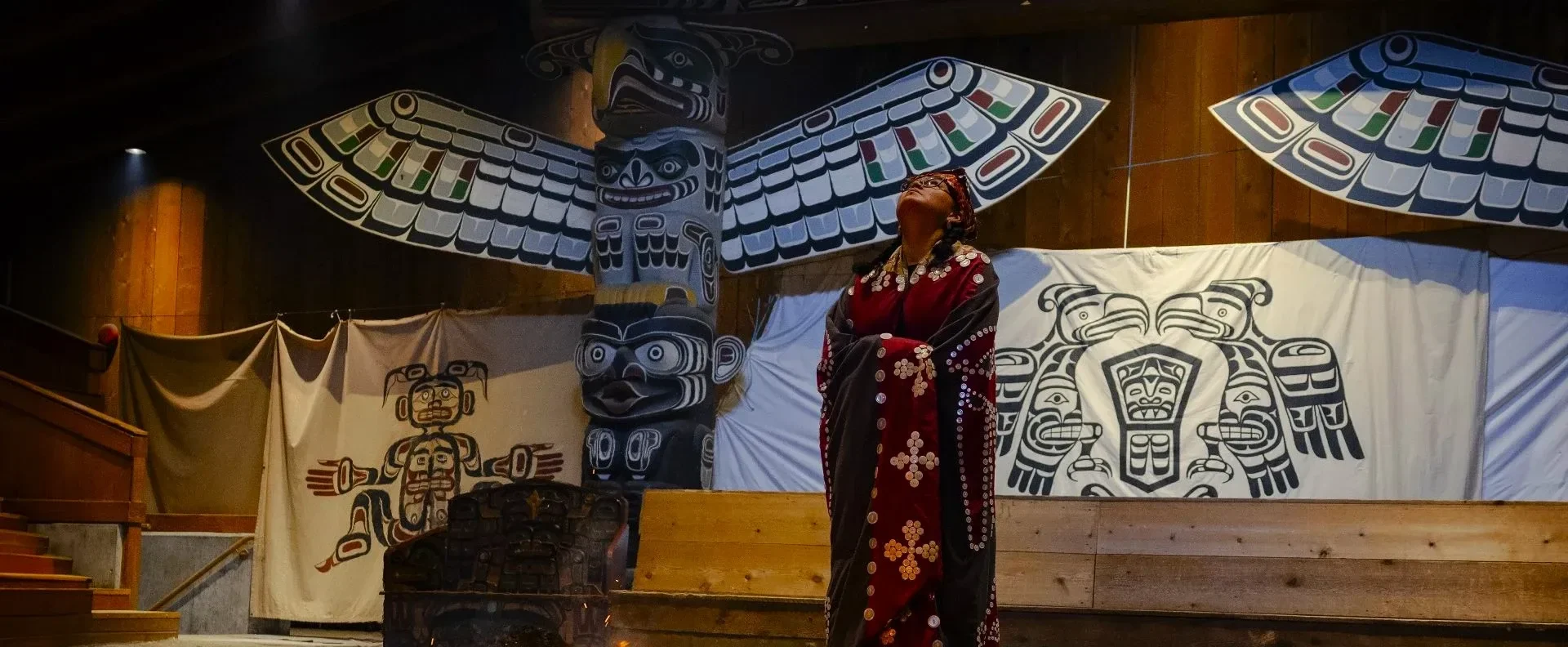
Alaska's Native cultures are distinct and continually evolving, expressed through language, art, knowledge, and relationships with their homelands. To understand Alaska more deeply, we look beyond its landscape to the people whose lives, histories, and traditions are connected to them.
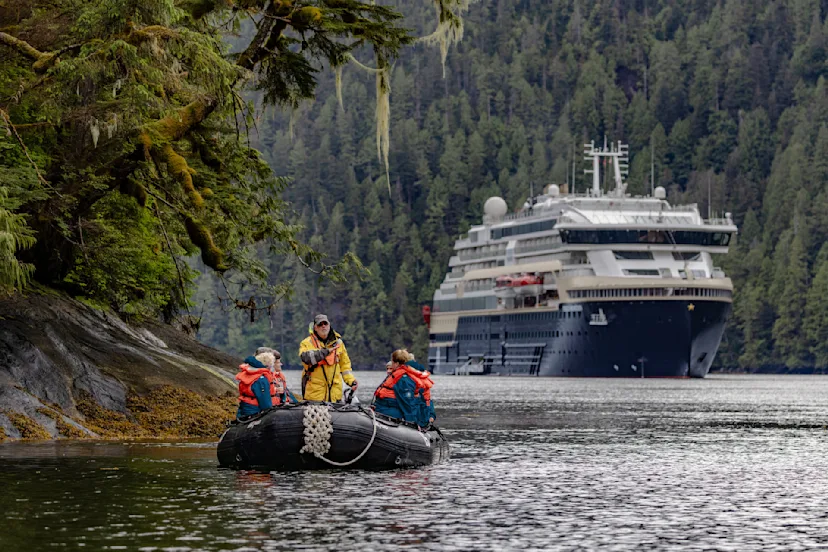
With HX, we explore these connections through the histories of the communities who call Alaska home, and through opportunities to learn from local people along the way. Explore Alaska with HX →
TEN THOUSAND YEARS
⠀
The lands and waters now known as Alaska have been home to indigenous peoples for more than 10,000 years, with archaeological evidence in the state extending back around 14,000 years. Across this vast landscape, communities developed distinct ways of life, shaped by local environments and sustained through generations of knowledge.
The Alaska Native Heritage Center recognises 11 major cultural groups, each with their own histories, languages, and traditions. These include Athabascan, Eyak, Łingít, Haida, Tsimshian, Unangax̂, Sugpiaq, Yup’ik, Cup’ik, St Lawrence Island Yupik, and Iñupiat.
Within each of these groups, communities speak different dialects, hold distinct customs, and carry their own local histories – the diversity runs as deep within the group as it does between them.
⠀
Historically, ways of life varied considerably between regions. Communities harvested fish, marine mammals, land animals, and plants according to local ecosystems and seasons. These practices supported daily life while also contributing to trade, ceremony, social relationships, and the passing of knowledge between generations.
That knowledge has never stayed in the past: hunting, fishing, and gathering remain important to many Alaska Native communities today, supporting cultural, economic, and spiritual wellbeing alongside daily needs.
For Angela Ketah, Indigenous Programs Manager at Shee Atiká in Sitka, that enduring connection to ancestral homelands is central to Łingít identity:
“What is unique about Łingít culture is that we still reside on the homeland that our ancestors resided on, and have for more than ten thousand years. I say ten thousand years because that’s what’s scientifically proven, but our stories go back to the times of the flood, the times of glaciers.”
— Angela Ketah, Indigenous Programs Manager at Shee Atiká in Sitka

THE WEIGHT OF CONTACT
⠀
In the Aleutian Islands, the arrival of Russian traders during the 18th century marked a profound disruption. Drawn by valuable sea otter pelts, enterprises brought violence and forced labour, and introduced diseases that caused severe population losses among the Unangans. Russian Orthodoxy also became an established and enduring part of community life.
The pressures of colonisation continued after the United States purchased Alaska from Russia in 1867. During the 19th and 20th centuries, Alaska Native children were forcibly sent to boarding schools operated or supported by the federal government and religious organisations. Many children were separated from their families and prevented from speaking their languages and practising their cultures. Communities continue to address intergenerational harm and the culture loss caused by these policies.
THE ALEUTIANS AT WAR
⠀
World War II brought another upheaval. In June 1942, Japanese forces invaded the Aleutian Islands of Attu and Kiska. The Unangan residents of Attu were taken to Japan as prisoners, while United States authorities evacuated 881 Unangan people from nine other communities to camps in Southeast Alaska. Conditions in the camps were dangerously inadequate, and dozens of those displaced died.
After the war, the surviving Attuans were not permitted to resettle their home village.
Museums and community projects continue to preserve and share this history, ensuring that the experiences of those displaced remain part of the Aleutians’ public memory.
“There’s a lot more pride than there used to be, and that’s because there was a lot of shame. We were children and grandchildren of boarding school survivors. You didn’t go around acting Native in public. You were trying to blend in.”
— Angela Ketah, Indigenous Programs Manager, Shee Atiká, Sitka

LIFE ON THE ALEUTIANS
⠀
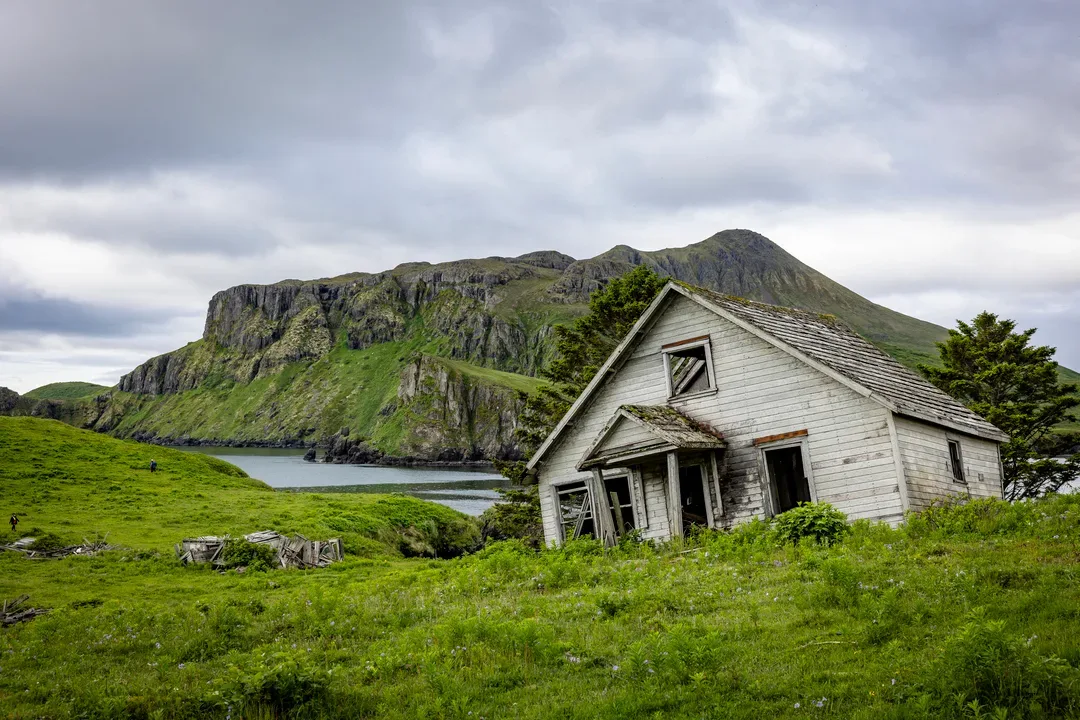
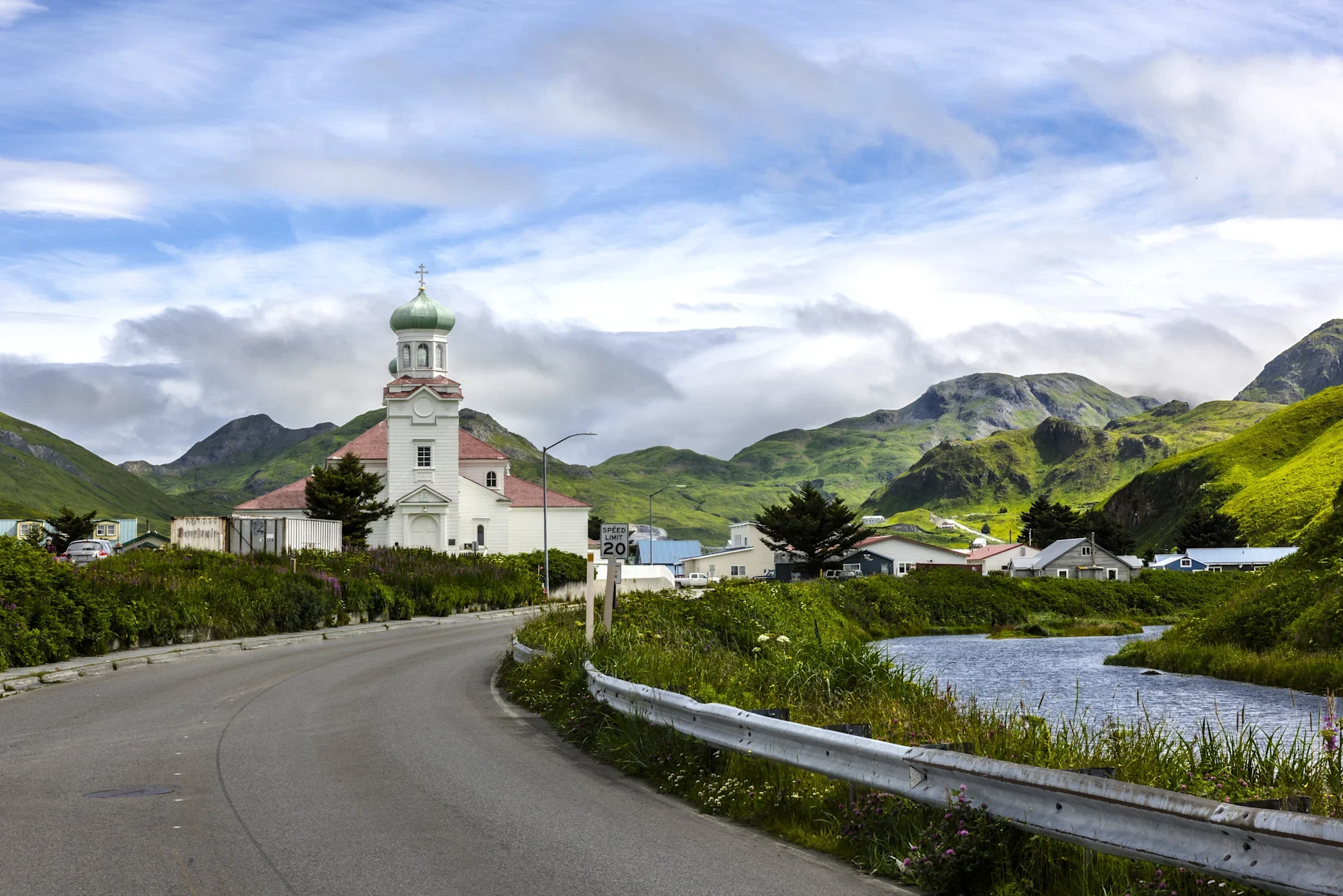
Understanding life in the islands also means looking at the knowledge and skills Unangan communities have passed between generations. Volcanic and windswept, the Aleutian Islands lie between the North Pacific and Bering Sea. To navigate these demanding conditions, Unangan communities developed sophisticated maritime technologies, including the iqyax, a light, sea lion skin-covered hunting vessel, and larger open skin boats used for travel and trade.
The same detailed understanding of materials shaped clothing. Communities made garments from skin and gut to protect against wet weather, and also worked with bird skins and animal furs. Building boats and garments demanded skilled craftsmanship and close knowledge of the surrounding environment — skills that form part of a living cultural heritage that Unangan artists, educators, and communities continue to maintain and renew today.
⠀
On HX's Aleutians to Katmai: Wild Alaska Revealed southbound, and Inside Passage, Bears and Aleutian Islands southbound and northbound itineraries, we plan a visit to Dutch Harbor on Unalaska Island — a working port at the edge of the Bering Sea, and a place where the region's history is still very much alive.
Depending on the program, guests may visit the Museum of the Aleutians, where local experts share Unangan heritage firsthand, from the iqyax to the enduring legacy of the Aleutian campaign.
Explore the Aleutian Islands with HX →
"Being Unangax̂ is a privilege, I do not take it for granted. Reflecting on how our ancestors survived shows the resilience of our people. It is very deep and meaningful, and I can't describe it. I am blessed."
— Katherine McGlashan, Executive Director of the Unalaska/Port of Dutch Harbor Convention and Visitors Bureau

TOTEMIC ANCESTRY: THE HAIDA, ŁINGÍT, AND TSIMSHIAN
⠀
Farther east, the exposed waters of the Aleutians give way to the calmer, forested channels of Southeast Alaska – and a different relationship with the sea. Large cedar canoes enabled Haida and coastal Łingít communities to travel, trade, and maintain connections. Clans and moieties, two broad social divisions, continue to shape identity and relationships.
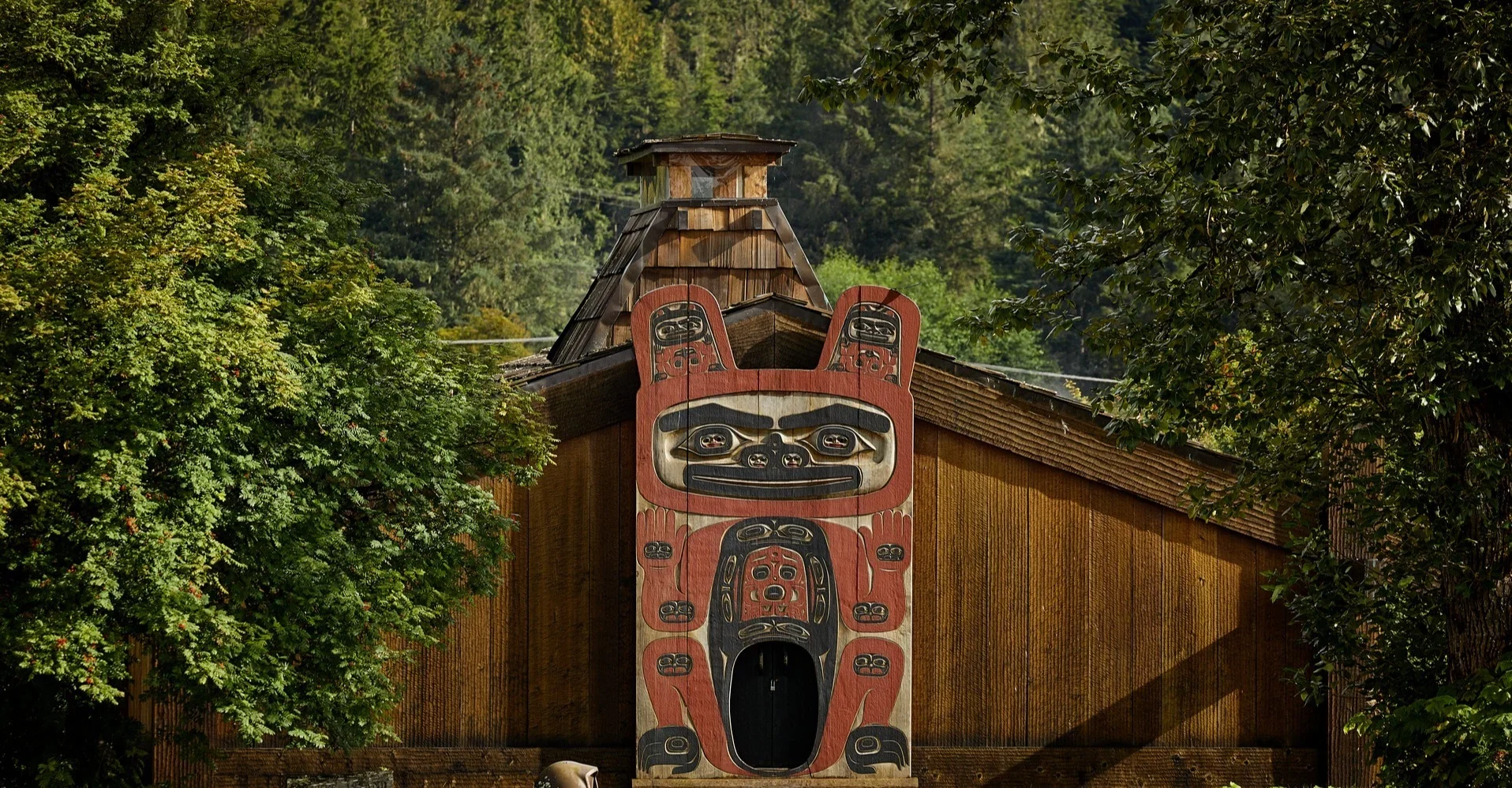
Carved monuments commonly called totem poles give visible form to these histories and connections. Their purposes vary: a pole may display clan crests, commemorate a person or event, or form part of a house, and their meanings are specific to the people and traditions associated with them.
Haida communities live on Prince of Wales Island in Southeast Alaska as well as on Haida Gwaii in British Columbia; the wider Haida homeland encompasses parts of southern Alaska, Haida Gwaii, and surrounding waters. Łingít traditional territories make up much of Southeast Alaska and extend into parts of present-day Canada.
⠀⠀⠀⠀⠀⠀⠀⠀⠀⠀⠀⠀⠀⠀⠀⠀⠀⠀⠀⠀⠀⠀⠀⠀
⠀
The Tsimshian are centred on Metlakatla on Annette Island, where seafaring traditions and distinctive art forms remain very much alive.
On HX's Alaska's Inside Passage – Wilderness & Culture (Southbound) itinerary, we visit Metlakatla to learn from the indigenous community that calls it home. Our Tsimshian hosts will tell us about their culture, seafaring traditions, and intricate art, often through the medium of dance, and guests have an opportunity to watch a dance demonstration. We also explore more of the island with local guides and try the traditional foods such as salmon, berries, and seaweed.
In Klawock, the connection between carving and community history is particularly visible. The Totem Park contains 21 poles, including reproductions of older poles associated with the Łingít village of Tuxekan, and local carving facilities support the continuation of these traditions. HX’s Klawock Highlights excursion includes the totem park and a visit to the Klawock Heenya Carving Shed.
LIVING ARTS AND TRADITIONS
⠀
Carving is just one thread in a much richer cultural fabric. Across Alaska, weaving, sewing, and basketry sit alongside song and dance as vital, living forms of expression, each carrying its own materials, meanings, and practices that vary considerably between peoples and communities.
Some works communicate histories, identities, or relationships; while songs, dances, and regalia may also carry particular ceremonial responsibilities. In some traditions, designs, songs, and objects belong to specific clans, with community protocols governing their use. Understanding these various expressions means recognising both their creativity and the relationships they carry.
Today, Alaska Native artists, educators, and cultural organisations continue this work through teaching, performance, workshops, and opportunities for younger generations to learn.

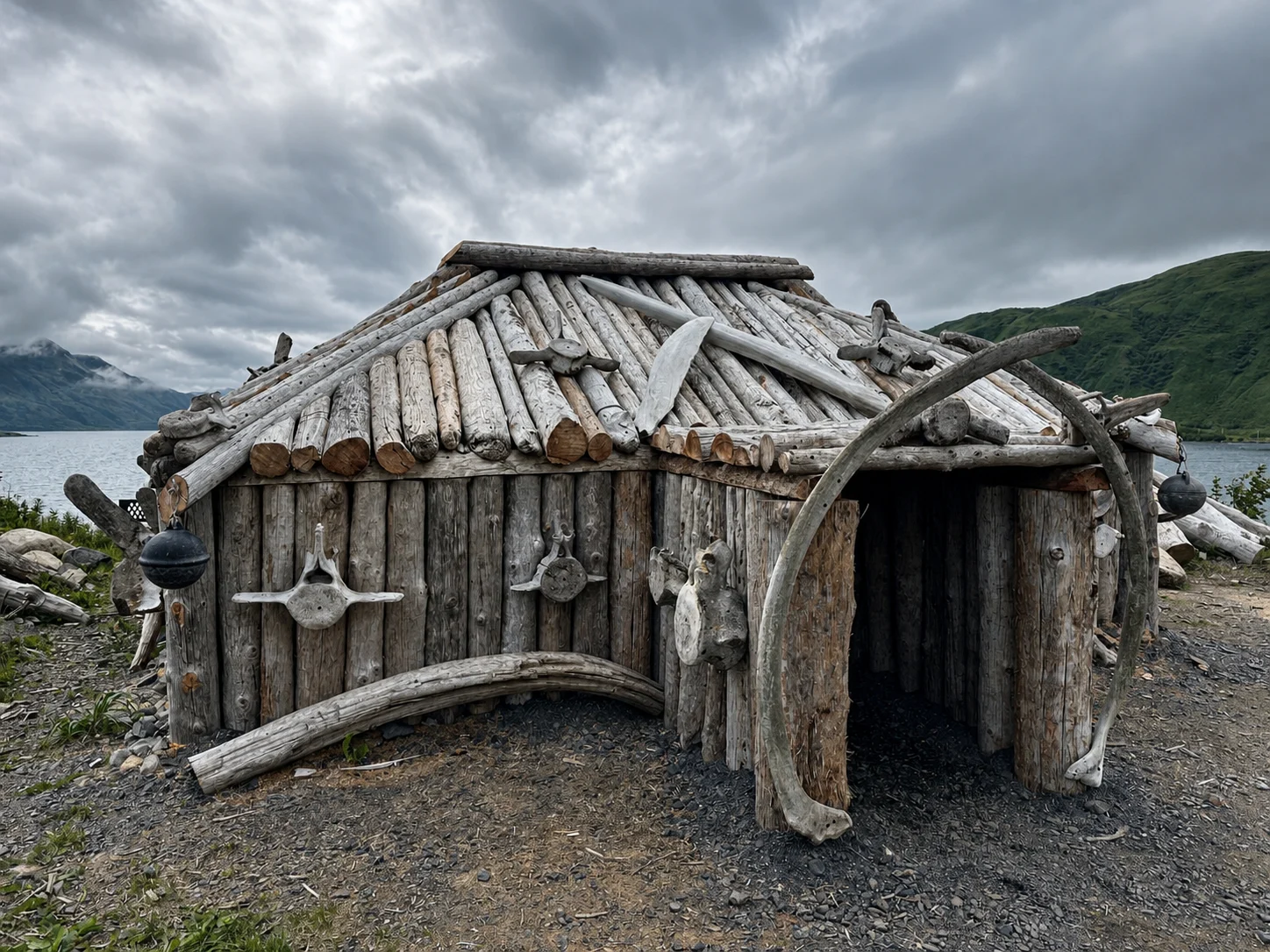
In Old Harbor, an Alutiiq/Sugpiaq village on Kodiak Island, that learning has a physical home. Completed in 2026, a replica of a traditional ciqlluaq (barabara) brought together Elders, students, archaeologists and community members to share ancestral building knowledge through hands-on experience.
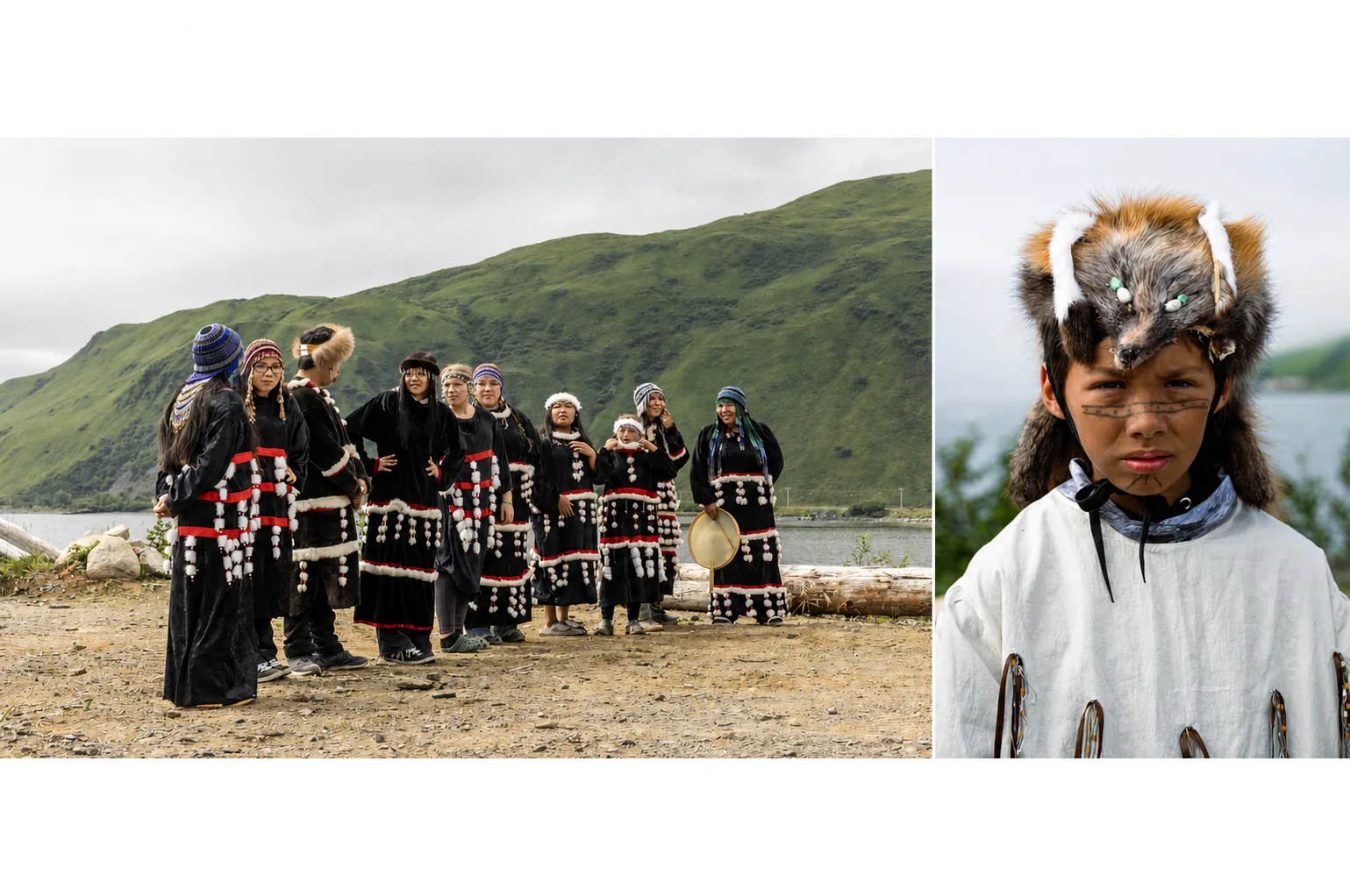
The village’s Alutiiq dance group, made up of young people aged eight to eighteen, carries the same knowledge forward. As Old Harbor Native Corporation observes, the dances, artwork and traditions visitors encounter are “only the visible expressions of a deeper cultural continuity.”
On selected HX itineraries, guests may learn about these traditions at cultural sites and through locally guided experiences. Availability depends on the itinerary, local arrangements, and operating conditions.
WHAT COMMUNITIES FACE TODAY
⠀
Alaska's changing climate is affecting Alaska Native communities’ access to the land and water their cultures depend on. Erosion, flooding, and thawing permafrost threaten homes and infrastructure across the state, while changes in environmental conditions affect access to resources important to subsistence and cultural life.
In remote villages, access to food is part of the same challenge.
“An avocado from California will travel by truck, rail, boat and air to reach our rural community,” says Old Harbor Native Corporation. The village now runs a hydroponic farm, oyster and kelp farms and a free-range bison herd, and is developing a hydroelectric project to reduce its dependence on diesel. Subsistence, the corporation says, “is about much more than food. It is about family, community, sharing, and passing knowledge forward.”
⠀
Language is another area where historical disruption and present-day action meet. Communities, educators, and cultural organisations are working to teach, document, and revitalise these endangered languages, creating opportunities for people to learn and reconnect with their heritage. These efforts reflect the determination of communities to sustain their cultures and shape what comes next.⠀
In Sitka, where the Sitka Native Education Program has taught language, song and dance since 1974, Ketah hears the change in everyday conversation:
“You hear people saying the words they know, even if it’s just gunalchéesh, which means thank you,” she says. “And this is my favourite part: the kids are calling each other by their Łingít names instead of their English names. That’s what really breathes life into the language.”
EXPLORE ALASKA WITH A DEEPER UNDERSTANDING
⠀
For many Alaska Native communities, how visitors arrive matters as much as why they come. “A respectful visit begins with curiosity, humility, and a willingness to listen,” says Old Harbor Native Corporation. “Indigenous tourism can be more than sightseeing.”
In Sitka, on Baranof Island, Ketah begins by welcoming visitors to Lingít Aaní, the ancestral homeland of the Łingít people. She speaks of Haa Shagóon, a Łingít concept that connects past, present and future generations, reflected in relationships with the land, family, community and cultural traditions.
⠀
“It’s our everything,” she says. “The way we interact with the land, how we take care of our family, how we take care of our resources. How we’ve always done that, how we still do it, how we want our future generations to do it.”
— Angela Ketah, Indigenous Programs Manager, Shee Atiká, Sitka

⠀
For visitors, these histories offer a starting point for a deeper understanding of Alaska. With HX, onboard lectures and talks provide context, while cultural excursions offer opportunities to learn about the places and communities we visit.
Depending on the voyage and the excursions available, you can explore Wrangell’s heritage, hearing local legends at Chief Shakes Tribal House and discovering ancient petroglyphs at Petroglyph Beach. In Klawock, visit the totem park and Klawock Heenya Carving Shed to learn about the master artists and apprentices continuing this living tradition.
⠀
On selected voyages, and by invitation, HX guests may be welcomed by indigenous communities including the Łingít, Unangax̂, and Sugpiaq. From traditional song and dance in Kake to cultural experiences in on Baranof Island and Haines, these encounters offer perspectives that bring culture to life.
⠀⠀⠀⠀⠀⠀⠀⠀
Explore all Alaskan expeditions
Experiences vary by voyage and are subject to availability and local conditions.
We acknowledge that our journeys in Alaska take place on the ancestral lands of the Dena'ina, Eyak, Haida, Inupiat, Łingít, Sugpiaq, Tsimshian, and Unangan peoples. We honour their enduring connection to these lands and waters, and we commit to learning from their traditions, respecting their knowledge, and recognising their continued cultural contributions.