University of Colorado Boulder
Aboard an HX expedition, climate scientist Dr. Alia Khan collected snow samples uncovering how algae are darkening Antarctica's ice.
Snow is supposed to be white. That's the whole point of it - it reflects sunlight back into space, keeping the planet cool. But when snow algae bloom across the surface of glaciers, they turn the snow dark red and green, and something that was supposed to reflect heat starts absorbing it instead.
The result is faster melting, and a feedback loop that accelerates as the climate warms. Dr Alia Khan studies this phenomenon - and its implications for our warming planet. Understanding it is a small but important piece of the bigger puzzle of how to protect Antarctica's ice.

Pioneering research into the effects of snow algae
Having spent the last decade conducting research across mountainous and polar regions, Dr Alia Khan has become one of the world's leading scientists dedicated to understanding the impact of our changing climate on glacial ice and snow.
A key area of her work is light-absorbing particles - particularly snow algae, the microscopic organisms that live on snow and ice and can significantly darken the surface, reducing its ability to reflect sunlight.
Her research has taken her from the Chilean Andes to the Alps of New Zealand, and to the National Snow and Ice Data Center in Colorado.
The consequences are already visible, she says.
"The blooms can be so intense and dark, like wearing a dark t-shirt on a sunny day, that they warm up the surface and cause more melting. The warming is likely expanding and strengthening the snow algae bloom season, which could continue to increase in this region of Antarctica as the climate continues to warm."
HX Expeditions & Western Washington University
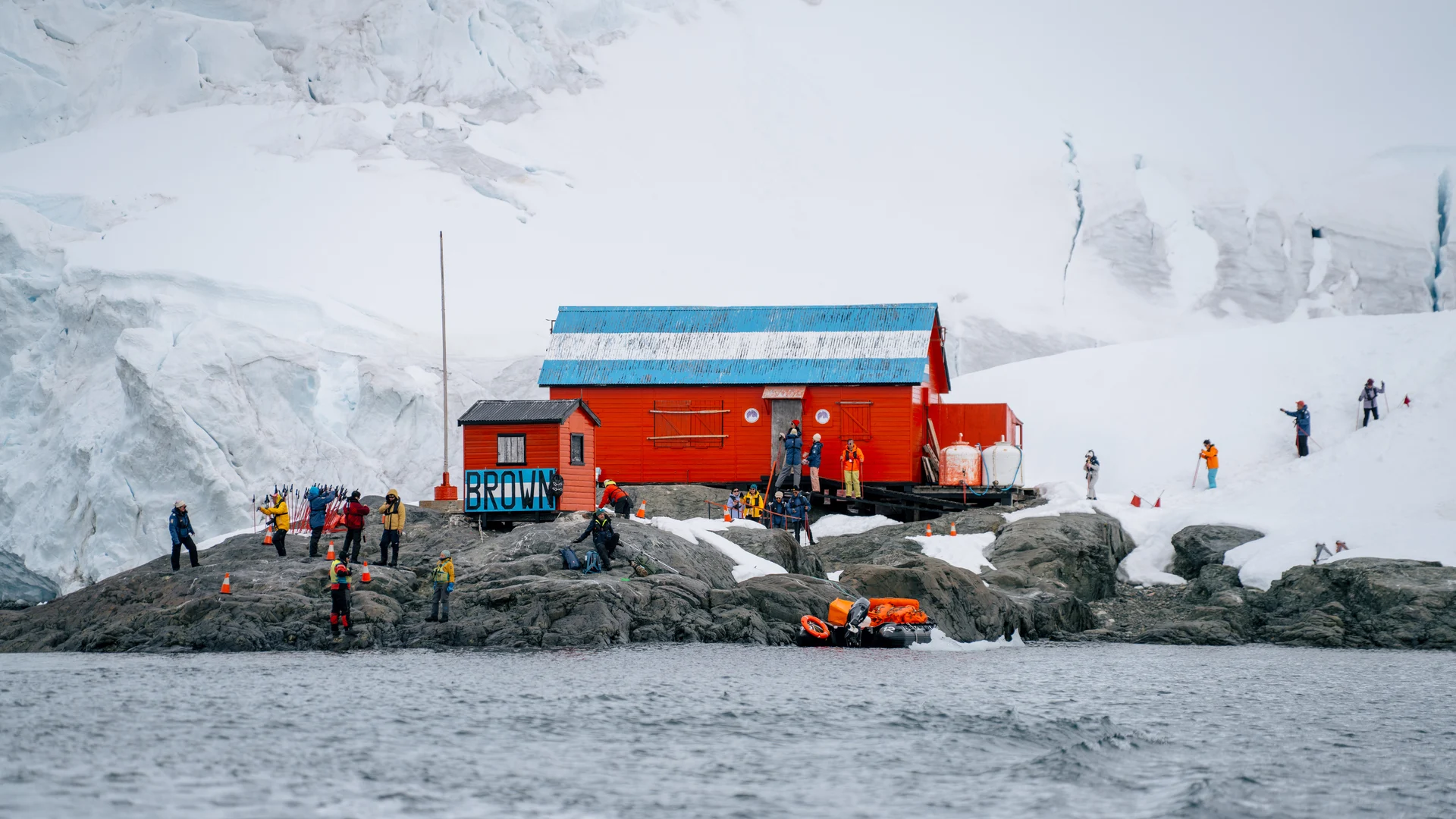
In February 2022, Dr Khan joined the crew on board MS Roald Amundsen on its summer sailings down to Antarctica. Working alongside the Expedition Team and the team on MS Fram, she collected around 20 snow samples at Brown Station and Petermann Island, looking for snow algae - the microalgae that live on snow and ice.The samples were melted and filtered before being transported back to the lab. The study focused on the algal pigments within the samples, with a specific focus on understanding the extent to which snow algae darken the surface of snow and ice, reducing its ability to reflect sunlight and contributing to faster melting.

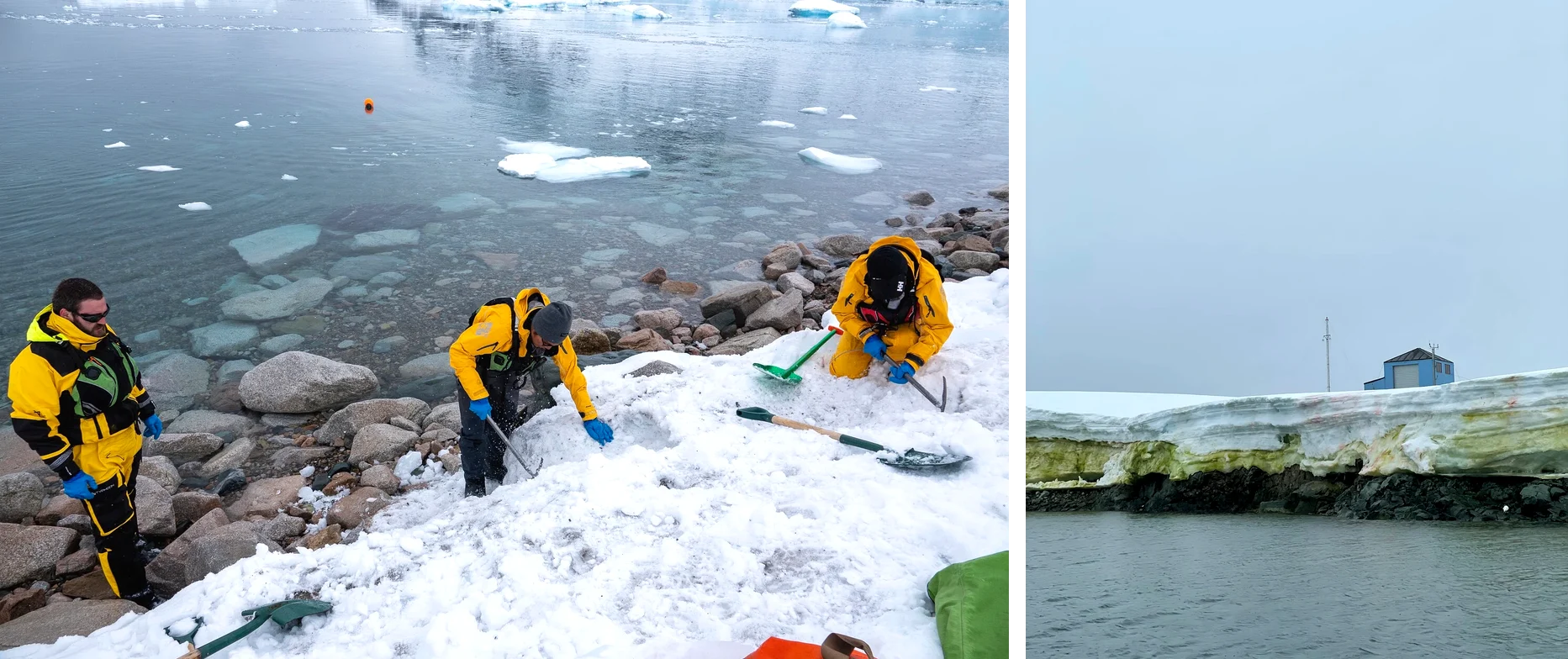
For Dr Khan, the collaboration was about more than the data, she says.
"I'm able to collect some samples and data for my research, and I can use some of the facilities on the ship, such as the microscopes, to look at the samples and then also work with the tourists to show them what I'm sampling in the snow."


