Things to Do in the Galápagos Islands
The Galápagos Islands are wild, raw, and alive. Think fearless wildlife, lava-sculpted landscapes, and up-close encounters you won’t get anywhere else. That’s why they’re called the Enchanted Isles, and these are the best ways to experience them.
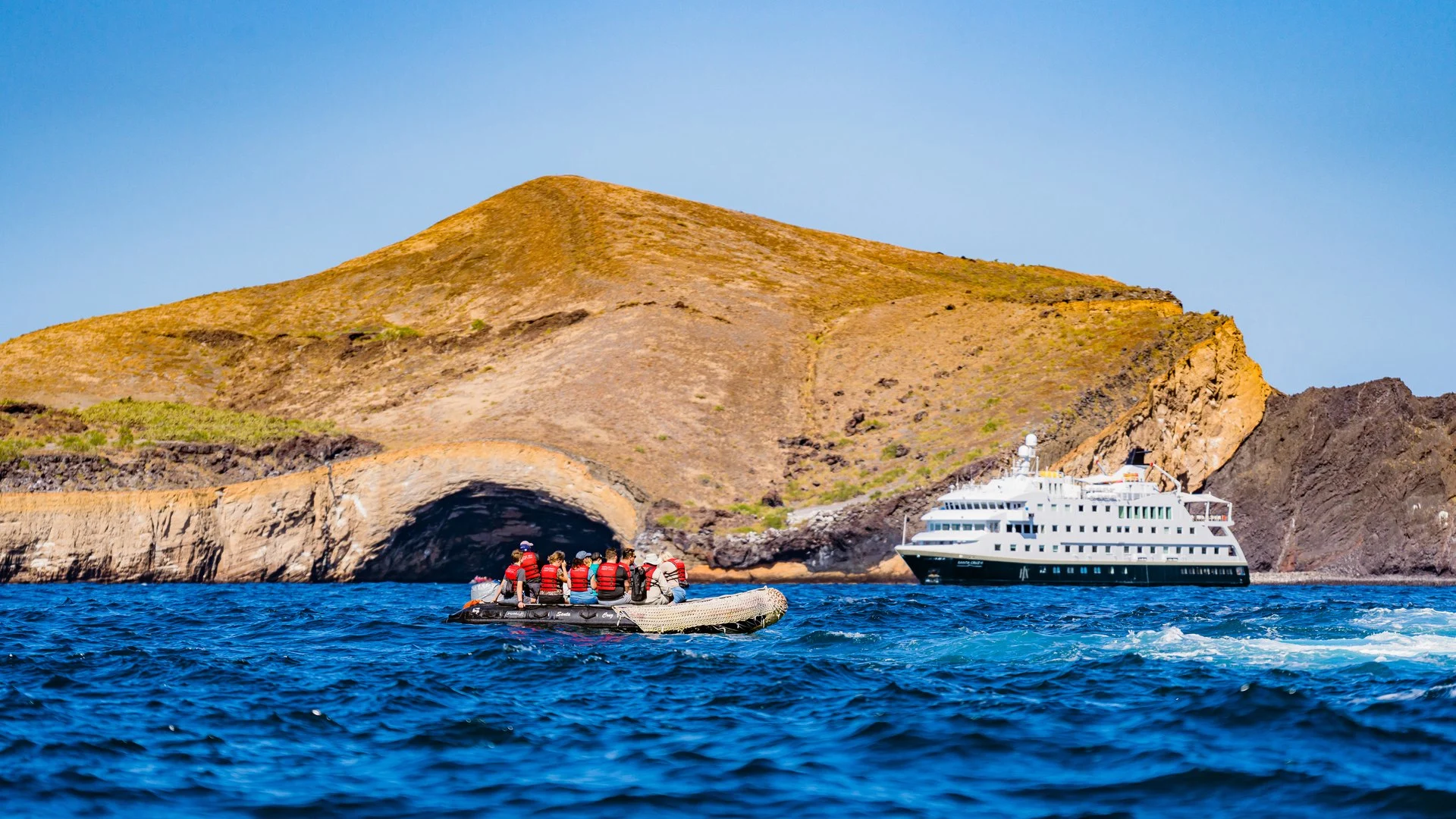

What can you do in the Galápagos Islands?
If you’re deciding what to do on the Galápagos Islands, you’ll find a mix of land, sea, and conservation-focused experiences. Most activities are designed to protect fragile ecosystems while allowing exceptional access to wildlife and scenery.
Top ways to experience the islands include:
Wildlife watching on land and at sea
Snorkelling in the Galápagos Marine Reserve
Kayaking and paddleboarding in sheltered bays
Guided volcanic hikes and nature walks
Small-boat cruising
Visits to conservation and research centres
Wildlife Experiences in the Galápagos
Galápagos wildlife is the main reason most travellers visit the islands. Animals here are famously unafraid of humans, allowing usually close one-of-a-kind encounters.
Expedition experiences in the Galápagos are built around observing these species in their habitats, whether on land, in shallow coastal waters, or when cruising on small boats.

Iconic wildlife encounters
Giant tortoises: Often seen on highland trails and in reserves, moving slowly through forest trails or resting in shaded clearings.
Iguanas: Such as the Santa Fe land iguana, seen in arid landscapes and rocky areas, alongside marine iguanas that gather on lava rocks and feed underwater on algae.
Sea lions: Frequently seen lazing upon shores and sandy beaches.
Galápagos fur seals: More elusive than sea lions, typically found resting in shaded rocky crevices.
Rays and reef fish: Eagle rays and other species glide through sandy-bottom shallows, often visible in clear water.
Sea turtles: Regularly spotted in coastal waters while snorkelling, especially in calmer bays.
Birdlife of the Galápagos
The islands are a world-renowned birdwatching destination, home to many endemic species.
Waved albatross (Española Island): Major breeding site and critical nesting ground
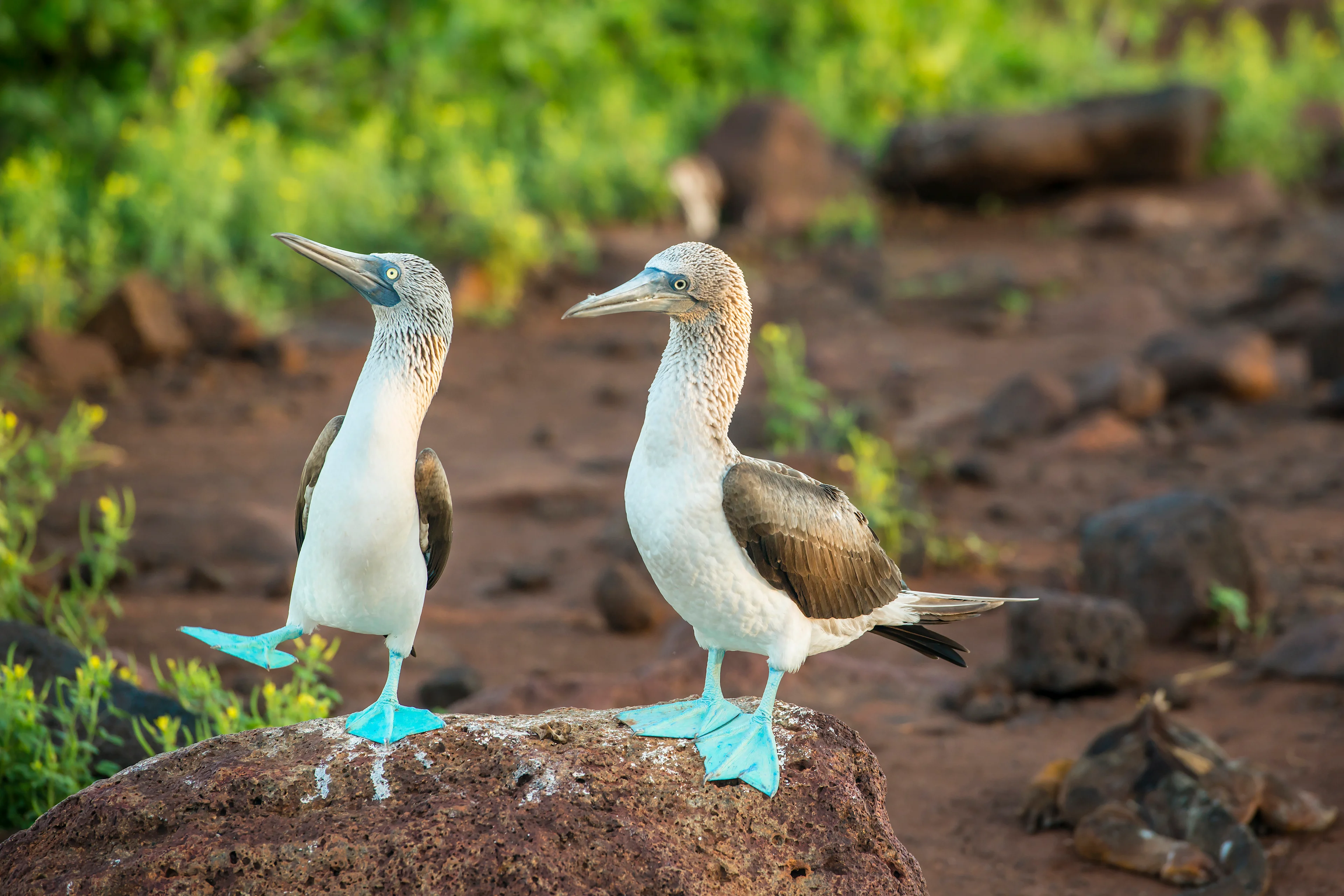
Boobies (San Cristóbal Island): Blue-footed, red-footed, and Nazca species in dramatic coastal colonies
Darwin’s finches (widespread across islands including Santa Cruz Island): Key to evolutionary science
Frigatebirds (coastal areas across the archipelago): Known for their striking red throat pouches
Galápagos penguins (western islands such as Isabela and Fernandina): The only penguins north of the Equator
Galápagos hawks (multiple islands): Apex aerial predators
Photographing wildlife responsibly
You don’t need specialist equipment to capture great images, just patience and awareness.
Move slowly and avoid sudden movements
Keep distance even when animals approach
Use early morning and late afternoon light
Wait for natural behaviour rather than directing it
Focus on experience first, photography second
Read more tips below for capturing your own Galápagos moments with lessons from British photographer, Alex Stead.

“One of the most memorable moments came during my expedition with HX. The HX Expedition Team guide led me to a secluded spot, perfect for observing young seals. This encounter encapsulated the essence of wildlife photography: patience, preparation, and the willingness to embrace the unexpected.”
Alex Stead, Photographer
On the Water: Snorkelling, Kayaking, and Marine Exploration
The Galápagos Marine Reserve is one of the richest marine ecosystems on Earth. Much of the experience here happens at sea level or just below it.
Snorkelling with marine life
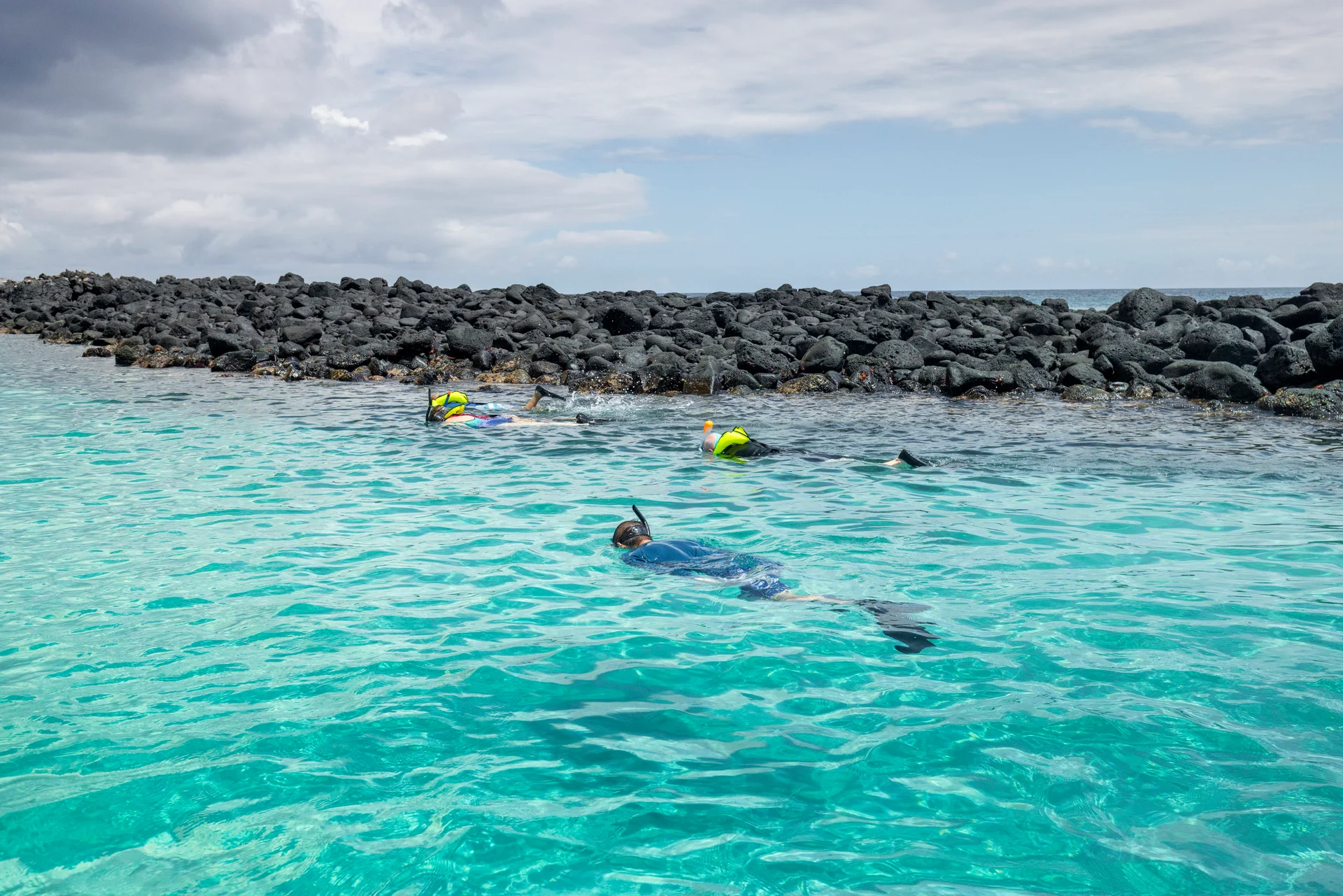
Snorkelling is one of the most accessible ways to experience the islands up close. Calm, clear waters make it suitable for beginners while still offering extraordinary wildlife encounters.
Expect to see:
Sea turtles gliding through coastal waters
Sea lions weaving playfully through the water
Eagle rays moving across sandy sea beds
Reef sharks in deeper channels
Dense schools of tropical fish over volcanic reef
Key snorkelling locations:
Eden Islet (off Santa Cruz Island): shallow volcanic reefs rich in marine life
Playa Mansa (Santa Cruz Island): sheltered mangrove-lined bay ideal for calm snorkelling
Conditions are generally comfortable year-round, with variations in visibility and water temperature.
Kayaking and paddleboarding
Kayaking and stand-up paddleboarding offer a quiet, low-impact way to explore sheltered bays and volcanic coastlines. Both are beginner-friendly thanks to calm seas and stable conditions.
You can:
Paddle through shallow coves
Drift alongside volcanic shorelines
Pause to observe marine life beneath you
Rest on your board or kayak at any time

Best locations include:
Santa Fe: calm waters and scenic coastline
Gardner Bay (Española Island): wildlife-rich shoreline
Black Turtle Cove (Santa Cruz Island): mangrove lagoon with still waters
On HX trips in the Galápagos, all necessary equipment is provided, so all you need to bring is your sense of adventure.
Small-boat cruising
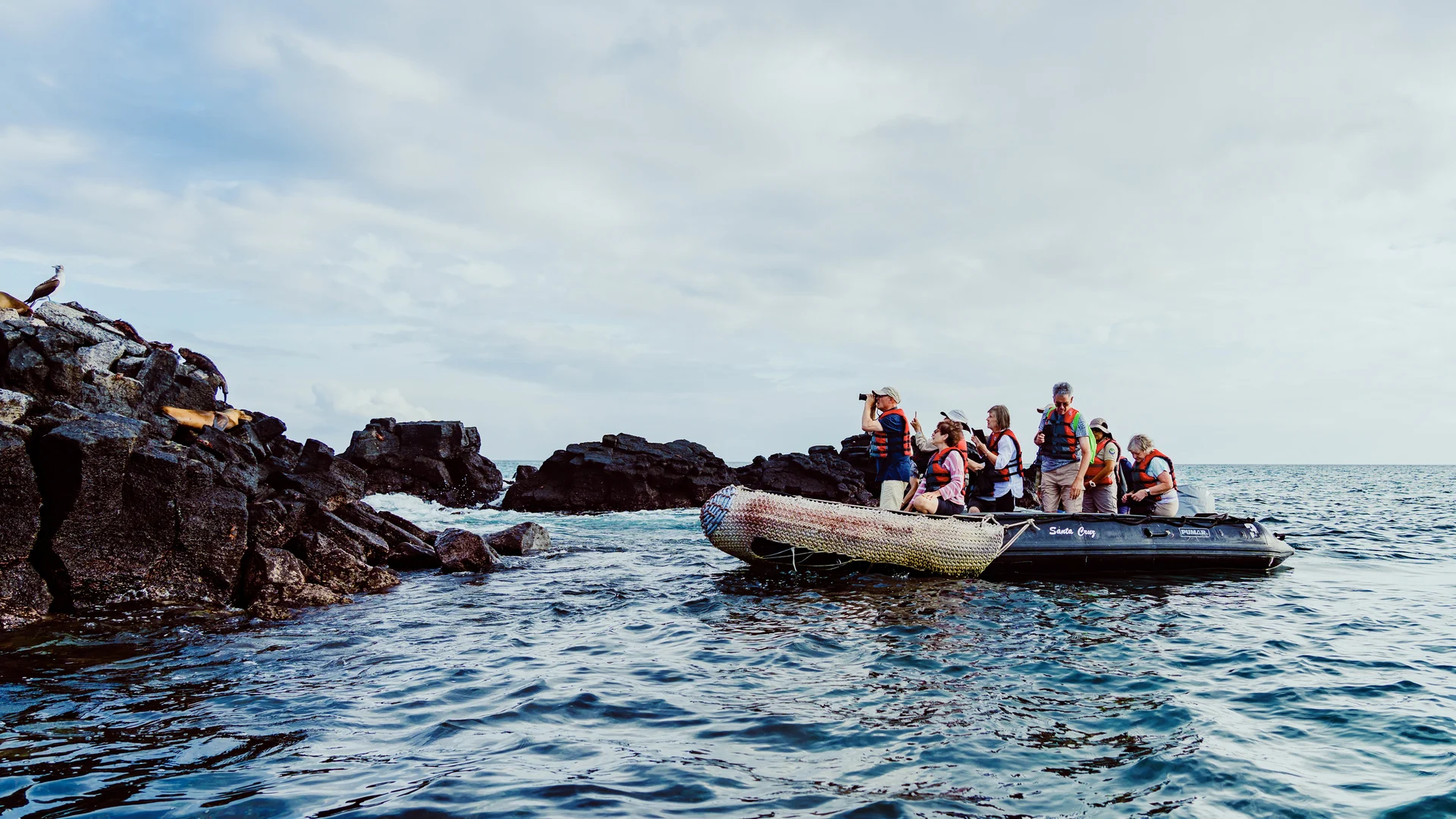
Smaller expedition boats called pangas allow access to shallow coves and remote landing sites larger vessels cannot reach. Wildlife sightings often include dolphins, rays, turtles, and seabirds travelling between islands.
Glass-bottom boats also offer a dry alternative, revealing underwater ecosystems without entering the water.
On Land: Islands, Landscapes, and Guided Walks
Galápagos Islands land-based excursions reveal the volcanic origins of the islands and the habitats that support their wildlife.
Guided walks are slow-paced and observational, focusing on ecology, behaviour, and landscape interpretation.

Across the archipelago, you may experience:
North Seymour Island: Walk through dry, volcanic terrain dotted with Palo Santo trees, where blue-footed boobies nest and frigatebirds soar overhead
San Cristóbal Island: Coastal trails where sea lions gather on beaches and boobies can often be seen along cliff edges
Mosquera Islet: A low sandy stretch known for large colonies of sea lions resting just steps from landing sites
Santa Cruz Island highlands: Misty green landscapes where giant tortoises roam freely through forests and grassland
A highlight of any land excursion is time in the Santa Cruz highlands, where you can observe giant tortoises in their natural environment. These encounters also offer insight into ongoing conservation work that protects one of the Galápagos’ most iconic species.
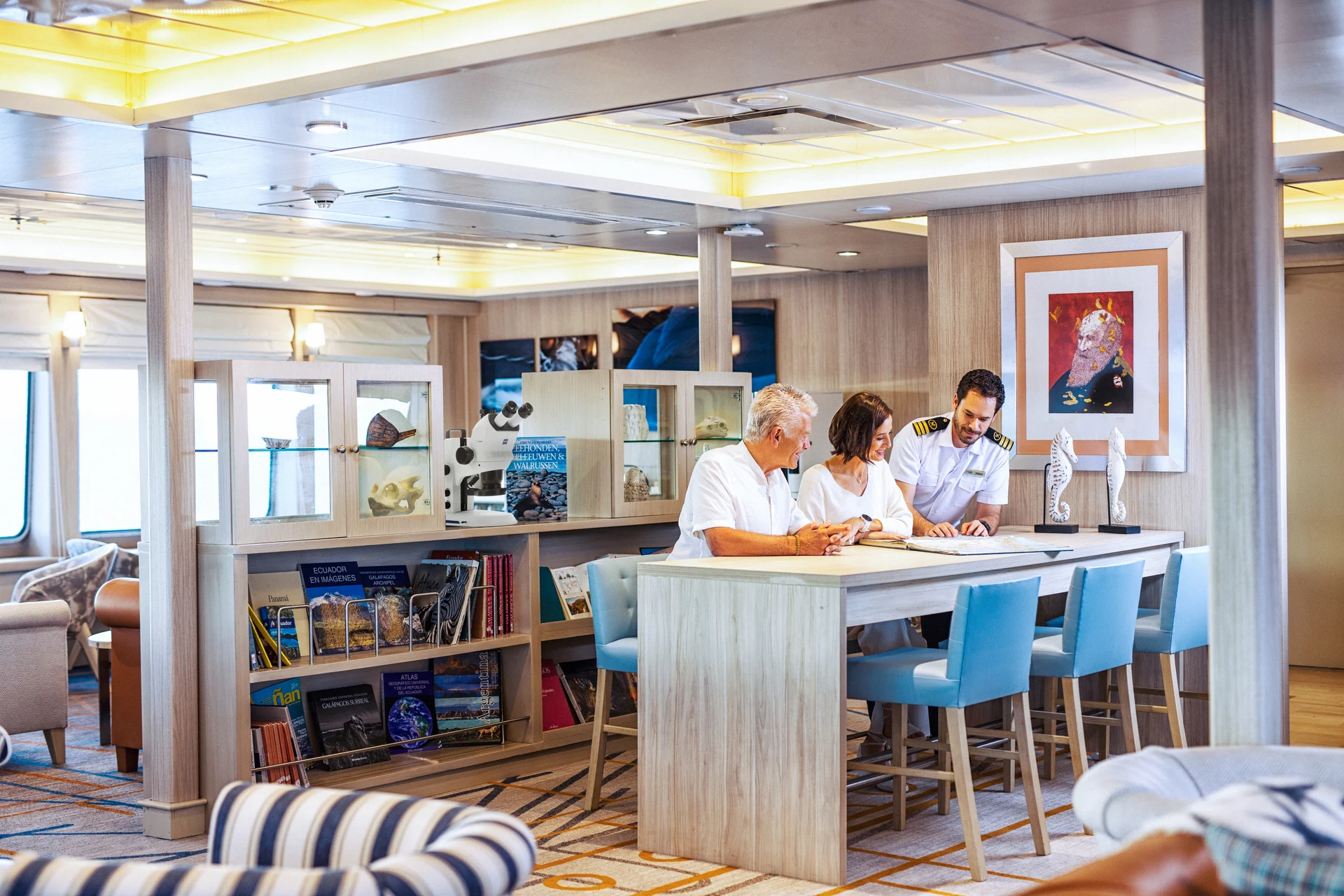
Science and Conservation
The Galápagos are a living laboratory for conservation and research. Both on board and ashore, HX expeditions connect you directly with ongoing scientific work.
Informal science sessions led by Expedition Teams
Microscopy workshops onboard exploring plankton and marine life
Visits to the Charles Darwin Research Station, supporting tortoise breeding and conservation programmes
Observation of Darwin’s finches and evolutionary research
Visits to protected reserves such as Cerro Colorado on San Cristóbal
Optional Citizen Science activities allow guests to contribute to global biodiversity research.
Why Explore the Galápagos by Expedition Cruise?
Galápagos Island trips by expedition cruise offer one of the most effective ways to experience the islands.
It allows:
Access to multiple islands in one journey
Landings in remote, protected environments
Expert interpretation from Naturalist Guides
Small group exploration with minimal impact
Seamless movement between land and sea experiences
This creates a more continuous and immersive understanding of the archipelago.
